
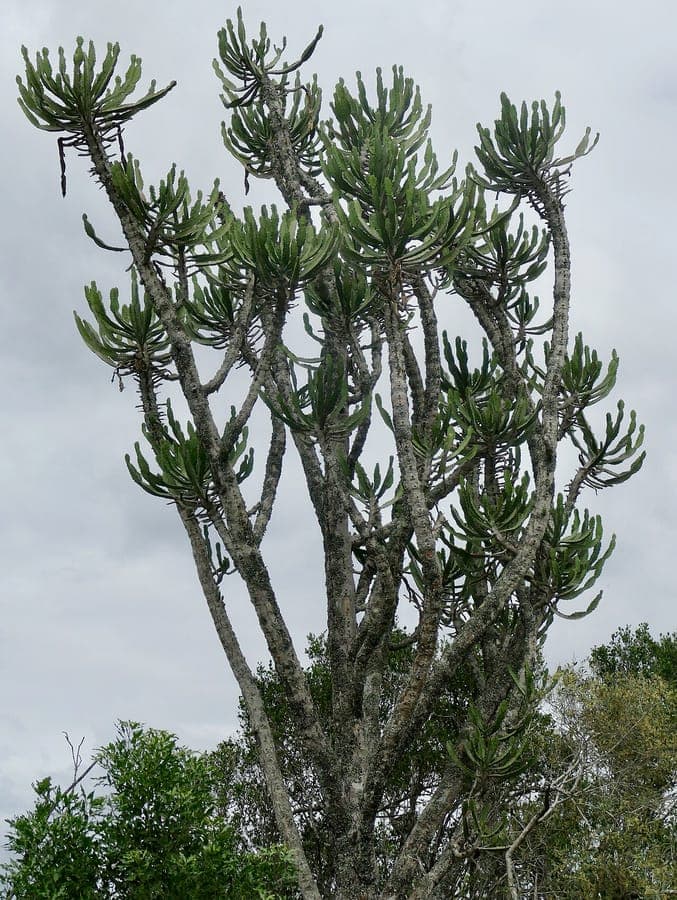
Bernard DUPONT from FRANCE / CC BY-SA 2.0, via Wikimedia Commons
Euphorbia triangularis: complete guide
Euphorbia triangularis
Want to see Euphorbia triangularis: complete guide in your garden?
1 minute, no credit card
Overview
Euphorbia triangularis is a remarkable succulent native to southern Mozambique and South Africa, instantly recognizable by its distinctive three-sided stems that create a striking architectural presence in any garden. This plant is sometimes called the Chandelier Tree or River Euphorbia, though the triangular stems are its most distinctive feature. Growing as a multi-stemmed shrub, it brings both drama and geometric elegance to landscape designs.
Appearance and Bloom
The plant develops as a shrubby growth form with multiple triangular stems that can reach considerable heights. The stems are green to brownish-green, creating a geometric silhouette. In its native habitat, it behaves more like a tree-form succulent. Small, inconspicuous yellow flowers appear but are less ornamental; the true beauty lies in the unique stem architecture. These three-sided stems make it instantly recognizable among succulents and create an almost architectural quality to the plant.
Ideal Location
Full sun exposure is essential for optimal growth. Provide at least six hours of direct sunlight daily. In temperate climates, full sun poses no problems. Extremely hot regions may benefit from light afternoon shade, though this is not necessary. For maximum vitality and color development, unobstructed sun exposure is strongly recommended. Indoor plants should be placed in south-facing windows receiving maximum light.
Soil
Excellent drainage is non-negotiable. A well-draining cactus or succulent potting mix amended with at least 50 percent mineral additives such as perlite, coarse sand, or pumice works perfectly. Soil pH should be neutral to slightly acidic (6.5-7.0). Heavy, moisture-retentive soil leads to root rot. In garden settings, this can be avoided by creating raised beds or mounds with loose, well-draining substrate that encourages water percolation.
Watering
Euphorbia triangularis is remarkably drought-tolerant and requires minimal water. During the growing season (spring-summer), allow soil to dry considerably between waterings. In winter, water extremely sparingly. Excessive moisture is the plant's greatest enemy. Outdoor plantings typically thrive on rainfall alone; supplemental watering is only necessary during prolonged dry periods. For potted specimens, water until the base feels moist, then stop.
Free design
Want to see Euphorbia triangularis: complete guide in your garden? Make a free design now.
Pruning
Pruning is generally unnecessary unless you want to maintain a more compact form or remove damaged sections. Old stems can be removed at the base to encourage new growth. Wounds heal slowly; always use clean tools and allow cut surfaces several days to dry before resuming watering. Remove any diseased material immediately to prevent spread.
Maintenance Calendar
Spring (March-May): Inspect for pests, consider repotting if needed, gradually increase watering as temperatures rise. Summer (June-August): Monitor moisture occasionally, minimal maintenance required. Fall (September-November): Gradually reduce water, prepare plant for dormancy. Winter (December-February): Minimal water, no feeding, frost protection where necessary.
Winter Hardiness
This South African species is not frost-tolerant. In regions experiencing moderate frosts (below -5 degrees Celsius), the plant must be brought indoors or protected. In warmer zones (9-11), it can remain outdoors year-round. Potted specimens can be overwintered in a cool, dry location with minimal light, then brought back outdoors in spring.
Companion Plants
Euphorbia triangularis pairs beautifully with other drought-tolerant species: Agave varieties, Yucca, other Euphorbia cultivars, Aloe species, lavender shrubs, and ornamental grasses. These combinations create cohesive xeriscaping designs. Avoid moisture-loving plants nearby to maintain proper drainage and aesthetic harmony.
Closing Thoughts
The Euphorbia triangularis is an impressive choice for anyone seeking a distinctive focal point in their front yard. With its sculptural form and minimal maintenance requirements, this plant offers a sustainable solution for modern gardening. At gardenworld.app, you can perfectly integrate this plant into your yard redesign plans. With proper placement, you create a tropical or South African atmosphere without the typical care intensity. At gardenworld.app, we help you realize perfect plant combinations that transform your outdoor spaces into stunning botanical retreats.
Want to see Euphorbia triangularis: complete guide in your garden? Make a free design now.
Upload a photo, pick a style, and get a photorealistic design with plant list in under a minute.
No credit card required


Similar plants
Woolly mercury: complete guide
Mercurialis tomentosa
All about Mercurialis tomentosa, the woolly mercury from southwestern Europe: site, soil, watering, care and garden design tips.
Shurur: complete guide
Euphorbia fruticosa
Everything about Shurur: cultivation in dry climates, xeriscaping, care and tips for drought-resistant gardens in warm climates
Glary spurge: complete guide
Euphorbia glareosa
Everything about glary spurge: cultivation, maintenance, frost hardiness and use in Mediterranean and mountain-inspired gardens