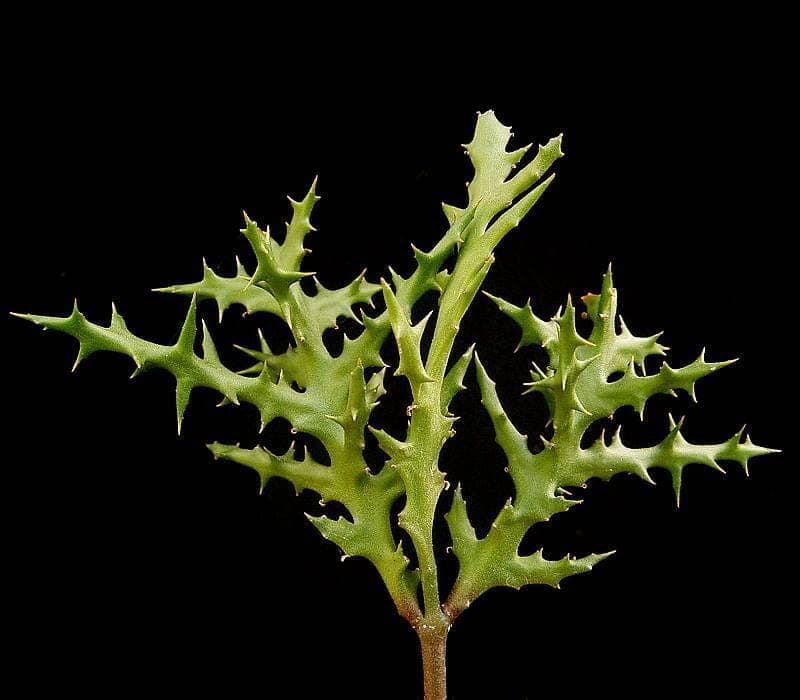
Frank Vincentz / CC BY-SA 3.0, via Wikimedia Commons
Euphorbia stenoclada: complete guide
Euphorbia stenoclada
Want to see Euphorbia stenoclada: complete guide in your garden?
Full design in HD: €7.99
Look after your Euphorbia stenoclada with the GardenWorld app
Identify plants with your camera and get a care calendar with reminders for this plant.


Overview
Euphorbia stenoclada, also known as silver thicket, is a striking succulent from the Euphorbiaceae family. Native to Madagascar and islands in the Mozambique Channel, this plant is a phenomenal addition with thin, branching stems that appear silvery-white to greenish. With potential heights of 1 to 2 meters, it suits dry gardens, containers, and xeriscape designs. The plant is deciduous and demands minimal water and care.
Appearance and Bloom
The most striking feature of Euphorbia stenoclada is its remarkable silhouette consisting of thin, upward-reaching stems that appear silvery-white to pale greenish. The stems are thinner than related species, giving the plant an almost ghostly appearance. The plant has very few visible leaves, leading to an interesting, minimalist design.
Flowering coincides with the growing season in summer. Flowers are small and yellow-green, hidden among the stems. Though not spectacular, these flowers are important for reproduction. Fruits are dry capsules.
Ideal Location
Euphorbia stenoclada thrives best in a full sun, warm location. At least six hours of direct daily sunlight is essential. The plant can also grow in bright indirect sun, though growth may be less robust. Ensure good air circulation and avoid wet, dark spots.
In temperate climates, the plant grows better in containers, especially during cold winters. Growing against warm south walls can help.
Soil Requirements
Euphorbia stenoclada requires excellent-draining, lean soil. Standard potting mix doesn't work well; instead use 50% drainage medium (sand, grit) and 50% standard potting mix. For ground planting use stony, dry sand mixture with very little nutrition.
The plant tolerates acidic to neutral pH (6-7). Add coarse sand and grit for extra drainage. Waterlogging is the greatest enemy of this plant.
Watering
Euphorbia stenoclada is very drought-tolerant and requires minimal water. Water sparingly to very sparingly. During growth season (spring/summer) give water moderately only when soil is completely dry. During dormant season (autumn/winter) withhold water almost entirely.
Overwatering is catastrophic for this plant and causes root rot. The plant prefers severe drought to any moisture.
Free preview
Want to see Euphorbia stenoclada: complete guide in your garden? Make a free preview of your design.
Pruning and Maintenance
Euphorbia stenoclada requires virtually no pruning. The plant grows slowly and develops interesting silhouettes naturally. Remove only dead or damaged stems. Wearing gloves is strongly recommended as Euphorbia sap is toxic.
Cover damaged spots with dry sand to prevent infection. In very cold climates, protection with burlap or other material helps.
Maintenance Calendar
Spring (March-May): Begin watering cautiously as growth starts. Check for new stems. Inspect for pests.
Summer (June-August): Water when soil becomes very dry. Enjoy minimal care requirements.
Autumn (September-October): Reduce watering as growing season ends.
Winter (December-February): Minimal watering. In cold zones provide frost protection.
Winter Hardiness
Euphorbia stenoclada is threatened in severe winters and performs poorly below 0°C. In temperate climates, protection may be needed. In very cold zones, container cultivation is recommended, moving indoors in winter.
Ensure continuous excellent drainage to prevent freezing and damp conditions.
Companion Plants
Euphorbia stenoclada combines well with other drought-tolerant, exotic plants. Try:
- Other Malagasy plants: Aloe species and Pachypodium
- Desert plants: Opuntia, Yucca and Agave
- Silver-leaved plants: Artemisia and Helichrysum
- Ornamental grasses: Stipa and Lagurus (in containers)
Closing Thoughts
Euphorbia stenoclada offers sculptural interest and exotic flair to gardens and container collections. With minimal water and care requirements, this succulent deserves a place in dry gardens and xeriscape designs. Once established in the right conditions, your plant will thrive for many years without significant care.
Want to transform your garden and discover how Euphorbia stenoclada fits into your design? Try our garden designer at gardenworld.app-receive personalized plant recommendations for your specific space. When you need more plant inspiration later, consult our comprehensive plant blog at gardenworld.app.
Frequently asked questions about Euphorbia stenoclada
Is Euphorbia stenoclada winter hardy?
Euphorbia stenoclada is threatened in severe winters and performs poorly below 0°C. In temperate climates, protection may be needed.
When and how do you prune Euphorbia stenoclada?
Euphorbia stenoclada requires virtually no pruning. The plant grows slowly and develops interesting silhouettes naturally.
How much water does Euphorbia stenoclada need?
Euphorbia stenoclada is very drought-tolerant and requires minimal water. Water sparingly to very sparingly.
Where does Euphorbia stenoclada grow best?
Euphorbia stenoclada thrives best in a full sun, warm location. At least six hours of direct daily sunlight is essential.
What soil does Euphorbia stenoclada need?
Euphorbia stenoclada requires excellent-draining, lean soil. Standard potting mix doesn't work well; instead use 50% drainage medium (sand, grit) and 50% standard potting mix.

See it in your garden
See Euphorbia stenoclada in your garden
One photo of your garden and a few questions. You see the result in about a minute.
Try it with a photoIdentify this plant in your own garden. Identify a plant
Similar plants
Woolly mercury: complete guide
Mercurialis tomentosa
All about Mercurialis tomentosa, the woolly mercury from southwestern Europe: site, soil, watering, care and garden design tips.
Shurur: complete guide
Euphorbia fruticosa
Everything about Shurur: cultivation in dry climates, xeriscaping, care and tips for drought-resistant gardens in warm climates
Glary spurge: complete guide
Euphorbia glareosa
Everything about glary spurge: cultivation, maintenance, frost hardiness and use in Mediterranean and mountain-inspired gardens
