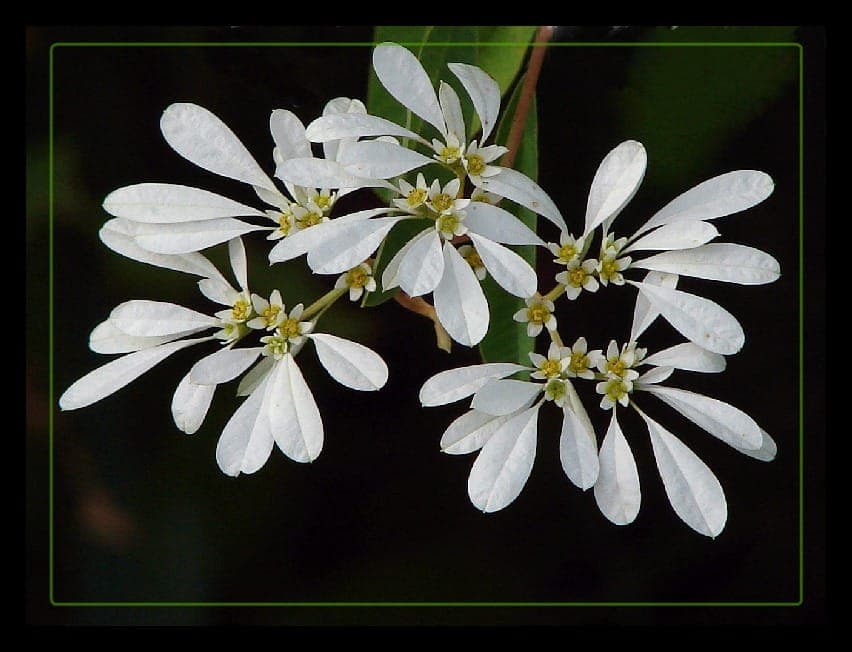
Tatiana Gerus from Brisbane, Australia / CC BY 2.0, via Wikimedia Commons
Euphorbia leucocephala: complete guide
Euphorbia leucocephala
Want to see Euphorbia leucocephala: complete guide in your garden?
Full design in HD: €7.99
Look after your Euphorbia leucocephala with the GardenWorld app
Identify plants with your camera and get a care calendar with reminders for this plant.


Overview
Euphorbia leucocephala, known as snow of Kilimanjaro or white lace bush, is a decorative shrub native to Mexico and Central America. This plant is valued for its delicate, lace-like white floral bracts that stand out against the green foliage. It blends shrub and succulent characteristics.
Appearance and bloom
Euphorbia leucocephala grows as an upright shrub reaching about 2 meters, depending on care. The foliage is elliptical and green-tinted, with silky texture. The white 'flowers' are actually bracts surrounding red cyathia. These appear from autumn through spring and create a snow-like appearance. The flowering period is long and continuous in warmer seasons.
Ideal location
Full sun is needed for rich blooming. At least 6-8 hours of direct sunlight. Protection from intense midday sun in very hot climates helps protect foliage. Avoid cold drafts or windy positions that limit flowering.
Soil
Well-draining, fertile soil is ideal. Add compost or humus. pH between 6.5 and 7.5. This plant requires more nutrition than pure succulents. In pots use potting soil with 20 percent sand for drainage.
Watering
Water moderately during growth. Soil can be lightly moist, not wet. In dormancy (winter) water sparingly - soil can dry out. Regular watering encourages more blooming. Prevent stagnation with good drainage.
Free preview
Want to see Euphorbia leucocephala: complete guide in your garden? Make a free preview of your design.
Pruning
Regular pruning helps shape shrubs and promote denser growth. Light pruning after blooming encourages fall blooming. Remove dead or weak branches.
Maintenance calendar
January-March: Light pruning; sparse watering. April-June: Active growth; regular watering. July-September: Summer growth; moderate water. October-December: Peak bloom; water regularly. Fertilize annually in spring and summer.
Winter hardiness
Not hardy. Minimum temperature 10 degrees Celsius, ideal 15-25 degrees. Frost damages severely. In cold climates, overwinter indoors. Outdoors suitable in southern warm regions.
Companion plants
Pair with other exotic shrubs like Ilex and Photinia. Bloomers like Hibiscus provide contrast. Vines add vertical interest. Dark green shrubwork behind enhances white beauty.
Closing thoughts
Euphorbia leucocephala is an elegant flowering shrub for warmer gardens or indoors in cooler regions. The delicate white bracts add elegance to any arrangement.
Find this plant at tree nurseries and plant shops. UK garden centers carry nursery specialties. German OBI and Hornbach offer exotic shrubs. French Truffaut and Jardiland provide warm-climate plant collections.
Want to learn more about exotic shrubs? Visit gardenworld.app/en. Or check gardenworld.app/en for more plant profiles.
Frequently asked questions about Euphorbia leucocephala
Is Euphorbia leucocephala winter hardy?
Not hardy. Minimum temperature 10 degrees Celsius, ideal 15-25 degrees.
When and how do you prune Euphorbia leucocephala?
Regular pruning helps shape shrubs and promote denser growth. Light pruning after blooming encourages fall blooming.
How much water does Euphorbia leucocephala need?
Water moderately during growth. Soil can be lightly moist, not wet.
Where does Euphorbia leucocephala grow best?
Full sun is needed for rich blooming. At least 6-8 hours of direct sunlight.
What soil does Euphorbia leucocephala need?
Well-draining, fertile soil is ideal. Add compost or humus. pH between 6.5 and 7.5.

See it in your garden
See Euphorbia leucocephala in your garden
One photo of your garden and a few questions. You see the result in about a minute.
Try it with a photoIdentify this plant in your own garden. Identify a plant
Similar plants
Woolly mercury: complete guide
Mercurialis tomentosa
All about Mercurialis tomentosa, the woolly mercury from southwestern Europe: site, soil, watering, care and garden design tips.
Shurur: complete guide
Euphorbia fruticosa
Everything about Shurur: cultivation in dry climates, xeriscaping, care and tips for drought-resistant gardens in warm climates
Glary spurge: complete guide
Euphorbia glareosa
Everything about glary spurge: cultivation, maintenance, frost hardiness and use in Mediterranean and mountain-inspired gardens
