
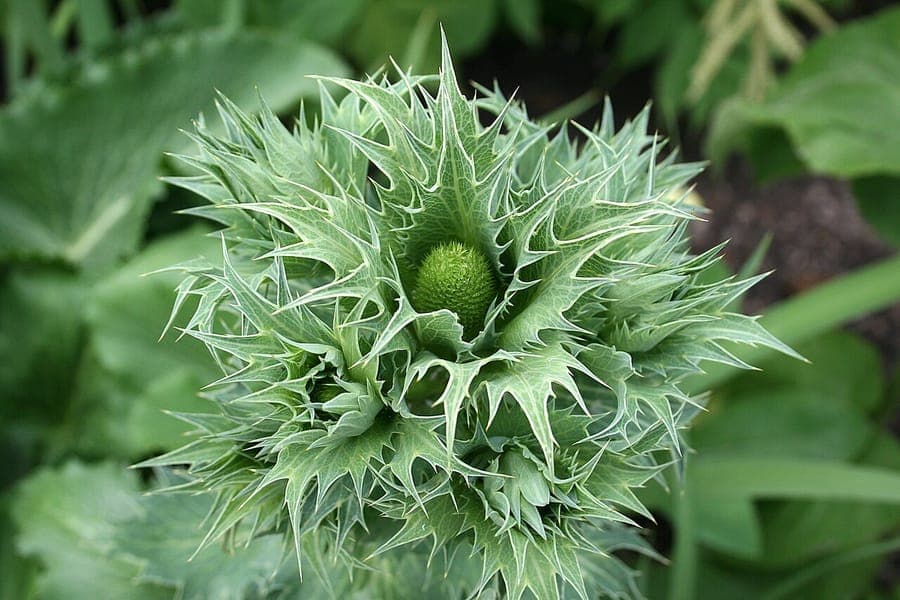
Jean-Pol GRANDMONT / CC BY-SA 3.0, via Wikimedia Commons
Eryngium giganteum: complete guide
Eryngium giganteum
Want to see Eryngium giganteum: complete guide in your garden?
1 minute, no credit card
Overview
Eryngium giganteum, popularly known as 'Miss Willmot's Ghost' after British gardener Ellen Willmot, is a breathtaking thistle-like plant from the Apiaceae family. This stately perennial grows to 1.5 meters tall and commands attention with its silvery-white to bluish flower heads and distinctive spiky bracts. Native to the Caucasus and Turkey, this plant is perfect for gardeners seeking an architectural plant with minimal maintenance requirements.
Appearance and Bloom
The most striking feature of Eryngium giganteum is the contrast between sturdy green stems and delicate silvery-blue flowers. Each flower head consists of numerous tiny florets arranged in a spherical or elongated umbel, surrounded by thorny bracts that feel surprisingly silky. These structural bracts are both decorative and functional: they protect the flower and attract pollinators. Blooming occurs from July to September, drawing countless bees and butterflies.
Leaves are large, wavy-edged, and display green to gray-green tones. They form a prominent rosette at the plant base. Heights typically range from 1 to 1.5 meters depending on growing conditions. Even in poor conditions, the plant maintains its majestic presence.
Ideal Location
Eryngium giganteum thrives in full sun. At least six hours of direct sunlight daily is essential for optimal growth and flowering. Partial shade can be tolerated, but this may reduce blooms. South or west-facing positions are ideal. The plant also handles wind-exposed locations well because strong stems resist damage.
Ensure good air circulation around plants to prevent fungal infections and other diseases. Warm, dry positions minimize fungal problems.
Soil Requirements
Eryngium giganteum prefers well-draining soil. Heavy clay soils should be amended with sand, grit, or organic matter to prevent waterlogging. The plant tolerates lean to moderately fertile soils well. Actually, excessive fertility can lead to overgrowth and weaker plants more susceptible to disease.
Soil pH should be neutral to slightly acidic (6.5 to 7.5). Layer sand at the bottom of planting holes for optimal drainage. The plant even accepts poor, dry soils provided drainage is excellent. This characteristic makes it suitable for rocky areas, gravel gardens, or other challenging locations.
Watering
Once established, Eryngium giganteum is quite drought-tolerant. During the first growing season, water regularly until the plant is fully established, especially during dry periods. Afterward, reduce watering significantly except during prolonged droughts.
The plant dislikes wet feet; waterlogging causes root rot. In autumn and winter, almost no watering is needed. Let soil dry somewhat between waterings. Container-grown plants may need slightly more frequent watering, but always ensure excellent drainage.
Free design
Want to see Eryngium giganteum: complete guide in your garden? Make a free design now.
Pruning and Maintenance
Eryngium giganteum requires minimal maintenance. After flowering (October-November), you may remove spent flower stems for aesthetic reasons, though you can leave them for winter interest. Remove dead or damaged leaves anytime. In spring, gently remove old foliage.
The plant needs no staking. Because it can be biennial or short-lived perennial, replacement every three to five years may be prudent. Preventing self-seeding can avoid unwanted seedlings, though many gardeners allow self-sown plants. In crowded borders, removing seed after flowering is advisable.
Maintenance Calendar
Spring (March-May): Remove dead leaf litter. Water regularly if dry. Support young plant growth with occasional surface feeding if desired.
Summer (June-August): Enjoy the blooms with pleasure. Water only during severe drought. Remove dead flowerheads if you wish to prevent self-seeding.
Autumn (September-November): Cut back spent flower stems. Add mulch layer after first frost for extra protection, especially in colder climates.
Winter (December-February): Minimal maintenance. The plant rests. No watering needed.
Winter Hardiness
Eryngium giganteum is fully hardy in temperate climates and tolerates temperatures down to -15°C. In severe winters (-25°C or lower), protection helps. Ensure good drainage in winter to prevent rot. A mulch layer around the base provides extra protection without smothering the plant.
In wet, cold winter regions, consider moving potted plants to dry, cool locations. For ground-planted specimens, excellent drainage is crucial for winter survival.
Companion Plants
Eryngium giganteum combines elegantly with other thistles and summer-blooming perennials. Try it with:
- Ornamental grasses: Miscanthus, Calamagrostis, and Panicum create texture and movement
- Purple flowers: Nepeta, Salvia, and Verbascum provide color contrast
- Silver-leaved plants: Artemisia, Senecio, and other silvery foliage harmonize with silvery-blue tones
- Other thistles: Echinops, Cirsium, and Carlina form interesting groupings
Planting together with sun-lovers like Lavandula, Achillea, and Catananche ensures better drainage and reduces frost damage.
Closing Thoughts
Eryngium giganteum brings unmistakable elegance and drama to any garden. With its silvery flowers, striking structure, and minimal care needs, this plant deserves more space in contemporary gardens. Once planted and established, your garden will enjoy its impressive presence for many years. You can find seeds and seedlings at garden centers throughout Europe.
Want to transform your garden and discover how Eryngium giganteum fits into your design? Try our garden designer at gardenworld.app-receive personalized plant recommendations for your specific space. When you need more plant inspiration later, consult our comprehensive plant blog at gardenworld.app.
Want to see Eryngium giganteum: complete guide in your garden? Make a free design now.
Upload a photo, pick a style, and get a photorealistic design with plant list in under a minute.
No credit card required


Similar plants
Whorled carrot: complete guide
Daucus involucratus
Daucus involucratus is a Mediterranean umbellifer with white flower heads framed by lacy bracts. Growing this gravel garden gem.
Daucus muricatus: complete guide
Daucus muricatus
Daucus muricatus, the spiny wild carrot, grows wild on Mediterranean coasts. Discover sowing, June-July bloom, and wildflower meadow use.
Daucus pumilus: complete guide
Daucus pumilus
Daucus pumilus is a dwarf wild carrot relative with white lacy umbels, thriving on dunes and coastal rock in poor, fast-draining soil.