
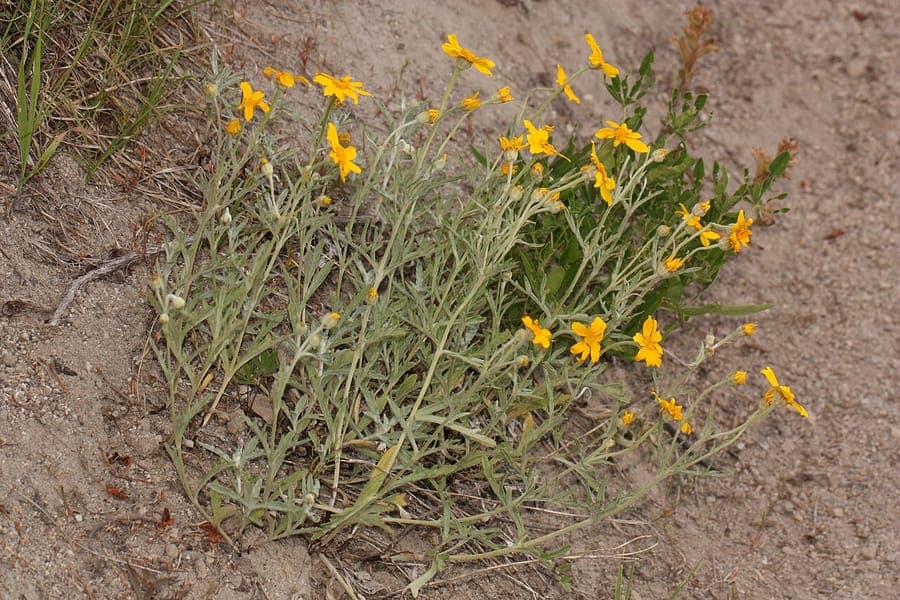
Walter Siegmund (talk) / CC BY-SA 3.0, via Wikimedia Commons
Common Woolly Sunflower: complete guide
Eriophyllum lanatum
Want to see Common Woolly Sunflower: complete guide in your garden?
1 minute, no credit card
Overview
The Common Woolly Sunflower (Eriophyllum lanatum), also known as Oregon Sunshine, is a beautiful North American perennial from the Asteraceae family. This robust flowering plant is renowned for its vivid golden-yellow blooms that appear from May through August. Growing naturally in dry, rocky mountain regions from British Columbia to northwestern Mexico, Eriophyllum lanatum is exceptionally drought-tolerant and pest-resistant. In gardens, it provides cheerful color and attracts pollinators without requiring intensive care.
The elegant yellow flowers and silvery-woolly foliage make this plant an ideal choice for Mediterranean, xeriscape, and rock gardens. With its compact growth habit, the plant remains tidy and neat without demanding hours of maintenance. Gardenworld.app helps you discover similar drought-tolerant plants for your front garden transformation.
Appearance and Bloom
Eriophyllum lanatum grows as a compact, shrubby perennial, typically reaching 20 to 40 centimeters in height and width. The most striking feature is the clusters of bright golden-yellow flowers resembling small sunflowers, usually with 8 to 10 petals. These blooms appear from May through August, attracting butterflies, bees, and other beneficial pollinators.
The foliage is highly distinctive: finely divided leaves covered in silvery-white hairs, creating a woolly, almost downy texture. This characteristic not only gives the plant its common names but also helps minimize water loss in dry habitats. The combination of silvery foliage and golden blooms creates a stunning visual contrast in any garden setting.
Ideal Location
Eriophyllum lanatum thrives best in full sun locations receiving at least six to eight hours of direct sunlight daily. Without adequate light, the plant produces fewer flowers and may become weak and leggy. It is perfectly suited for open garden borders, rock gardens, and xeriscape landscapes where dry conditions are normal.
Avoid shady spots, very moist situations, and areas where water pools. The plant is hardy to at least -20 degrees Celsius, making it suitable for temperate climates throughout Europe. In British, Belgian, and French gardens, Eriophyllum lanatum thrives provided it is not excessively wet during winter.
Soil
Soil must be well-draining and not overly nutrient-rich. Eriophyllum lanatum grows optimally in sandy, gravelly, or loamy soils with a pH between 5.5 and 7.5. Adding rocks, gravel, or sand improves water drainage significantly and prevents problems with roots sitting in moisture too long.
Avoid heavy clay soils without added drainage material. In container cultivation, use a mixture of garden soil with sand and peat in equal proportions so the moisture content remains low while the plant still receives some nutrients.
Free design
Want to see Common Woolly Sunflower: complete guide in your garden? Make a free design now.
Watering
Once established, Eriophyllum lanatum is extremely drought-tolerant thanks to its deep root system. During the growing season (May to October), you need water only once every two weeks, especially during dry spells. Young plants in their first year may require slightly more water to establish good roots.
Avoid overwatering, especially in autumn and winter. Excessive moisture leads to root rot and fungal diseases. When in doubt: too dry is better than too wet. Rainwater is ideal as it contains no extra salts.
Pruning
Eriophyllum lanatum requires minimal pruning. Deadhead spent flowers regularly to encourage continuous blooming and keep the plant tidy. At the end of autumn or early winter, you can cut the plant back to approximately 15 centimeters height. This encourages more compact growth for the following season.
Always immediately remove damaged, diseased, or dead stems. Ensure your pruning tools are clean and sharp to prevent infection.
Maintenance Calendar
- Spring (March-May): Plant new specimens and apply minimal fertilizer. Check for pests. Begin watering if soil becomes dry.
- Summer (June-August): Deadhead spent flowers, water during very dry periods. Enjoy the blooms.
- Autumn (September-October): Reduce watering. Apply minimal fertilizer for autumn hardiness.
- Winter (November-February): The plant dies back above ground. Prune in January to 15 cm height. Water only if exceptionally dry.
Winter Hardiness
Eriophyllum lanatum is extremely hardy, tolerating temperatures down to -20 degrees Celsius. In Britain, the Low Countries, and northern France, plants overwinter without problems. In warmer regions, the plant may remain evergreen and grows more actively during spring.
Regions with very wet winters can be problematic due to moisture accumulation rather than cold. Ensure good drainage and prevent leaf litter from building up against the plant, which can trap moisture.
Companion Plants
Eriophyllum lanatum combines perfectly with other drought-tolerant plants from similar habitats. Group it with lavender, sage, santolina, sedums, gray-leaved artemisia, and dwarf goldenrod. Larger ground-covering species can grow around Eriophyllum lanatum without casting excessive shade.
In rock gardens, combining with saxifrages, phlox, and other alpine plants is very natural. These plant combinations all require the same dry, well-drained growing conditions and often bloom during the same season.
Closing Thoughts
Eriophyllum lanatum is an excellent choice for those seeking a drought-tolerant, low-maintenance perennial with beautiful flowers. Perfect for rock gardens, Mediterranean borders, and any corner of your garden where water is scarce and sun is abundant. Through Gardenworld.app, you can discover similar xeriscape plants to transform your front yard. The silvery foliage and golden blooms provide visual joy throughout the summer season.
With truly minimal effort and maximum visual reward, the Common Woolly Sunflower is a winner for beginner to experienced gardeners. Simply prevent moisture buildup and your plant will provide years of enjoyment.
Want to see Common Woolly Sunflower: complete guide in your garden? Make a free design now.
Upload a photo, pick a style, and get a photorealistic design with plant list in under a minute.
10,000+ gardens designed already
No credit card required


Similar plants
Calendula stellata: complete guide
Calendula stellata
Complete guide to Calendula stellata, the star-flowered marigold from Sicily: location, soil, watering and companion planting tips.
Korean chrysanthemum: complete guide
Chrysanthemum x rubellum
Chrysanthemum x rubellum is a hardy autumn perennial with single pink to copper flowers from August to November. Care and combinations.
Helianthus divaricatus: complete guide
Helianthus divaricatus
Helianthus divaricatus is a North American woodland sunflower with yellow summer blooms, ideal for naturalistic borders and shady edges.