
Krzysztof Golik / CC BY-SA 4.0, via Wikimedia Commons
Black fonio: complete guide
Digitaria iburua
Want to see Black fonio: complete guide in your garden?
1 minute, no credit card
Overview
Digitaria iburua, commonly known as black fonio or black acha, is an annual cereal crop belonging to the family Poaceae, native to West Africa. Its natural range covers Benin, Nigeria, Togo, Niger, Ivory Coast, and Cameroon. The species was formally described by British botanist Otto Stapf in 1915, though it has been cultivated across the West African savanna belt for thousands of years as a traditional food crop. Black fonio is the darker-seeded counterpart to white fonio (Digitaria exilis), and both belong to a group of ancient African cereals that have sustained communities across the Sahel for millennia. The small, dark grains are nutritionally dense and have attracted growing attention in food culture circles in recent years.
For European gardeners, Digitaria iburua occupies an intriguing niche: it is not a standard ornamental, but its elegant finger-like plumes and upright habit give it genuine visual appeal in a collection border or kitchen garden with a global scope. Growing it in temperate climates requires attention to warmth and timing, but the process is straightforward for any gardener familiar with tender annuals. Explore gardenworld.app to design a garden layout that incorporates heritage and international crop species like black fonio alongside more conventional plantings.
Appearance and bloom cycle
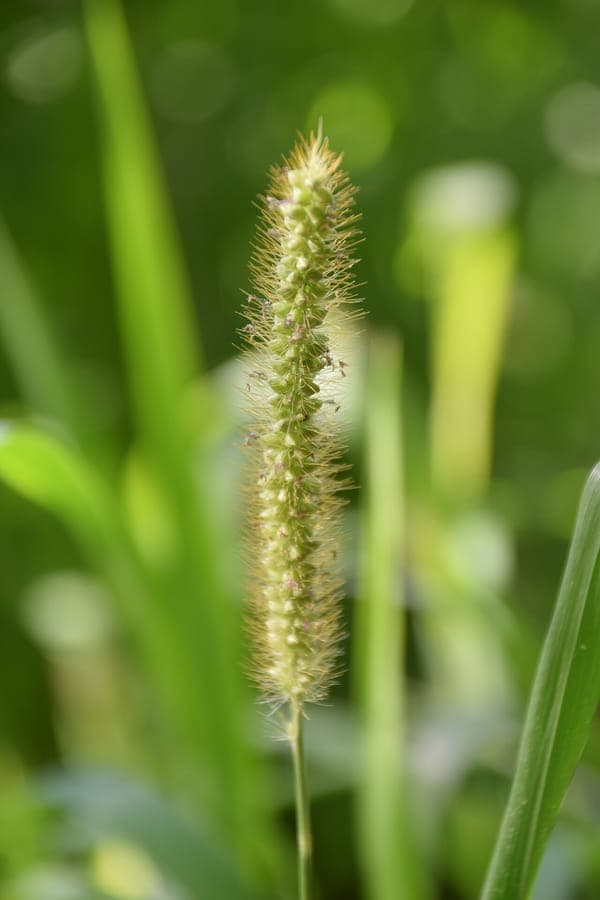
Digitaria iburua is an upright annual that reaches 60 to 120 cm in height under favourable conditions. The stems are slender and hollow, characteristic of the grass family. Leaves are narrow and elongated, 5 to 12 mm wide and 15 to 40 cm long, light to medium green with a slightly rough upper surface and softly hairy underside. The inflorescence - the seed-bearing structure at the top of the stem - consists of multiple slender, finger-like racemes radiating outward from a central point, giving the plant its genus name: Digitaria derives from the Latin digitus, meaning finger. Flowering occurs during the warmest months of summer, roughly July to September in temperate conditions. The seeds are small, very dark - almost black - and hard when ripe. They mature by late summer to early autumn depending on when the plant was established and how warm the season has been.
Ideal location
Black fonio is a tropical crop that requires full sun and warmth. Choose the warmest, most sheltered, most sun-drenched position in the garden: a south-facing bed against a heat-retaining wall is ideal. In the UK, the Netherlands, Belgium, and similar temperate climates, the summers are shorter and cooler than in West Africa, so maximising warmth at the planting site is critical. Avoid shaded or cool, damp corners, which slow growth dramatically and prevent complete seed ripening. The plant tolerates urban environments and light air pollution. Wind protection is helpful - stems can become top-heavy once the plumes develop, and strong winds increase the risk of lodging. gardenworld.app can map the sun exposure and heat accumulation in your garden to identify the most appropriate spots for warm-season tender annuals like black fonio.
Soil
In its natural habitat, black fonio grows in poor to moderately fertile, well-drained soils, including the laterite and sandy loam soils common across the West African savanna. It does not demand rich growing conditions. In the garden, a light, free-draining soil with moderate fertility and a pH between 5.5 and 7.0 works best. Heavy, waterlogged clay is unsuitable. Improve very sandy soils with a modest addition of mature compost, but avoid over-enriching: excessive fertility promotes lush leaf growth at the expense of seed production. This is one of those crops where a lean soil can actually produce better results than a heavily amended bed. Good drainage is more important than high nutrient levels.
Free design
Want to see Black fonio: complete guide in your garden? Make a free design now.
Watering
Black fonio is a savanna crop adapted to alternating wet and dry periods. It tolerates drought far better than cold, waterlogged conditions. During germination and early growth, keep the soil evenly moist to support establishment. Once plants are 20 to 30 cm tall, allow the soil to dry out partially between watering sessions. During seed setting - typically August and September in temperate gardens - keep conditions on the dry side to encourage good grain development. In dry periods, water once a week at 5 to 8 litres per square metre. In wet summers, additional watering is rarely necessary. Overwatering increases the risk of lodging, where stems become too heavy and tip over, especially once the plumes are fully formed.
Pruning
As an annual, black fonio does not require conventional pruning. Allow the plumes to develop fully and remain on the plant until the seeds are completely ripe - dark, hard, and firmly attached. Cut the seed heads when ready and dry them further in a well-ventilated, dry space. For ornamental use in the collection garden, the plumes can be left standing as dried material: they retain their decorative quality for months after ripening. At the end of the season, remove all plant debris to prevent self-seeding in unintended locations.
Maintenance calendar
- January: no action; plant is annual and has completed its cycle
- February: seed ready for early indoor sowing if facilities allow
- March: sow indoors at a minimum soil temperature of 20 degrees Celsius
- April: grow on in a warm greenhouse or on a bright windowsill; begin hardening off
- May: plant out after the last frost date, in a warm sheltered spot
- June: water moderately and regularly; weed around plants
- July: flowering begins; allow soil to dry between waterings for best plume development
- August: seed heads forming; keep on the dry side to encourage good grain set
- September: harvest seed heads when grains are dark and hard
- October: remove all plant debris; store seed in a cool, dry location
- November: clear the bed; lightly work the soil
- December: rest; plan next season's sowing
Winter hardiness
Digitaria iburua has no winter hardiness in the European sense. It is a tender tropical annual that completes its life cycle within a single season and survives winter only as seed. In temperate climates it is grown as a summer annual: seed is started indoors in March or April and planted out after the last frost, typically from mid-May onward in northern Europe. The quality of the growing season - particularly summer warmth and sunshine - strongly influences how well the plant develops and whether seed ripens fully. In cool summers, grain maturation may be incomplete. USDA hardiness zones are not applicable to this species as a perennial plant.
Companion plants
In a collection garden focused on heritage or international crops, black fonio combines well with other warm-season annuals from similar climatic origins. Good companions include Cenchrus americanus (pearl millet, 100-150 cm), Coix lacryma-jobi (Job's tears, 100-150 cm), and Sorghum bicolor (80-200 cm). Smaller culinary plants from tropical traditions also work well in the same bed, such as Ocimum gratissimum (African basil, 30-60 cm) or Abelmoschus esculentus (okra, 60-150 cm). The fine plumes of black fonio contrast well with broad-leaved tropical plants and with flowering annuals. For a border that tells a story about global food culture, gardenworld.app can help you design a visually coherent and botanically interesting planting scheme.
Closing
Black fonio is not a conventional garden plant, and that is precisely what makes it worthwhile for the curious gardener. It connects West African agricultural heritage to the contemporary collection garden, offering visual appeal, historical depth, and botanical interest in one compact annual. Seed is available from specialist ethnobotanical suppliers and heritage seed libraries - standard garden centres typically do not stock it, but online specialists can supply it reliably. With the warmest possible position, a free-draining soil, and careful timing of the sowing, Digitaria iburua can be a genuinely rewarding and distinctive addition to a summer garden. Use gardenworld.app to plan how this and other heritage crops can fit into a larger, coherent garden design.
Want to see Black fonio: complete guide in your garden? Make a free design now.
Upload a photo, pick a style, and get a photorealistic design with plant list in under a minute.
10,000+ gardens designed already
No credit card required


Similar plants
Hairy crabgrass: complete guide
Digitaria sanguinalis
Discover everything about Hairy crabgrass (Digitaria sanguinalis): growth, identification, and management strategies for a healthy lawn.
Cenchrus americanus: complete guide
Cenchrus americanus
Learn how to grow and care for Cenchrus americanus in your garden with practical tips.
coix lacryma jobi: complete guide
Coix lacryma-jobi
A beautiful ornamental plant for your garden. Learn how to grow and care for this plant with practical tips.