
Consultaplantas / CC BY-SA 4.0, via Wikimedia Commons
Dianthus rupicola: complete guide
Dianthus rupicola
Want to see Dianthus rupicola: complete guide in your garden?
1 minute, no credit card
Overview
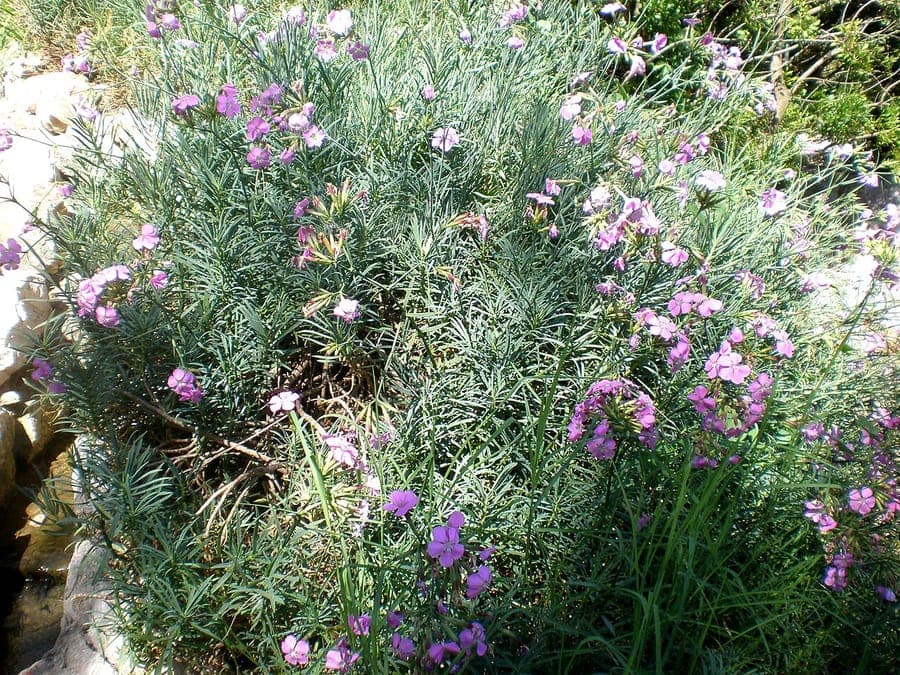
Dianthus rupicola is a beautiful Mediterranean carnation originating from southern Italy and Sicily. This robust, drought-tolerant plant is ideal for rock gardens, dry scree areas, and Mediterranean gardens. With its graceful, pink flowers and grey-green foliage, Dianthus rupicola brings southern charm to your garden.
The plant forms low, compact rosettes and grows only 15 to 25 centimeters high. Dianthus rupicola is very winter hardy and thrives excellently in full sun with perfect drainage.
Appearance and bloom
The leaves of Dianthus rupicola are narrow, linear, and grey-green, giving the plant a soft, refined appearance. The plant forms dense rosettes with a robust, compacted form.
The flowers are the highlight. They appear on sturdy, upright stems above the foliage in summer months. The flowers are typically pink to bright pink, sometimes with light fringes or toothed margins. They have a subtle fragrance. The flowering period runs from June through August, providing long-lasting color. The plant also produces small fruits after flowering.
Ideal location
Dianthus rupicola requires full sun and well-ventilated places. At least 7 to 8 hours of direct sunlight daily is essential. In partial shade the plant blooms less abundantly.
This plant is perfect for steep rocky slopes, Mediterranean dry gardens, and rock gardens. With perfect drainage it also grows well in containers on patios or balconies. Wind and air circulation are beneficial for health. Protection from damp, rainy downpours is desired.
Soil
Use very well-draining, rocky soil. Dianthus rupicola thrives best in lean, poor soil and accepts calcareous soils well. Add plenty of gravel, perlite, and sand to potting mix.
Drainage is absolutely critical. In heavy clay soils add lots of sand, scree, and gravel. In container culture use special cactus mix with extra perlite. The plant grows better in poor soil than in overfed conditions.
Free design
Want to see Dianthus rupicola: complete guide in your garden? Make a free design now.
Watering
Dianthus rupicola is very drought-tolerant. Water only when soil feels dry several centimeters deep. Overwatering directly leads to root rot.
During growing season you may water slightly more regularly, but always cautiously. In autumn and winter barely water. In containers check moisture levels regularly as drainage is critical here.
Pruning
Dianthus rupicola requires minimal pruning. Remove only spent flowers (deadheading) to encourage blooming and keep the plant neat. This does not involve complicated pruning operations.
Remove very old, woody stems at ground level in early spring for renewal. The plant is otherwise self-maintaining and requires minimal intervention.
Maintenance calendar
Spring: Remove dead winter material. Begin deadheading. Summer: Continue deadheading stimulates blooming. Water very cautiously in dry weather. Autumn: Bloom continues. Reduce watering. Winter: Very minimal maintenance. Protect from extreme wet conditions.
Winter hardiness
Dianthus rupicola is hardy to about -10 to -15 degrees Celsius. In the Netherlands it grows best in warm, protected microclimates. In harsh winters frost damage can occur.
In southern Europe outdoor overwintering occurs without issues. Ensure perfect drainage in wet winters to prevent root rot. Young plants can better overwinter indoors in containers in very cold regions.
Companion plants
Dianthus rupicola grows well with other Mediterranean, dry plants such as Sedum, Sempervivum, Armeria, and Silene. Perfect in rock gardens with Saxifraga and Alpine flax. Also combine with low-growing Lavandula and Thymus.
In dry border schemes pairs well with Cistus, Genista, and other Mediterranean shrubs. For authentic South European look, group multiple specimens together in sunny rocky corners.
Closing thoughts
Dianthus rupicola is a reliable, drought-tolerant carnation that blooms for years. With perfect drainage, minimal water and feeding, and full sun you will enjoy this rocky beauty for a long time.
On gardenworld.app you can find inspiration for creating Mediterranean rocky garden sections.
Want to see Dianthus rupicola: complete guide in your garden? Make a free design now.
Upload a photo, pick a style, and get a photorealistic design with plant list in under a minute.
No credit card required


Similar plants
Dianthus karami: complete guide
Dianthus karami
Dianthus karami is a rare Lebanese mountain pink with fringed pink blooms on limestone cliffs, ideal for rock gardens and troughs.
Sicilian pink: complete guide
Dianthus siculus
Discover Dianthus siculus, an elegant purple bloomer from Sicily. Cultivation, June-September flowering and garden combinations.
Alpine mouse-ear chickweed: complete guide
Cerastium pedunculatum
Full growing guide for Cerastium pedunculatum: ideal location, soil, watering, winter hardiness, and companion plants for rock gardens.