
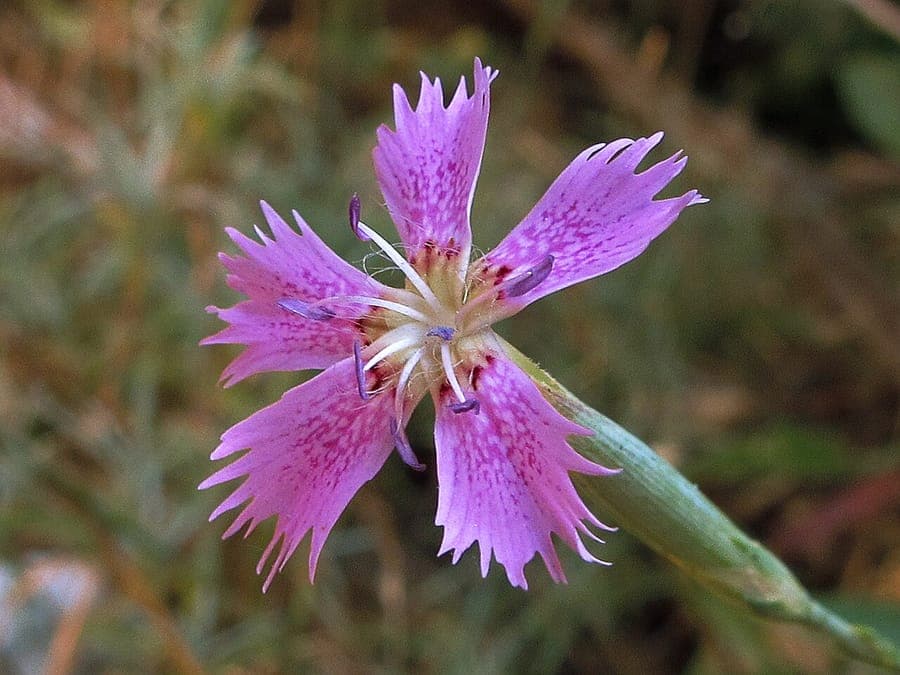
jacilluch / CC BY-SA 2.0, via Wikimedia Commons
Dianthus lusitanus: complete guide
Dianthus lusitanus
Want to see Dianthus lusitanus: complete guide in your garden?
1 minute, no credit card
Overview
Dianthus lusitanus is a charming, compact carnation originating from the Iberian Peninsula and North Africa. This robust plant is known for its delicate, pink flowers that appear throughout summer and autumn. With its built-in drought tolerance and minimal maintenance requirements, Dianthus lusitanus is ideal for rock gardens, alpines, dry gardens, and containers.
The plant forms a low mat-forming growth habit with hazel-grey greenery. Dianthus lusitanus thrives in full sun and tolerates dry conditions easily.
Appearance and bloom
The leaves of Dianthus lusitanus are narrow, linear, and grey-green in color, giving the plant a fine, elegant texture. The plant forms compact rosettes and grows very low, reaching only 15 to 30 centimeters high.
The flowers are the highlight of this plant. They appear on long, slender stems above the foliage. The flowers are pink to salmon-red, sometimes with light fringes or teeth on the petal edges. They appear abundantly from late spring deep into autumn, providing a very long bloom period. The flowers have a subtle, pleasant fragrance.
Ideal location
Dianthus lusitanus requires full sun, at least 6 to 8 hours of direct sunlight daily. In shady locations the plant grows weak and blooms sparingly. Therefore, place on a warm, sunny location.
The plant is very suitable for steep slopes, rock gardens, and scree slopes. With good drainage it also thrives in containers, troughs, and pots on patios. Wind and air circulation are beneficial for health.
Soil
Use very well-draining, sandy or gravel-based soil. Dianthus lusitanus has very minimal nutrient requirements. Actually, a poor, dry soil is preferred over nutrient excess.
Drainage is essential. In heavy clay soils add plenty of sand, gravel, and perlite. For containers use special cactus and succulent mix with added perlite. The plant tolerates calcareous soil well too.
Free design
Want to see Dianthus lusitanus: complete guide in your garden? Make a free design now.
Watering
Dianthus lusitanus is very drought-tolerant. Water very cautiously, only when soil is dry several centimeters deep. During growing season (spring-summer) you may water slightly more frequently than winter.
Overwatering is the prime cause of death. The plant tolerates drought better than wetness. In containers check moisture level regularly. No watering needed during rain or wet periods.
Pruning
Dianthus lusitanus requires minimal pruning. Remove only spent flowers (deadheading) to encourage new bloom and extend flowering period. This also helps keep the plant compact and neat.
Remove very old, woody stems at ground level for renewal. This is best done in early spring. The plant tolerates light pruning, but minimal intervention is preferred.
Maintenance calendar
Spring: Remove dead material. Start regular deadheading. Summer: Continue deadheading stimulates blooming. Water cautiously in extreme dry periods. Autumn: Bloom continues. Reduce watering carefully. Winter: Minimal maintenance. Water only in extreme drought.
Winter hardiness
Dianthus lusitanus is hardy to about -10 to -15 degrees Celsius. In the Netherlands it grows best as a half-winter plant in warm, protected locations. In harsh winters damage can occur.
To survive in northern climate, plant in dry microclimate with good drainage. Container specimens overwinter indoors in cool, dry location.
Companion plants
Dianthus lusitanus combines beautifully with other Mediterranean, dry-location plants such as Sedum, Sempervivum, Armeria, and Thymus. Perfect for rock gardens with Saxifraga, Alchemilla, and Geranium.
In dry border schemes pairs well with Lavandula, Cistus, and low-growing Deutzia or Spiraea. Group multiple specimens together for dramatic effect in scree or rocky areas.
Closing thoughts
Dianthus lusitanus is a reliable, drought-tolerant flowering plant that blooms for years. With minimal water and care requirements and very well-drained soil you will enjoy a beautiful, flower-rich display in dry garden corners.
On gardenworld.app you can find inspiration for integrating Mediterranean drought-tolerant plants into front yard designs.
Want to see Dianthus lusitanus: complete guide in your garden? Make a free design now.
Upload a photo, pick a style, and get a photorealistic design with plant list in under a minute.
No credit card required


Similar plants
Dianthus karami: complete guide
Dianthus karami
Dianthus karami is a rare Lebanese mountain pink with fringed pink blooms on limestone cliffs, ideal for rock gardens and troughs.
Sicilian pink: complete guide
Dianthus siculus
Discover Dianthus siculus, an elegant purple bloomer from Sicily. Cultivation, June-September flowering and garden combinations.
Alpine mouse-ear chickweed: complete guide
Cerastium pedunculatum
Full growing guide for Cerastium pedunculatum: ideal location, soil, watering, winter hardiness, and companion plants for rock gardens.