
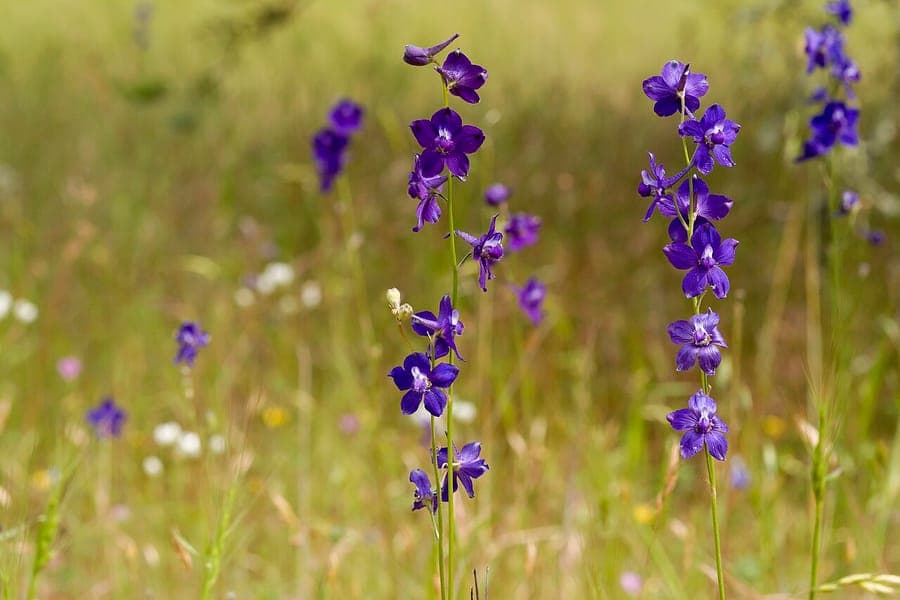
Patrick Alexander from Las Cruces, NM / CC0, via Wikimedia Commons
Delphinium hansenii: complete guide
Delphinium hansenii
Want to see Delphinium hansenii: complete guide in your garden?
1 minute, no credit card
Overview
Delphinium hansenii, known as Hansen's larkspur or eldorado larkspur, is a rare and exceptional alpine plant found exclusively in the high mountains of California. This plant is far less known than its more common relatives, but offers real treasure for those willing to invest the effort to grow it.
This is a plant for gardeners who love rarities and are willing to provide the extra attention this alpine flower demands. In return, you gain a unique plant that distinguishes your garden from thousands of others with standard cultivars.
This article provides complete guidelines for successfully growing this rare California alpine flower in your European garden.
Appearance and Bloom
Delphinium hansenii grows as a compact plant, typically 30 to 60 cm tall. It features finely divided, almost fern-like leaves that are gray-green colored and have an elegant, delicate appearance.
The flowers are spectacular: densely packed spiral-arranged flower spikes with intensely blue to purple flowers. The flowers display the characteristic spur structure of delphiniums and create striking geometric bloom patterns.
The flowering period runs from July to September, which is considerably later than many other delphiniums. This makes it valuable for season extension.
Ideal Location
Delphinium hansenii requires full sun and very well-draining soil. This is an alpine plant that dislikes wet feet.
In Dutch gardens, you'd best plant this species in a sunny, warm microclimate, possibly at the base of a south-facing stone wall or in raised beds where drainage is optimal.
Wind protection isn't essential because the plant grows low, but light shelter is welcome.
Soil
Delphinium hansenii absolutely requires very well-draining soil. Alpine grit, coarse sand, and small stones should be mixed with minimal amounts of fertile soil.
Provide approximately 1 part grit, 1 part sand, and 1 part loam for the optimal mixture. Add no extra compost unless your soil is exceptionally poor.
The pH preference is around neutral to slightly acidic (pH 6-7).
Watering
Delphinium hansenii prefers dryness after establishment. During the first growing season, you must water regularly until the plant is well-established.
Once established, your plant needs very little extra water. Overwatering is the primary cause of death for this plant.
In very dry summers you can water sporadically, but always ensure the soil can dry completely between waterings.
Free design
Want to see Delphinium hansenii: complete guide in your garden? Make a free design now.
Pruning
Pruning is typically unnecessary for Delphinium hansenii. The plant grows naturally compact and prefers neglect.
When flowers appear you can harvest them for vases, though it's better to leave them on the plant as they're ecologically valuable for insects.
Maintenance Calendar
Spring (April-May): Plant seedlings or young plant material in very well-draining soil. Ensure full sun.
May-June: Plant establishes. Minimal watering; allow soil to remain mostly dry.
June-July: Growth period, but still little support needed.
July-September: Flowering period. Plant flowers profusely. No special care needed.
September-October: Flowering ends. Plant can set seed or be cleaned.
November-March: Plant rests. In Dutch winters, your California alpine plant will likely die unless you grow it in protected conditions.
Winter Hardiness
Delphinium hansenii is not winter-hardy in Dutch climate. This is fundamentally the major challenge with growing this plant in Europe.
You have three options:
- Grow the plant in pots and place in a dry, cool location in winter (cellar, cold frame, greenhouse)
- Heavily protect the plant in winter with straw and glass
- Treat it as annual and resow each year
Availability and seed preservation is probably the practical solution.
Companion Plants
Delphinium hansenii works well in alpine troughs, in raised beds, or in rock gardens where its delicate appearance comes across beautifully. Plant it with other alpine flowers like alpine phlox or alpine forget-me-nots.
Avoid planting with vigorous growers that might overshadow it.
Closing Thoughts
Delphinium hansenii is for the true plant enthusiast. This is not the plant for beginners or for those who want their garden plants to fend for themselves.
But for those willing to invest attention and care, this plant offers something special. It's a genuine alpine premiere, a true jewel from the high Sierras.
Seed suppliers sometimes have this plant, but it's rare. Search online listings or contact California plant societies for seed or propagation material.
Worth the extra effort? Absolutely. This is the plant that underscores your gardening identity: someone who dares venture beyond usual paths.
Enjoy this extremely rare flower. With patience, understanding care, and likely considerable experimentation, you'll succeed in growing this alpine plant. And when you see flowers, all the effort will be worthwhile.
Want to see Delphinium hansenii: complete guide in your garden? Make a free design now.
Upload a photo, pick a style, and get a photorealistic design with plant list in under a minute.
No credit card required


Similar plants
Drummond's anemone: complete guide
Anemone drummondii
Discover Drummond's anemone (Anemone drummondii): a silvery-grey mountain plant for cool rock gardens and alpine troughs.
Korean clematis: complete guide
Clematis serratifolia
Clematis serratifolia is a hardy climber with fragrant yellow bell flowers in August-September. Pruning group 3, location and care tips.
Aquilegia brevistyla: complete guide
Aquilegia brevistyla
Discover Aquilegia brevistyla, the elegant North American columbine. Growing tips, shade tolerance, and design ideas for woodland and shadowed gardens.