
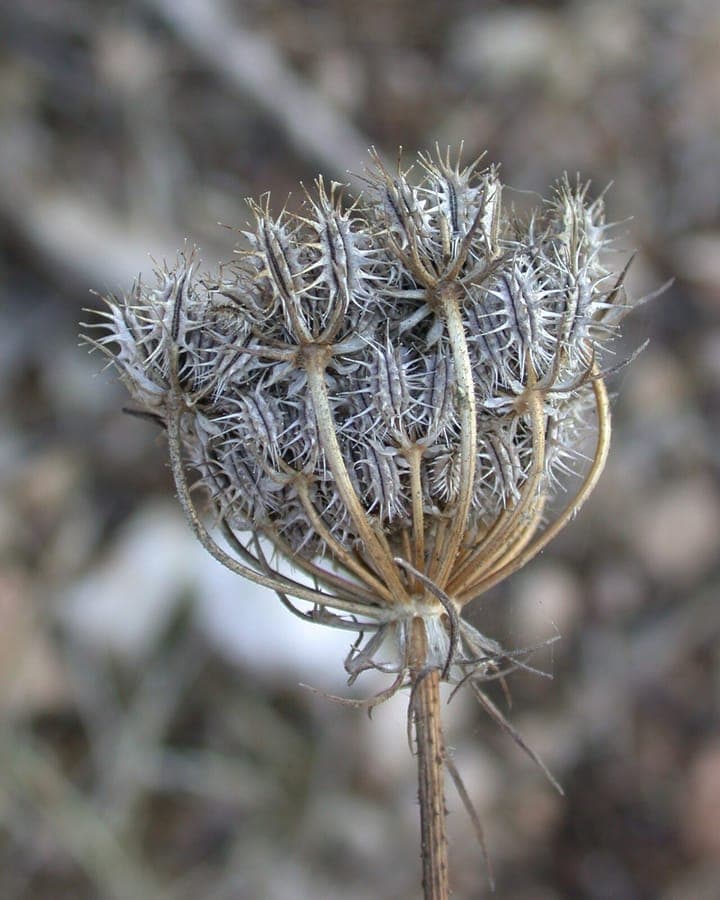
Gideon Pisanty (Gidip) / CC BY 3.0, via Wikimedia Commons
Brotero's carrot (Daucus broteri): complete guide
Daucus broteri
Want to see Brotero's carrot (Daucus broteri): complete guide in your garden?
1 minute, no credit card
Overview
Daucus broteri, commonly known as Brotero's carrot, is a little-known but botanically interesting member of the carrot family (Apiaceae), native to southeastern Europe and western Iran. The species was described by the Italian botanist Michele Tenore in 1830 and named in honour of Felix Avellar Brotero, the pioneering Portuguese botanist who laid the foundations of Iberian plant taxonomy in the eighteenth and early nineteenth centuries. The species is closely related to the familiar wild carrot (Daucus carota) that grows along roadsides and on dry, chalky ground across much of Europe.
In the wild, Daucus broteri is found in Albania, Bulgaria, Cyprus, the East Aegean islands, Greece, Iran, Iraq, Italy, Crete, Lebanon, Syria, Palestine, Turkey, and the former Yugoslavia. This wide distribution across the warmer, drier parts of southeastern Europe and the Near East reveals a plant adapted to summer drought, open terrain, and calcareous soils. On gardenworld.app you will find naturalistic garden designs where plants like Daucus broteri contribute their airy white umbel flowers to pollinator-friendly, Mediterranean-style planting schemes.
The carrot family is one of the most ecologically important plant families for garden wildlife. The open, flat umbel flowers of Daucus broteri are accessible to a vast range of pollinators - bees, hoverflies, beetles, and butterflies all visit them readily. Growing this plant is a simple, low-effort way to increase the wildlife value of any garden.
Appearance and bloom cycle
Daucus broteri closely resembles its cousin Daucus carota in general structure. It is an upright, herbaceous plant reaching 30 to 80 cm in height depending on conditions. The stems are angular, stiff, and covered with rough, bristly hairs - a characteristic of the broader Daucus group. The leaves are pinnate to bipinnate, finely divided, and give the plant a feathery, elegant texture quite unlike the bold-leafed plants that tend to dominate traditional borders.
The inflorescence is the classic compound umbel of the Apiaceae: a flat to slightly dome-shaped platform formed by a cluster of smaller umbellets, each bearing numerous tiny white flowers. As with Daucus carota, the central flower of the main umbel is sometimes dark purple or near-black, a feature thought to attract insect pollinators by mimicking a resting fly or bee. Flowering typically occurs from late spring through summer - June to August in northern European garden conditions.
After flowering, the plant sets spiny fruits (mericarps) that cling to passing animals and clothing, contributing to seed dispersal. In the wild, this is an effective strategy; in the garden it means the plant can spread modestly to new areas if conditions suit.
Ideal position
This Mediterranean species demands a warm, sunny position. In its native range it grows on open slopes, disturbed ground, roadsides, and dry, stony or chalky soils where competition from larger plants is limited. In the garden, full sun is the priority; light shade is tolerated but results in taller, weaker stems and fewer flowers.
Daucus broteri is well suited to wildflower gardens, dry gravel gardens, south-facing slopes, and Mediterranean-style borders. Its light, airy texture makes it a useful filler plant in the middle of a border, softening the transitions between bolder-leafed plants. Pair it with other Mediterranean species that share its preference for heat and good drainage for a coherent, low-maintenance planting.
Avoid planting Daucus broteri in densely planted areas where it will be crowded out by more competitive neighbours. It needs light reaching down to the base of the plant and open conditions where its fine stems can stand upright without being pushed about. A slightly bare, lean patch is its ideal home.
Soil requirements
Poor, well-drained soil is the key requirement. In its natural habitat, Daucus broteri grows on calcareous, stony, or sandy soils that heat up quickly and drain rapidly after rain. It has no need for fertile or enriched ground; in fact, overly rich soil encourages leafy growth at the expense of flowering and makes plants floppy and prone to toppling.
On heavy clay soils, incorporate coarse grit to improve drainage. A lightly alkaline to neutral pH is preferred, reflecting the calcareous soils of its native range, though the plant tolerates mildly acidic conditions. Never add slow-release fertiliser or rich compost to the planting area. Sandy or loamy, open-structured soils are ideal.
Free design
Want to see Brotero's carrot (Daucus broteri): complete guide in your garden? Make a free design now.
Watering
Once established, Daucus broteri is highly drought tolerant - a necessary quality for a plant adapted to the dry summers of the eastern Mediterranean and Near East. In its native range it survives long, hot, waterless summers with little difficulty. In garden conditions in northwestern Europe, supplemental watering is usually unnecessary under normal rainfall patterns.
During the germination and early establishment phase, keep the seed bed or potting mix lightly moist to ensure reliable germination. Once seedlings reach 5 to 10 cm, reduce watering sharply. Overwatering on heavy or poorly drained soil leads to root rot and can kill young plants surprisingly quickly.
In containers, allow the compost to dry out significantly between waterings. Water at the base of the plant, never over the flowers or foliage, to minimise the risk of fungal disease. Morning watering is preferable to evening.
Pruning
As an annual or biennial, Daucus broteri requires no pruning in the conventional sense. During the growing season, simply let the plant develop naturally. After flowering, if self-seeding is desired, leave the ripening seed heads in place until they have fully dispersed. The seeds cling to clothing and animal fur, so if you want to control where the plant spreads, harvest the heads just before full maturity.
At the end of the season, once seeds have set, remove the dried remains. There is no need for any pruning during the growing season unless you want to remove damaged or diseased material. If growing as a biennial, remove flower stems in the first year to direct energy into root development; in the second year allow the plant to flower and seed freely.
Maintenance calendar
- January - February: No action needed. Protect any self-seeded seedlings from hard frost with a light layer of fine grit.
- March - April: Sow seed directly where plants are to flower, or start indoors at 15 to 20 degrees Celsius. Keep seed bed lightly moist.
- May: Transplant indoor-raised seedlings to the final position after the last frost. Thin direct-sown seedlings to 20 to 30 cm apart.
- June - August: Flowering period. No care needed. Leave plants open for pollinator access.
- September: Seeds ripen. Leave seed heads for self-seeding or harvest for storage in a cool, dry place.
- October - November: Remove spent plants unless retaining for winter structure or bird feeding.
- December: Rest. Protect any autumn-germinated seedlings if frost is severe.
Winter hardiness
Daucus broteri is an annual to biennial plant and does not survive winter as a mature living plant. Seeds in the soil tolerate light frost reasonably well and may germinate the following spring. In regions with harsh winters (USDA zones 5 to 6), harvest ripe seed in autumn and store it dry and cool for spring sowing indoors.
In mild climates (USDA zones 7 to 9), which correspond to much of western Europe, the species behaves reliably as a biennial or self-seeding annual, returning year after year from self-sown seedlings in suitable spots. The plant's native range - from southeastern Europe to western Iran - indicates a tolerance for summer heat and mild winters rather than deep continental cold.
Companion plants
The white umbel flowers and feathery foliage of Daucus broteri suit a wide range of naturalistic planting partners:
- Lavandula angustifolia (English lavender): purple flower spikes against white umbels - a classic Mediterranean combination.
- Origanum vulgare (common marjoram): same requirements, same pollinator value, naturally occurring in similar habitats.
- Foeniculum vulgare (fennel): similar feathery texture in the border, with gold-yellow umbels providing contrast.
- Echinacea purpurea (purple coneflower): bold purple flowers alongside delicate white umbels for a naturalistic summer border.
- Verbascum thapsus (great mullein): tall yellow flower spikes providing vertical interest next to the more horizontal umbel structure.
Avoid pairing Daucus broteri with moisture-loving plants or those that cast heavy shade - it needs open conditions, light, and good drainage to perform its best.
Closing thoughts
Daucus broteri may not be the showiest plant in the garden, but it delivers something increasingly valuable: a genuine contribution to garden ecology, an airy, naturalistic texture, and almost zero maintenance once established. The white umbels light up a summer border and bring a constant stream of pollinators throughout the flowering season.
If you are planning a wildflower garden or a Mediterranean-style front garden, visit gardenworld.app to explore planting combinations that make the most of low-maintenance, wildlife-friendly species like Daucus broteri. The design tools on gardenworld.app let you visualise and plan your planting before a single seed is sown.
Want to see Brotero's carrot (Daucus broteri): complete guide in your garden? Make a free design now.
Upload a photo, pick a style, and get a photorealistic design with plant list in under a minute.
10,000+ gardens designed already
No credit card required


Similar plants
Whorled carrot: complete guide
Daucus involucratus
Daucus involucratus is a Mediterranean umbellifer with white flower heads framed by lacy bracts. Growing this gravel garden gem.
Daucus muricatus: complete guide
Daucus muricatus
Daucus muricatus, the spiny wild carrot, grows wild on Mediterranean coasts. Discover sowing, June-July bloom, and wildflower meadow use.
Daucus pumilus: complete guide
Daucus pumilus
Daucus pumilus is a dwarf wild carrot relative with white lacy umbels, thriving on dunes and coastal rock in poor, fast-draining soil.