
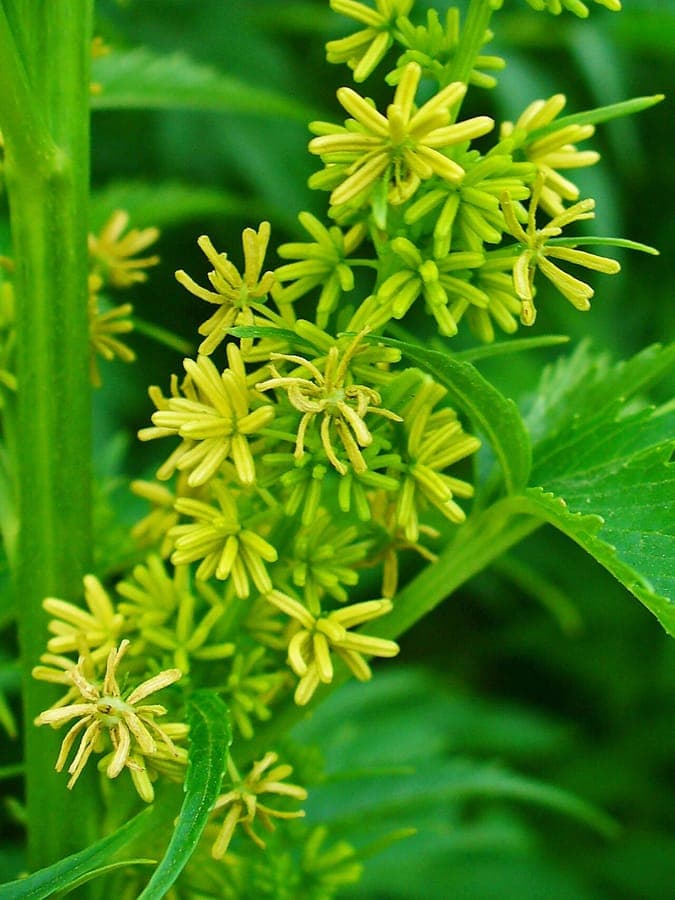
H. Zell / CC BY 3.0, via Wikimedia Commons
Datisca cannabina: complete guide
Datisca cannabina
Want to see Datisca cannabina: complete guide in your garden?
1 minute, no credit card
Overview
Datisca cannabina, known by the vernacular name Akalbir, is a fascinating plant originating from the Mediterranean region through Central Himalaya. This member of the Datiscaceae family is prized for its delicate, fern-like foliage and attractive pale yellow flowers. It is a plant that captures attention in gardens for its unusual appearance and capacity to thrive in warm, dry conditions.
The plant has a long history of use and distribution, originally found across Afghanistan, Cyprus, Iran, Iraq, Kyrgyzstan, Crete, Lebanon-Syria, Nepal, North Caucasus, Pakistan, Palestine, Tajikistan, Transcaucasus, Turkey, Uzbekistan, and West Himalaya. It has also been introduced to Vietnam.
Appearance and Bloom
Datisca cannabina is recognized for its delicate, finely divided leaves that give the plant an airy, lace-like appearance. The foliage is pinnately dissected and resembles fine filigree, providing the plant with an elegant, graceful form. The flowers are small and pale yellow, arranged in loose racemes. They appear primarily during the growing season and attract numerous insects.
The plant reaches a mature size of 60-120 centimeters in height, depending on growth conditions and soil fertility. Under optimal conditions, it may grow even larger. The fruit structure is interesting - dry seed capsules develop after flowering.
Ideal Location
Datisca cannabina thrives best in full sun to partial shade positions. The plant needs at least 6 hours of direct sunlight daily for optimal growth and flower production. In warm climates, it can tolerate some afternoon shade, particularly during extremely hot periods.
Ensure the plant is positioned where air circulation is good, as this helps prevent moisture-related problems. The plant excels in hot, dry positions that might deter other species. This makes it ideal for xeric (drought-tolerant) garden designs.
Soil
Soil must be well-draining - this is crucial for Datisca cannabina success. Sandy loam or stony loam is preferred. The plant cannot tolerate waterlogging and will rot in heavy clay soils.
A slightly acidic to neutral pH range (approximately 6.0-7.5) is recommended. Add compost or other organic material when planting to improve soil structure and drainage. The plant is frugal regarding nutrition, though moderate feeding during the growing season can help.
Watering
Once established, Datisca cannabina is highly drought-tolerant. During the first growing season, water regularly until the plant is well-established (approximately 1-2 times weekly, depending on weather). Once past this stage, watering frequency can be significantly reduced.
Adult plants need water only during extended dry periods. Overwatering is far more damaging than underwatering for this plant. In winter, particularly in temperate climates, watering is unnecessary.
Free design
Want to see Datisca cannabina: complete guide in your garden? Make a free design now.
Pruning
Pruning is generally minimal for Datisca cannabina. After flowering, spent flowers can be removed to prevent seed development and keep the plant tidy. In spring, dead or damaged branches can be removed.
If the plant becomes too large, it can be cut back after flowering, though this is usually unnecessary if the correct growing position is chosen. The plant forms an attractive shape naturally and requires little shaping.
Maintenance Calendar
January-February: Check for winter damage; pruning not needed in temperate climates.
March-April: Soil preparation; apply balanced mulch; feeding may be applied.
May-July: Regular watering until established; enjoy blooming period.
August-October: Reduce watering; deadhead spent flowers.
November-December: Minimal watering; no special activities needed.
Winter Hardiness
Datisca cannabina is considered moderately hardy in temperate climates. It is most suited to zones with mild winters (USDA zones 8-11). In cold regions, it should be protected or grown as an annual.
In temperate climates with frost, mulching with 5-8 cm of dry organic material helps protect the root zone. In severe cold regions, grow the plant in containers and move indoors during winter.
Companion Plants
Datisca cannabina grows well with other drought-tolerant plants with similar requirements:
- Santolina (Lavender Cotton)
- Salvia species (drought types)
- Helichrysum (Strawflower)
- Cistus (Rock Rose)
- Phlomis (Jerusalem Sage)
These combinations work well in Mediterranean or xeric gardens. Avoid combining with plants requiring significant water.
Closing Thoughts
Datisca cannabina is a distinctive plant for those seeking something different in their garden. The elegant, feathery foliage and pale yellow flowers offer a subtle but attractive addition to southern or Mediterranean gardens. With minimal care once established, it is ideal for dry climates and ecological gardens.
Find Datisca cannabina plant material at specialized nurseries and online suppliers. Seeds are also available online. Check online retailers for availability, or visit gardenworld.app for more plant recommendations.
With the right location and attention during the first season, this plant will reward you for years. Its drought tolerance and unusual appearance make it a sustainable and attractive choice for modern gardens.
Want to see Datisca cannabina: complete guide in your garden? Make a free design now.
Upload a photo, pick a style, and get a photorealistic design with plant list in under a minute.
No credit card required


Similar plants
Acer pycnanthum: complete guide
Acer pycnanthum
Acer pycnanthum, the Japanese swamp maple, is a fast-growing tree with early red flowers and brilliant autumn color, ideal for damp garden settings.
Freeman maple: complete guide
Acer × freemanii
Everything about the Freeman maple (Acer x freemanii): a fast-growing shade tree with spectacular autumn colour for large gardens.
Silver vine: complete guide
Actinidia polygama
Discover silver vine (Actinidia polygama): a hardy climbing plant with silvery foliage, loved by gardeners and cats alike.