
Hectonichus / CC BY-SA 3.0, via Wikimedia Commons
Mediterranean-marigold: complete guide
Coleostephus myconis
Want to see Mediterranean-marigold: complete guide in your garden?
1 minute, no credit card
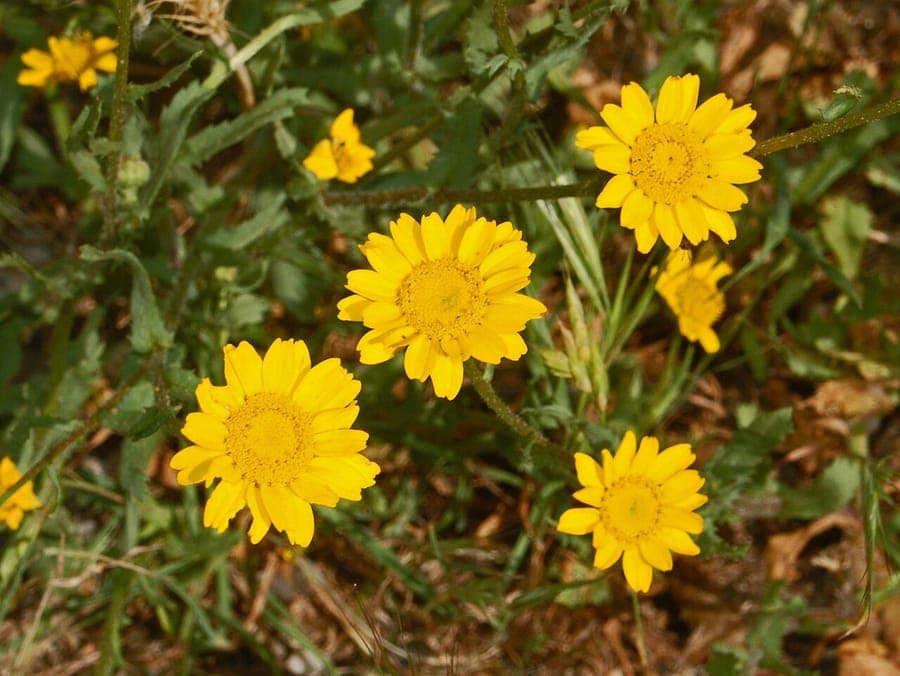
The Mediterranean-marigold is a charming, low-growing shrub native to Mediterranean regions spanning southern Europe, north Africa and parts of Asia. This delightful plant belongs to the Asteraceae family and produces bright yellow flowers that bloom prolifically over extended periods from spring into early summer. With its compact habit and drought-tolerant nature, it proves ideal for Mediterranean or xeriscape gardens throughout warm regions. The plant is also called yellow false daisy or Mykonos goldflower in various languages and remains very popular in South European gardens.
The plant grows thirty to fifty centimetres tall and forms naturally rounded, dense mounds of vegetation. The foliage is finely dissected and green, creating delicate textural quality that looks attractive from all angles. The flowers are pure yellow, measuring about two to three centimetres in diameter and appearing in clusters from April through June with potential continued blooming into July in cooler seasons. These flowers attract abundant pollinators and beneficial insects bringing considerable wildlife activity.
Success with Mediterranean-marigold begins absolutely with full sunlight continuously throughout the day. Position plants where they receive minimum seven to eight hours direct sun daily minimum required. This plant struggles significantly in shade and grows very poorly without adequate illumination for photosynthesis functioning. In extremely hot climates above thirty-five degrees Celsius, light afternoon shade in hottest months helps prevent heat stress issues.
Soil requirements prove undemanding and uncomplicated: well-draining, light, nearly poor soil is actually ideal for this species. This plant actually thrives in depleted soils and rocky terrain where other plants struggle considerably. Add sand to heavy clay to improve drainage dramatically. Avoid rich, heavily fertilised soils where the plant gets overfed unnecessarily. Neutral to slightly alkaline soil pH six point five to seven point five proves perfect for optimal blooming performance.
Water very sparingly or minimally once established and rooted firmly in soil. This Mediterranean plant exhibits remarkable drought tolerance and survives extended periods without any irrigation water whatsoever. During growth period water occasionally only if rainfall is absent for extended weeks. However, allow soil to dry completely between waterings absolutely. Never permit waterlogging which kills the plant. Once established after three to four months, water only sporadically unless in severe drought conditions.
Pruning proves straightforward and beneficial: trim lightly after flowering to maintain compact form and shape. This encourages branching and bushiness significantly. Deadhead spent flowers year-round whenever observed blooming. Cut woody stems more severely in early spring for rejuvenation pruning.
Maintenance calendar: April through May peak flowering reaches maximum bloom. June through July possible repeat blooming in favourable conditions. August through October dormancy begins gradually. November through February minimal water, no fertiliser required whatsoever.
The Mediterranean-marigold tolerates frost periods to approximately minus five to minus eight degrees Celsius, though performs better in mild climates. Very cold winters require heavy mulching or burlap protection systems. In warm climates such as southern France, Spain, southern Italy it survives outdoors effortlessly without protection.
Combine with other Mediterranean plants such as lavender, rosemary, santolina or oregano for authentic composition. The bright yellow flowers create vivid colour contrast with purple lavenders or pink diascia species. Particularly suited to xeriscaping compositions or rock gardens with minimal irrigation requirements.
The Mediterranean-marigold provides colour and joy to dry gardens effectively. With bright yellow blooms, compact form and drought tolerance, this proves the plant for warm climate gardeners absolutely. Available at garden centres. Discover more garden inspiration at gardenworld.app!
Want to see Mediterranean-marigold: complete guide in your garden? Make a free design now.
Upload a photo, pick a style, and get a photorealistic design with plant list in under a minute.
No credit card required


Similar plants
Calendula stellata: complete guide
Calendula stellata
Complete guide to Calendula stellata, the star-flowered marigold from Sicily: location, soil, watering and companion planting tips.
Korean chrysanthemum: complete guide
Chrysanthemum x rubellum
Chrysanthemum x rubellum is a hardy autumn perennial with single pink to copper flowers from August to November. Care and combinations.
Helianthus divaricatus: complete guide
Helianthus divaricatus
Helianthus divaricatus is a North American woodland sunflower with yellow summer blooms, ideal for naturalistic borders and shady edges.