
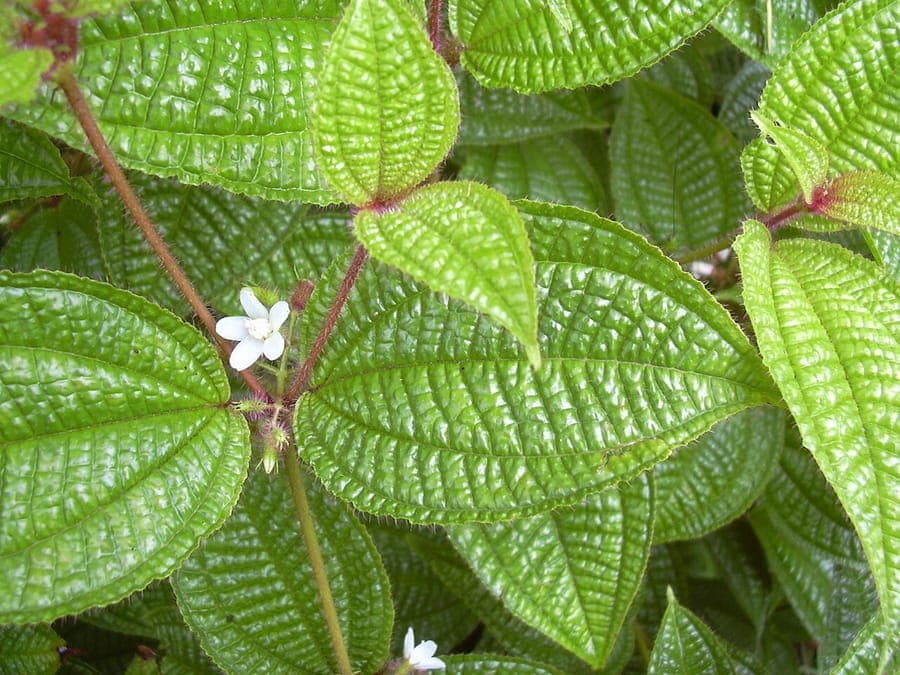
Forest & Kim Starr / CC BY 3.0, via Wikimedia Commons
Clidemia hirta: complete guide
Clidemia hirta
Want to see Clidemia hirta: complete guide in your garden?
1 minute, no credit card
Overview
Clidemia hirta, also known as Curse of India or Koster's curse, is a fast-growing tropical flowering shrub originating from Central and South America. This plant is known for its white flowers and small purple berries. Although it can be an invasive species in certain regions, in temperate climates it makes an attractive greenhouse plant. The hairy leaves give the plant its name 'hirta', which means hairy.
Appearance and bloom
The plant grows into a compact shrub reaching 1 to 1.5 meters tall with strong branching. The leaves are characteristically hairy, dark green, and have a rough surface. The flowers are small, white to pink, and appear continuously throughout the growing season. After flowering, small, dark purple berries follow that attract birds. This makes the plant ornamental throughout the entire season.
Ideal location
Clidemia hirta thrives best in brightness with indirect sunlight. In warm climates, it can tolerate some shade. In greenhouses, a location in the brightest part works well. Avoid direct afternoon sun in very warm regions. The plant does not tolerate temperatures below 10 degrees Celsius, so protection from frost is essential. Provide adequate ventilation to prevent fungal diseases.
Soil
Use nutrient-rich, well-draining potting soil. A mixture of peat, compost, and perlite works excellently. The plant tolerates slightly wetter soil than many other tropical plants, but waterlogging must be avoided. Ensure drainage holes in pots and regularly check soil moisture.
Free design
Want to see Clidemia hirta: complete guide in your garden? Make a free design now.
Watering
Likes regularly moist soil during the growing season. Water when the top 1 centimeter feels dry. In winter, slightly wetter soil is acceptable, but not waterlogged. Preferably use lukewarm water. Too much moisture can cause root rot, but too dry leads to leaf drop.
Pruning
Pruning helps maintain a compact form. Regularly pinch the growing tips to encourage branching. Remove dead or damaged branches. After flowering, you can lightly prune the plant to stimulate bloom formation for the next season. The plant responds well to careful pruning.
Maintenance calendar
May to August: Regular watering, fertilize monthly. September to April: Less water, minimal feeding. Throughout the year: Check for whiteflies and spider mites. Regular inspection helps catch problems early.
Winter hardiness
Clidemia hirta is not winter hardy and can only grow outdoors in tropical and subtropical climates. In the UK and northern Europe, the plant must be overwintered in a greenhouse or heated room. Protect against temperatures below 10 degrees Celsius. Reduce watering significantly in winter.
Companion plants
In container growing, Clidemia hirta can be combined with other tropical plants such as ficus or anthurium. Ensure it is not overshadowed by larger plants. In warm greenhouses, it can grow in the ground with other flowering shrubs.
Closing
Clidemia hirta is a delightful tropical shrub for greenhouse plant enthusiasts. With proper care - warmth, humidity, and good light - it will delight you for years with flowers and decorative berries. The perfect choice for those wanting a bit of tropical atmosphere in their greenhouse garden. Given its growth rate, it can last for years with minimal support.
Want to see Clidemia hirta: complete guide in your garden? Make a free design now.
Upload a photo, pick a style, and get a photorealistic design with plant list in under a minute.
No credit card required


Similar plants
Acer pycnanthum: complete guide
Acer pycnanthum
Acer pycnanthum, the Japanese swamp maple, is a fast-growing tree with early red flowers and brilliant autumn color, ideal for damp garden settings.
Freeman maple: complete guide
Acer × freemanii
Everything about the Freeman maple (Acer x freemanii): a fast-growing shade tree with spectacular autumn colour for large gardens.
Silver vine: complete guide
Actinidia polygama
Discover silver vine (Actinidia polygama): a hardy climbing plant with silvery foliage, loved by gardeners and cats alike.