
no rights reserved / CC0, via Wikimedia Commons
Elk thistle: complete guide
Cirsium foliosum
Want to see Elk thistle: complete guide in your garden?
1 minute, no credit card
Overview
Cirsium foliosum, commonly known as the elk thistle or leafy thistle, is a striking member of the Asteraceae family native to the subarctic regions of western Canada and the Rocky Mountains of the United States, reaching as far south as Wyoming. Described botanically by Augustin Pyramus de Candolle in 1838, it takes its name from the remarkably leaf-studded stems that set it apart from most other thistles - 'foliosum' meaning leafy or leaf-bearing in Latin.
In its natural habitat, the elk thistle grows on mountain meadows, streambanks, and open subalpine terrain at elevations ranging from 1000 to over 2500 metres. It favours moist, nutrient-rich soils with adequate drainage, often in full sun or light partial shade. The species is classified as rapid-growing, producing a dense basal rosette in the first season followed by tall flowering stems in the second.
For gardeners interested in wildlife-friendly, naturalistic planting schemes, Cirsium foliosum is a valuable addition. The flower heads attract an impressive range of pollinators: bumblebees, honeybees, solitary bees, butterflies, and hoverflies all visit for nectar and pollen. Goldfinches and other seed-eating birds are drawn to the mature seed heads in late summer and autumn. The plant's coarse, deeply lobed leaves and upright habit make it a bold focal point in borders, wild gardens, and prairie-inspired planting schemes.
Those exploring ways to design naturalistic gardens can visit gardenworld.app to discover how Cirsium foliosum and similar species can be incorporated into a cohesive and ecologically rich garden layout.
Appearance & bloom cycle
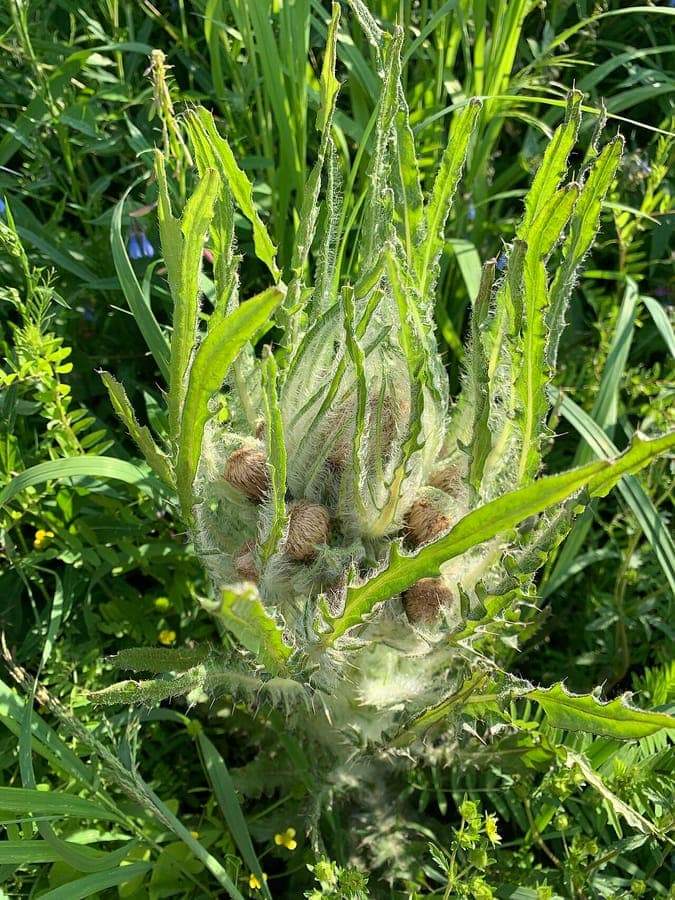
Cirsium foliosum forms an imposing basal rosette of deeply lobed, spiny-margined leaves in its first growing season. The leaves are grey-green on top and covered beneath with a white woolly down, a characteristic that catches sunlight beautifully and adds textural contrast in the border. Each leaf lobe ends in a sharp spine - a reminder of the plant's wild origins and an effective deterrent against browsing animals.
In the second season (or sometimes the same season under favourable conditions), erect stems rise from the rosette, typically reaching 60 to 120 cm in height. Unlike many thistles where leaves diminish up the stem, in C. foliosum the leaves continue densely up the entire stem length, giving a leafy, dramatic appearance all the way to the top. This is the 'foliosum' quality that makes the plant visually unique.
The flower heads are relatively compact, measuring 2 to 4 cm in diameter, and are borne in tight clusters at stem tips and in upper leaf axils. The florets are white to pale pink, occasionally deeper pink in some populations. Bloom time in garden cultivation at lower elevations is typically June through August. After flowering, the attractive pappus - the feathery white seed plumes - persist on the plant well into autumn, extending ornamental interest and providing food for finches. The plant sets seed abundantly, which means it self-sows reliably to form a naturalistic colony over time without becoming aggressively invasive.
Ideal location
Cirsium foliosum performs best in open, sunny positions that replicate its natural mountain meadow habitat. Full sun - at least six hours of direct sunlight daily - produces the sturdiest plants with the most abundant flowers. In partial shade, the stems tend to lean toward light and flowering is noticeably reduced, though the foliage remains attractive.
The plant tolerates wind exposure well, which makes it suitable for open, exposed positions in larger gardens or for planting on slight slopes where air movement is good. It does not perform well in dry, dense shade beneath established trees, where competition for moisture and nutrients is intense. Spacing should be generous: plant at 50 to 60 cm apart to allow rosettes to fully expand and to maintain good air circulation, which reduces fungal disease.
A waterside position - along a garden pond, stream, or rain garden - suits this species very well, as it mirrors the streambank habitats it occupies in the wild. In more formal borders, it can serve as a tall accent plant rising above lower-growing neighbours such as ornamental grasses and ground-covering perennials. Its bold form makes it an effective back-of-border subject where it creates a striking seasonal backdrop.
Soil requirements
The elk thistle grows naturally on moist, moderately fertile soils with a pH ranging from 6.0 to 7.2 - slightly acidic to neutral. It performs well on loamy soils that hold moisture without becoming waterlogged. On pure sand, the soil dries out too quickly and supplemental watering becomes critical; on heavy clay, winter waterlogging can cause root rot.
When planting in average garden soil, incorporate 5 to 8 cm of well-rotted compost or leaf mould into the top 20 cm of the bed to improve moisture retention and soil structure. On sandy soils, a higher proportion of organic matter combined with clay-based soil improvers such as bentonite helps maintain consistent moisture levels. The plant is not particularly hungry and does not require additional fertilising when sufficient organic matter is present in the soil. Excessive nitrogen applications produce lush, soft growth that is more susceptible to aphid attack and less likely to flower prolifically.
On sites with a high water table or winter waterlogging, work a drainage layer of coarse grit or sharp sand into the planting area, or raise the bed slightly to improve natural drainage. This investment pays off greatly in the longevity and health of the plant over multiple seasons.
Watering
Cirsium foliosum prefers consistently moist soil and this is especially important during establishment in the first growing season. Water newly planted specimens thoroughly at planting and continue once a week through the first summer, checking soil moisture at 5 cm depth; if dry at that level, additional water is warranted. During heatwaves or extended dry spells, twice-weekly watering maintains healthy foliage and prevents premature bolting.
Established plants from the second year onwards are considerably more drought-tolerant, as their root systems penetrate deeper layers of the soil profile. Watering every two weeks through an average summer is usually sufficient for healthy growth and flowering. Prolonged drought of more than three weeks may accelerate the plant's life cycle, causing it to set seed early and die back sooner than expected, which is not necessarily problematic for a biennial species.
Drip irrigation at the base of the plant is ideal, keeping foliage dry and reducing the risk of fungal leaf spots. Morning watering allows any inadvertent leaf wetting to dry before evening. Avoid watering late in the day, as moist foliage overnight creates ideal conditions for Botrytis cinerea (grey mould) and powdery mildew, particularly in warm, humid weather.
Free design
Want to see Elk thistle: complete guide in your garden? Make a free design now.
Pruning
Cirsium foliosum requires very little active pruning, but thoughtful management increases ornamental value and helps control self-seeding. Remove spent flower heads promptly after blooming if you wish to limit seed spread. Leave a selection of heads intact if you want the plant to self-sow and establish a self-perpetuating colony. The feathery seed plumes that follow are genuinely decorative and provide important food for seed-eating birds such as goldfinches.
Dead stems can be cut back to within 10 cm of the ground after the first hard frost in autumn, once they have fully dried. Avoid cutting too early: the hollow stems provide overwintering habitat for solitary bees and other beneficial insects. A simple cut with sharp secateurs in late October or November is sufficient. Leave the stubble rather than cutting flush to the ground, as this offers some protection to the root crown.
In spring, remove any dead or damaged leaves from the basal rosette as new growth emerges. A light tidy-up in March - clearing away old plant debris and improving air circulation around the crown - is all the maintenance needed. Always wear gloves when working with Cirsium due to the spiny leaf margins, which can cause skin irritation on prolonged contact.
Maintenance calendar
January – February: Plant is dormant. Check that root crowns have not been heaved out of frozen ground by frost action. Apply a light mulch of dry leaves if temperatures below -20 °C are expected.
March: Remove dead winter foliage from the rosette. Work a handful of well-rotted compost into the soil around each plant. Begin watering if conditions are dry and the soil has thawed.
April: Check for and remove unwanted seedlings around established plants, or transplant them to new positions. Monitor for aphid colonies on emerging shoots; a strong jet of water dislodges them effectively.
May – June: Flower buds form and open. Water as needed. The plant is highly attractive to early-season bumblebees and should be observed regularly for pollinator activity.
June – August: Peak flowering period. Enjoy the white flower heads and abundant pollinator visits. Deadhead spent blooms if self-seeding is not desired. Water consistently during dry weather.
September – October: Seed plumes develop and disperse. Leave some for birds. Cut stems back to 10 cm after the first hard frost.
November – December: Mulch the root crown in exposed positions. Minimal maintenance required until spring.
Winter hardiness
Cirsium foliosum is extremely cold-hardy, native as it is to subarctic Canada and alpine zones at altitude. In the wild it endures temperatures of -30 °C and colder, with a covering of snow providing insulation through the coldest months. In cultivation in northern and central Europe, it is reliably hardy in USDA zones 3 to 7, covering the entire UK, Netherlands, Belgium, Germany, and much of Scandinavia without any protective measures.
The plant requires no special winter protection in most European climates. In coastal areas with mild but persistently wet winters - where temperatures rarely drop below -5 °C but waterlogging is common - the root crown may be more at risk from rot than from cold. Improving drainage with a layer of coarse grit around the base is a practical preventive measure in such conditions.
Young first-year rosettes are slightly less cold-hardy than established plants with deep root systems. In USDA zone 3 and colder, a light covering of straw or dry bracken over young rosettes in the first winter provides useful insurance. In zones 8 and warmer, the plant may behave as a summer annual rather than a biennial, completing its life cycle within a single growing season. Garden centres in the UK, Netherlands, and Belgium may carry this species as a specialist wildflower plant. Visiting gardenworld.app can help you plan where to position it within a complete garden design.
Companion plants
Cirsium foliosum works beautifully in naturalistic and prairie-style borders alongside other robust perennials and ornamental grasses. Its coarse, upright form calls for companions that offer textural contrast without competing aggressively for space.
- Echinacea purpurea (purple coneflower): the warm purple tones of coneflower provide striking contrast to white thistle blooms, and both species attract pollinators simultaneously in July and August.
- Penstemon digitalis (foxglove penstemon): slender white flower spires of Penstemon complement the bold thistle form and overlap in bloom time during June and July.
- Festuca glauca (blue fescue): fine-textured, steel-blue foliage of this ornamental grass softens the thistle's coarse leaf margins and offers year-round structural interest.
- Achillea millefolium (common yarrow): the flat-topped white flower clusters of yarrow in June create a pleasing interplay of heights and flower shapes alongside the upright thistle.
- Monarda fistulosa (wild bergamot): pink-purple flower whorls of bergamot suit the same moist, open conditions and bloom at the same time, creating a rich pollinator border.
Avoid pairing with low, compact plants that will be overwhelmed by the thistle's spreading rosette. Provide at least 60 cm between plants for optimal air circulation and visual balance in the border.
Closing
Cirsium foliosum is not a plant for the timid garden, but for those who appreciate bold, ecologically valuable planting it is a rewarding and distinctive choice. Its combination of impressive leaf architecture, attractive white flowers, and outstanding pollinator appeal makes it one of the more interesting thistles available for cultivation. Hardy, relatively drought-tolerant once established, and requiring minimal intervention beyond occasional thinning of self-sown seedlings, it earns its place in any garden that celebrates wild beauty.
Whether you are establishing a naturalistic meadow border, a wildlife garden, or simply want a dramatic focal plant that draws bumblebees and butterflies in numbers, the elk thistle delivers season after season. Plant in groups of three for the greatest visual impact and allow the colony to develop naturally over years.
Want to see Elk thistle: complete guide in your garden? Make a free design now.
Upload a photo, pick a style, and get a photorealistic design with plant list in under a minute.
10,000+ gardens designed already
No credit card required


Similar plants
Calendula stellata: complete guide
Calendula stellata
Complete guide to Calendula stellata, the star-flowered marigold from Sicily: location, soil, watering and companion planting tips.
Korean chrysanthemum: complete guide
Chrysanthemum x rubellum
Chrysanthemum x rubellum is a hardy autumn perennial with single pink to copper flowers from August to November. Care and combinations.
Helianthus divaricatus: complete guide
Helianthus divaricatus
Helianthus divaricatus is a North American woodland sunflower with yellow summer blooms, ideal for naturalistic borders and shady edges.