
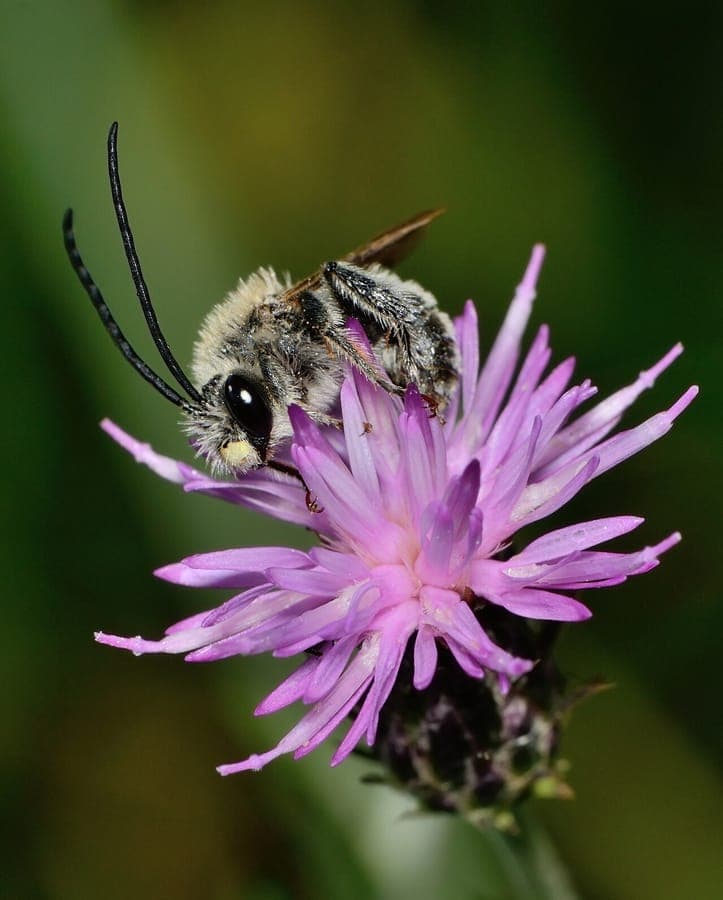
Gideon Pisanty (Gidip) גדעון פיזנטי / CC BY 3.0, via Wikimedia Commons
Carduus argentatus: complete guide
Carduus argentatus
Want to see Carduus argentatus: complete guide in your garden?
1 minute, no credit card
Overview
Carduus argentatus, also known as Silver Thistle or Silvery Thistle, is a characterful Mediterranean plant native to Southeast Mediterranean regions, particularly Greece, Egypt, Pakistan, and surrounding areas. This striking plant is renowned for its silvery, hairy foliage and radiant violet-purple flowers. It is an interesting choice for dry gardens and naturalistic designs.
Appearance and bloom
Carduus argentatus is a biennial or short-lived plant with distinctly silvery, woolly foliage. The leaves are elongated and full of small thorns, typical of thistles. The plant grows 60-120 cm high. The characteristic flowers are purple to violet, appearing in late spring to early summer. The flowers attract butterflies and bees and form decorative seed heads after blooming.
Ideal location
Silver Thistle grows optimally in very sunny, fully exposed locations. Minimum 8 hours of direct sunlight daily is essential. The plant is ideal for drier, perhaps unusual garden corners, rock gardens, dry borders, and for middle naturalistic, unkempt plantings. The silvery foliage provides contrast in mixed borders and can be used effectively in modern minimalist designs.
Soil
Carduus argentatus thrives in well-draining, preferably poor to moderately fertile soils. Sandy, rocky soils are ideal. The plant is extremely tolerant of poor soils and calcareous grounds. Waterlogging is poorly tolerated. A neutral to slightly acidic pH (6.0-7.5) is suitable. The plant flourishes in marginal garden conditions where many other plants fail.
Watering
After establishment, Silver Thistle needs regular watering, especially during the first growing season. Once mature, the plant is extremely drought-tolerant. Water only when the ground feels very dry. In rainy climates, good drainage is crucial. This is an exceptionally water-saving plant.
Free design
Want to see Carduus argentatus: complete guide in your garden? Make a free design now.
Pruning
Pruning is not really necessary. Faded flowers can be removed to encourage continued blooming or prevent seed dissemination. If rosettes form in the second year, these can be removed. The plant naturally maintains a neat form.
Maintenance calendar
- Spring: Minimal activity, remove weeds
- Summer: Water only in very dry periods, deadhead flowers
- Autumn: Winter preparation, leave leaves intact if overwintering
- Winter: Protection not needed in most Mediterranean climates
Winter hardiness
Carduus argentatus is reasonably winter-hardy and tolerates temperatures to about minus 5 to minus 8 degrees Celsius. However, the plant is better suited to warmer Mediterranean climates. In very cold areas, the plant can be treated as an annual. In mild-wintering areas, it can live more than two years.
Companion plants
Silver Thistle combines well with other drought-tolerant, Mediterranean plants like Santolina, Achillea, Teucrium, and other silver-foliaged plants. Wild-look mixed plantings with grasses and herbs work excellently. Lavender provides colour contrast. The plant fits well into naturalistic planting schemes.
Closing
Carduus argentatus is a distinguished accent for gardens with dry, Mediterranean conditions. With its dramatic silvery foliage and violet-purple flowers, it provides structure and texture where many other plants fail to grow. The plant is simple to cultivate and requires sensible water management. For an unconventional, characterful plant that creates interesting contrast, Silver Thistle is a continuous talking point.
Seeds can be found at Mediterranean nurseries and specialized seed suppliers.
Want to see Carduus argentatus: complete guide in your garden? Make a free design now.
Upload a photo, pick a style, and get a photorealistic design with plant list in under a minute.
No credit card required


Similar plants
Calendula stellata: complete guide
Calendula stellata
Complete guide to Calendula stellata, the star-flowered marigold from Sicily: location, soil, watering and companion planting tips.
Korean chrysanthemum: complete guide
Chrysanthemum x rubellum
Chrysanthemum x rubellum is a hardy autumn perennial with single pink to copper flowers from August to November. Care and combinations.
Helianthus divaricatus: complete guide
Helianthus divaricatus
Helianthus divaricatus is a North American woodland sunflower with yellow summer blooms, ideal for naturalistic borders and shady edges.