
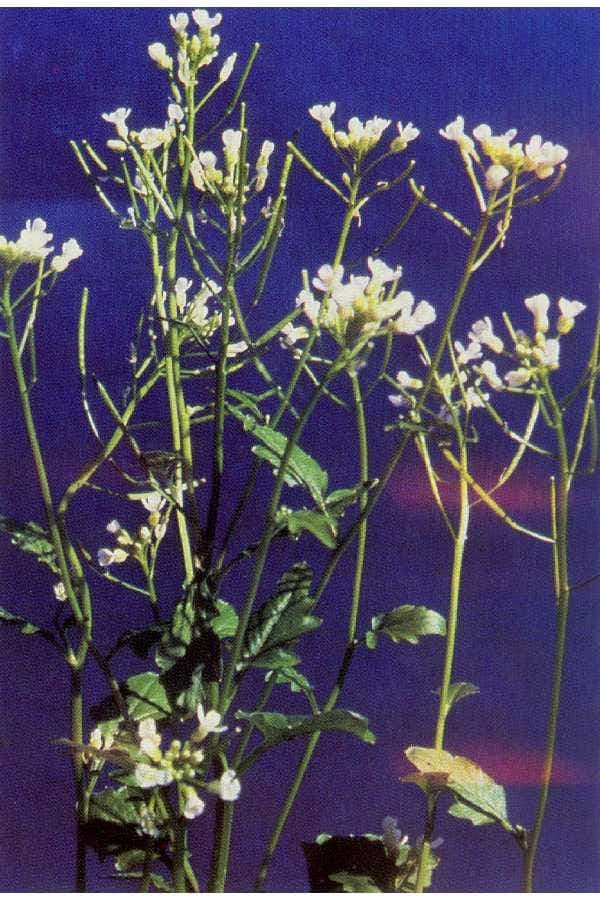
Joe F. Duft / Public domain, via Wikimedia Commons
Brewer's bittercress: complete guide
Cardamine breweri
Want to see Brewer's bittercress: complete guide in your garden?
1 minute, no credit card
Overview
Cardamine breweri, commonly known as Brewer's bittercress, is a rhizomatous perennial herb belonging to the mustard family (Brassicaceae). It was first described by the botanist Sereno Watson in 1875 and named in honour of William Henry Brewer, a pioneering American botanist and explorer of the American West. The species is native to a broad swathe of western North America, from British Columbia in Canada southward through Oregon, Washington, California, Idaho, Nevada, Utah, Colorado, Montana, Wyoming, and into the Mexican states of Sonora and Chihuahua.
In its natural habitat, Brewer's bittercress grows along stream banks, in wet meadows, moist woodland clearings, and at the margins of ponds and seeps - always in places where the soil stays consistently moist and the canopy provides shade during the hottest parts of the day. The variety 'leibergii' (formerly Cardamine breweri var. leibergii) is sometimes encountered in specialist nurseries, differing slightly in leaf shape and height.
For gardeners in Europe, Cardamine breweri offers a graceful, undemanding perennial for shaded, moisture-rich situations: under trees, along the edges of garden ponds, in damp woodland borders, or in rain gardens where water naturally collects after heavy showers. Visit gardenworld.app to explore garden designs that make the most of shaded, damp corners.
Appearance & bloom cycle
Cardamine breweri is an upright to spreading perennial reaching 20 to 50 cm in height, spreading gradually via a network of slender rhizomes. The leaves are pinnately to palmately compound, with rounded to kidney-shaped leaflets that vary in size from 1 to 4 cm across. The texture is described botanically as medium - neither coarse nor particularly fine - and the fresh green colour brings a lively quality to shaded borders.
Flowers appear in spring, typically from March to May at lower elevations, extending to June or July in cooler, mountainous areas. Each individual bloom is small but pretty: four white petals arranged in the classic cruciform pattern of the mustard family, each petal 3 to 6 mm across, held in loose racemes above the foliage. The massed effect of dozens of small white flowers over fresh green foliage is charming in a cottage-garden or woodland setting.
After flowering, narrow siliques (seed pods) develop. At maturity, these pods split explosively, flinging seed several centimetres from the parent plant - a highly effective dispersal mechanism that allows the species to colonise suitable areas quickly. Vegetative spread via the creeping rhizome also contributes to the plant's capacity to form broad, dense colonies over time.
Ideal location
Brewer's bittercress thrives in full to partial shade. Dappled light under a deciduous canopy is ideal; direct midday sun will scorch the delicate foliage and cause rapid drying of the soil surface. North- or east-facing positions, the shaded side of walls or fences, and spots beneath loosely branching trees are all excellent. The margins of garden ponds, streams, and bog gardens are prime positions because they offer the consistently moist soil the plant requires without any need for supplemental watering.
Avoid dry shade (the deep, root-filled zone under dense conifers or large beeches), sunny exposed positions, and compacted or waterlogged clay. While the plant likes moisture, truly stagnant, anaerobic conditions will cause root rot. Moving or gently trickling water is more beneficial than standing water.
Container growing works well in large pots (at least 20 cm diameter) kept in deep shade, with the growing medium maintained consistently moist. This is a good approach for a shaded balcony or courtyard garden near a water feature.
Soil requirements
Rich, humus-laden, moisture-retentive soil is the key requirement. Soil pH between 5.6 and 7.0 is suitable, with the plant performing best in the slightly acid to neutral range (pH 6.0–6.8). On very acid soils (pH below 5.5), growth may be slow; on very alkaline soils (pH above 7.2), leaf chlorosis (yellowing) may occur.
Amend sandy soils with 30 to 40% by volume of well-rotted compost or leaf mould before planting. On clay, ensure adequate drainage by working in coarse organic matter; add horticultural grit if the clay is very heavy. An annual top-dressing of leaf mould (5 cm deep) in spring mimics the woodland floor conditions the plant naturally favours, maintains moisture, and gradually enriches the soil.
Limestone-rich, free-draining, or very poor soils are unsuitable. The plant needs a constant supply of moisture and moderate nutrients - think of the damp, humus-rich soil of a forest floor as the benchmark.
Free design
Want to see Brewer's bittercress: complete guide in your garden? Make a free design now.
Watering
Consistent soil moisture is the cardinal requirement for Cardamine breweri. The plant will signal drought stress quickly with wilting foliage and premature yellowing. At pond or stream margins, natural water availability usually meets all the plant's needs. In drier garden positions, water two to three times per week during dry spells in summer, always soaking the soil deeply rather than sprinkling the surface.
In spring and autumn, rainfall in most of northern Europe is usually adequate. In warm, dry summers, reliable watering is essential. Rainwater or soft water is preferable to hard tap water, as Cardamine breweri can be slightly sensitive to high calcium levels. An automated drip system or a bog-garden construction that retains rainwater provides an elegant low-maintenance solution.
Mulching with leaf mould or fine wood chips (5 to 8 cm deep) around the plants dramatically reduces evaporation and maintains a stable moisture level in the root zone, reducing the frequency of watering needed.
Pruning
Cardamine breweri requires minimal intervention. The main task is to remove spent flower stalks once flowering and seed set are complete (May to July). Cut stems back to ground level with clean, sharp secateurs. If you wish to limit self-seeding - sometimes desirable in smaller gardens - remove the siliques before they ripen and split.
In early spring (February to March), tidy up any winter-damaged foliage. A full cut-back is neither necessary nor desirable; the rhizomatous root system naturally produces fresh growth each spring. Division of congested clumps every three to four years keeps the plant vigorous and compact. Each section of rhizome with at least one growing point can be replanted or shared.
Beyond these simple tasks, the plant requires no specialist attention. Its naturally loose, wild character is part of its appeal in woodland and naturalistic gardens.
Maintenance calendar
January – February: Check that plants are not buried under heavy wet debris. Light protection only if extremely hard frost is forecast for very young plants.
March: Remove winter damage. Apply a 3 to 5 cm layer of well-rotted compost around the root zone as an annual feed.
April – May: Flowering period. Begin watering if spring is dry. Remove weeds while small to avoid competition for moisture.
June: Remove spent flower stalks. Remove seed pods before they burst if self-seeding needs to be controlled.
July – August: Critical drought period. Water two to three times per week during hot, dry weather. Check undersides of leaves for aphids.
September: Fresh leaf growth often follows summer heat. Apply leaf mould mulch if not already in place.
October – November: Reduce watering frequency. The plant begins its semi-dormant phase.
December: Minimal care. Allow the plant its winter rest.
Winter hardiness
Cardamine breweri is classed in USDA hardiness zones 5 to 7, corresponding to minimum winter temperatures of -26 to -12 °C. In the Netherlands, Belgium, and northwestern Germany (USDA zones 7–8), the plant is reliably hardy through most winters. The greatest risk in the European maritime climate is not outright cold but rather a combination of frost and persistently wet soil causing root rot. On well-structured, humus-rich soils with good drainage, this risk is low. First-year plants benefit from a 10 to 15 cm mulch of leaf mould over the root zone in late autumn. Established plants rarely need protection.
In harsher continental climates (zone 5 or colder), a generous mulch layer is strongly recommended as standard autumn practice.
Companion plants
Cardamine breweri is a natural team player in shaded, moist plantings. The best companions share its preference for damp, humus-rich conditions under a light canopy:
- Hosta 'Halcyon' - the broad, blue-toned hosta leaves provide bold contrast to the delicate, compound foliage of Cardamine.
- Astilbe 'Deutschland' - white astilbe plumes flowering alongside the white Cardamine blooms in May create a flowing, all-white shade display.
- Primula vulgaris - common primroses bloom at the same time and share the same moist, humus-rich soil requirements.
- Tiarella cordifolia - foamflower, another low-growing shade perennial with airy white spikes in spring - a close aesthetic match.
- Carex sylvatica - woodland sedge provides fine texture and movement in the understorey, framing the Cardamine beautifully.
- Geranium nodosum - knotted cranesbill, an excellent deep-shade geranium for the same moist woodland conditions.
Avoid pairing with drought-tolerant, sun-demanding plants such as lavender, ornamental grasses needing full sun, or Mediterranean herbs - the growing conditions are fundamentally incompatible.
Closing
Cardamine breweri is an unassuming but genuinely rewarding plant for the shaded, moist parts of the garden that are often hardest to fill attractively. Once established in suitable conditions, it settles in with minimal fuss, returning each spring with fresh white flowers and handsome compound foliage. Its rhizomatous habit means it gradually expands to fill gaps naturally, creating a beautifully naturalistic effect.
For design inspiration and professional planting plans for shaded and damp garden areas, visit gardenworld.app - tailored garden designs that find the right plant for every challenging spot.
Want to see Brewer's bittercress: complete guide in your garden? Make a free design now.
Upload a photo, pick a style, and get a photorealistic design with plant list in under a minute.
10,000+ gardens designed already
No credit card required


Similar plants
Brassica cretica: complete guide
Brassica cretica
Brassica cretica, the Cretan cabbage, grows wild on Aegean cliffs. Discover how to grow this drought-tolerant, yellow-flowered Mediterranean perennial.
Corsican cabbage: complete guide
Brassica insularis
Corsican cabbage is a rare Mediterranean rock cabbage with white flowers and blue-green leaves. Location, soil and winter protection.
Prostrate cabbage: complete guide
Brassica procumbens
Prostrate cabbage is a creeping North African cliff plant with yellow flowers. Discover location, soil type and winter protection.