
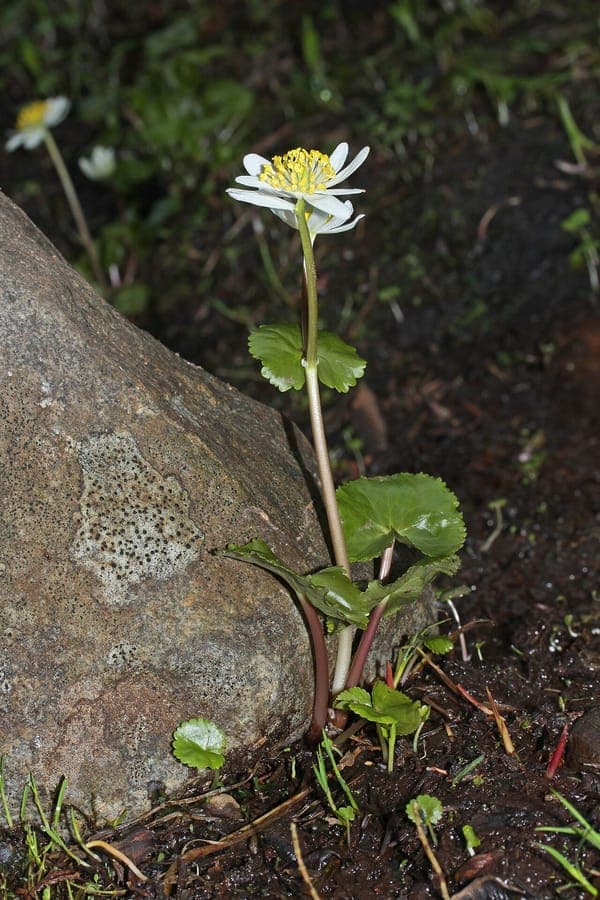
Walter Siegmund (talk) / CC BY-SA 3.0, via Wikimedia Commons
Caltha leptosepala: complete guide
Caltha leptosepala
Want to see Caltha leptosepala: complete guide in your garden?
1 minute, no credit card
Overview
Caltha leptosepala, commonly known as white marsh marigold or mountain marsh marigold, is a captivating alpine plant native to the mountainous regions of North America. Belonging to the Ranunculaceae family, this species grows naturally in wet areas from Alaska through the western United States. With its vibrant white blooms and glossy, dark green foliage, this plant creates a striking presence in cool, moist environments.
This plant is exceptionally valuable for gardeners seeking cold-hardy, moisture-loving specimens. Caltha leptosepala not only provides visual beauty but also supports local pollinators and wildlife. Its preference for cool, humid climates makes it ideal for gardens in temperate zones or areas with sufficient water availability.
Appearance and Bloom
White marsh marigold grows as a compact, robust plant with glossy, heart-shaped leaves displaying striking dark green coloration. The foliage is rounded and somewhat fleshy, indicating its adaptation to wet conditions. The plant typically reaches heights of 15-30 centimeters, making it an excellent groundcover.
The flowers are absolutely enchanting: pure white petals with golden stamens in the center, creating a beautiful contrast. These blooms appear from June through August, depending on elevation and climatic zone. Each flower displays 5-7 delicate petals arranged above the low-growing plant.
Ideal Location
Caltha leptosepala thrives in partial shade to full shade environments. In alpine settings, this plant particularly prefers areas where snowmelt maintains consistent moisture. In the UK, Scandinavia, or regions with cool summers, locations near ponds, streams, or water features are ideal.
The plant requires minimal space and works wonderfully in:
- Pond margins and water feature edges
- Moisture-loving rock gardens
- Boggy garden corners
- Alpine troughs with moisture retention
- Rocky areas with good water retention
Avoid direct afternoon sunlight in warm regions. A spot with morning sun and afternoon shade is perfect. Ensure good drainage following prolonged rain to prevent waterlogging issues.
Soil
Soil must be rich in organic matter with excellent moisture retention. This is a plant that thrives in slightly acidic to neutral soil (pH 6.6-8.2 according to growth data). Amend soil with compost or peat before planting.
The ideal soil composition would be:
- 40% compost or leaf mold
- 30% peat or coir
- 20% sand for drainage
- 10% grit for extra drainage
Ensure adequate nutrition by adding organic material yearly in spring. This plant thrives in nutrient-rich but not excessively fertilized ground.
Free design
Want to see Caltha leptosepala: complete guide in your garden? Make a free design now.
Watering
Caltha leptosepala is extremely moisture-loving and requires consistently wet soil conditions. Water regularly, especially during dry periods. In lower rainfall areas, you may need to water three times weekly.
It's actually difficult to overwater this plant; underwatering is far more problematic. Ensure the soil never completely dries out, particularly during growing seasons (April-September).
During winter months, watering frequency can decrease, but even then prevent complete soil desiccation. If you have a garden pond, you can place portions of the plant in water, as it can also survive amphibiously.
Pruning
Caltha leptosepala requires minimal pruning maintenance. The plant grows naturally compact and orderly, with no need for significant shaping.
Maintenance consists of:
- Removing dead leaves in spring
- Cutting back spent flower stems after blooming
- Carefully removing diseased stems with disinfected pruners
This not only creates a neater appearance but allows the plant to direct energy toward new growth. Never prune drastically, as this can damage the plant.
Maintenance Calendar
April: Increase watering as snowmelt provides moisture. New growth points begin emerging. May-June: Blooms reach their peak. Water weekly as needed. July-August: Flowering continues. Check for pests and diseases. September: Bloom begins declining. Gradually reduce water supply. October-November: Plant establishes itself and enters dormancy. Minimal watering. December-February: Winter rest period. Ensure soil doesn't freeze completely dry. March: Preparation for growth. Gradually increase watering.
Winter Hardiness
Caltha leptosepala is extremely cold-hardy and can survive temperatures far below freezing. As a true alpine plant, snow cover presents no problems.
In the UK and Northern Europe, this plant can remain outdoors year-round. No additional protection is necessary, even during harsh winters. The plant will likely retreat completely in February/March but will re-emerge as temperatures warm.
In Scandinavia, the plant thrives in USDA zones down to zone 3.
Companion Plants
Caltha leptosepala combines beautifully with other moisture-loving alpine plants:
- Primula japonica (Japanese primrose) - pink and red varieties
- Trollius europaeus (European globeflower) - golden yellow
- Ranunculus acris (Meadow buttercup) - yellow and white
- Astilbe - fine, feathery foliage
- Hostas - contrasting foliage forms
These combinations create a richly varied moisture garden with seasonal interest.
Closing
Caltha leptosepala is an incredible plant for gardeners wanting to fill moist areas with beauty. With its vibrant white blooms, compact habit, and extreme cold-hardiness, it's a top choice for moisture-loving borders. The plant requires minimal maintenance and offers years of reliable beauty.
Specimens can be found at major garden centers across the UK and Europe. GardenWorld.app also offers design advice for integrating this plant into your front garden scheme.
With proper placement, attention to moisture needs, and minimal maintenance, you'll enjoy Caltha leptosepala for many seasons to come.
Want to see Caltha leptosepala: complete guide in your garden? Make a free design now.
Upload a photo, pick a style, and get a photorealistic design with plant list in under a minute.
No credit card required


Similar plants
Drummond's anemone: complete guide
Anemone drummondii
Discover Drummond's anemone (Anemone drummondii): a silvery-grey mountain plant for cool rock gardens and alpine troughs.
Korean clematis: complete guide
Clematis serratifolia
Clematis serratifolia is a hardy climber with fragrant yellow bell flowers in August-September. Pruning group 3, location and care tips.
Aquilegia brevistyla: complete guide
Aquilegia brevistyla
Discover Aquilegia brevistyla, the elegant North American columbine. Growing tips, shade tolerance, and design ideas for woodland and shadowed gardens.