
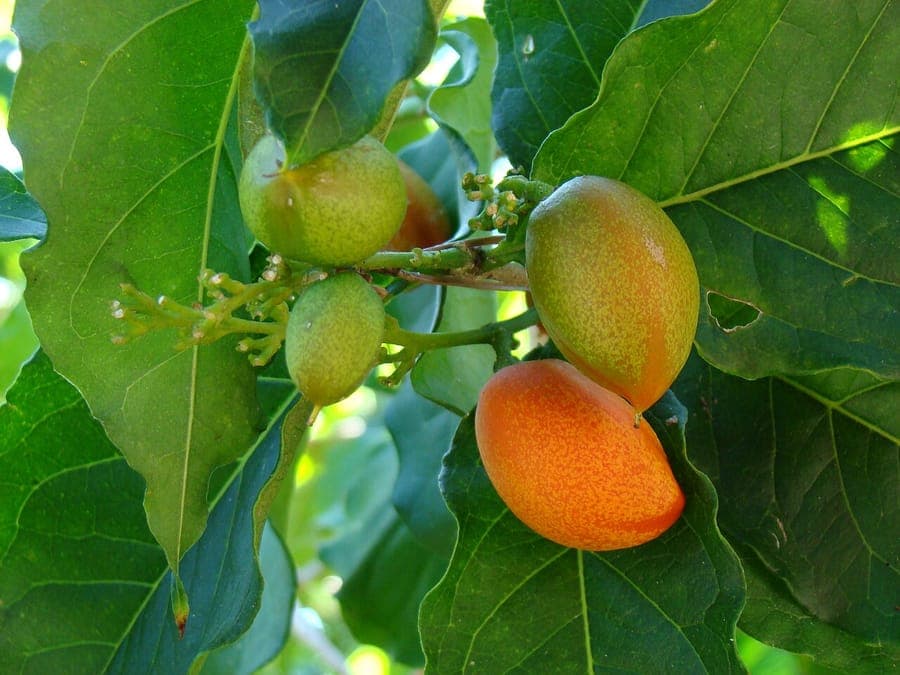
Asit K. Ghosh Thaumaturgist / CC BY-SA 3.0, via Wikimedia Commons
Peanut butter fruit: complete guide
Bunchosia glandulifera
Want to see Peanut butter fruit: complete guide in your garden?
1 minute, no credit card
Overview
Bunchosia glandulifera, popularly known as the peanut butter fruit, is a tropical shrub or small tree in the family Malpighiaceae. It was formally described in 1822 by Humboldt, Bonpland, and Kunth, based on specimens from Colombia and Venezuela, its core native range. From there the species has been introduced across a wide arc of tropical America, including Bolivia, northern Brazil, Cuba, Ecuador, Guyana, Puerto Rico, Suriname, Trinidad and Tobago, and the Windward Islands.
The name 'glandulifera' refers to the glandular structures found on the flower stalks and petals, a characteristic feature of the Malpighiaceae family. The common name comes from the extraordinary flavour and texture of the ripe fruit: soft, sticky, sweet, and unmistakably reminiscent of peanut butter. In tropical regions the fruits are eaten fresh, made into jam, or blended into smoothies and desserts. The species is also known by other common names including cafe falso (Spanish) and cafe bois or cafe moka (French).
For temperate-zone gardeners, Bunchosia glandulifera is a rewarding container plant for the summer terrace, moving indoors for winter. At gardenworld.app you can explore how exotic and tropical container plants can anchor a bold, seasonal terrace design.
Appearance and bloom cycle
In tropical conditions Bunchosia glandulifera grows into a compact tree or large shrub reaching 3 to 6 metres. In a container in a temperate garden, it stays much smaller: 1 to 2 metres is typical with good management. The leaves are broad-elliptic, deep glossy green on the upper surface and paler below, with a leathery texture reminiscent of citrus foliage.
The flowers are small and yellow, arranged in clusters that emerge along the stems and branches - a pattern called cauliflory in its more extreme forms. Each flower has five yellow petals with fringed or clawed edges, a hallmark of the Malpighiaceae. In a warm environment the plant can flower almost year-round; in temperate conditions flowering is concentrated from May through September.
Fruits begin green, ripen to bright orange-yellow, and turn deep red to dark red when fully ripe. They are oval, 2 to 4 cm long, and contain one to three hard seeds. The flesh is soft, sticky, and sweet with that characteristic nutty, peanut-butter-like flavour. The fruits are edible raw and are a genuine culinary curiosity for visitors to the garden.
Ideal location
The peanut butter fruit thrives in warmth and light. In its tropical homeland it grows in full sun or light dappled shade. In a temperate garden, give it the warmest, most sheltered spot available: a south-facing terrace against a heat-retaining wall, in a cold greenhouse, or in a heated conservatory.
The plant can spend the summer outdoors from May through to early October in mild years. Move it indoors when night temperatures consistently drop below 10 degrees Celsius. Temperatures below 5 degrees Celsius cause leaf damage; frost is fatal.
Indoors, position it in front of a large, south-facing window or under supplemental grow lights in winter. A minimum of 10 to 12 degrees Celsius is required for dormancy; warmer conditions of 18 to 22 degrees Celsius maintain active growth and can promote year-round flowering.
Soil
Bunchosia glandulifera prefers a fertile, well-draining potting medium. A standard multipurpose compost blended with 20 to 25 percent perlite or coarse sand provides the right balance of moisture retention and aeration. The roots are intolerant of permanently wet conditions; waterlogged compost leads quickly to root rot.
A mildly acidic to neutral pH of 5.5 to 7.0 is suitable. Avoid heavy, compacted clay-based mixes or low-grade multipurpose compost that compacts with repeated watering. Repot every two to three years in spring, moving up just one or two pot sizes at a time. An oversized pot holds too much moisture and increases the risk of root problems.
For in-ground planting in a sheltered, frost-free garden, choose a humus-rich, well-aerated soil in a warm, sunny position.
Watering
Water regularly during the growing season, but allow the top third of the compost to dry out between waterings. During active growth from April through September, watering every five to seven days is a reasonable guide, adjusted for temperature and humidity. In very hot spells, daily checks may be necessary.
During the winter rest period, when the plant is kept at 10 to 15 degrees Celsius, reduce watering significantly: once every two weeks is usually adequate to prevent the roots from desiccating. At warmer overwintering temperatures (18 degrees Celsius and above), maintain moderate regular watering.
Always use water at room temperature and avoid wetting the foliage in direct sun to prevent scorching. Rainwater is preferable to hard tap water, as it has a lower pH and avoids limescale build-up in the compost.
Free design
Want to see Peanut butter fruit: complete guide in your garden? Make a free design now.
Pruning
Bunchosia glandulifera does not require heavy pruning. Light shaping in spring, after the plant has been brought back outdoors, is sufficient to keep it compact and well-branched. Cut back overlong shoots to just above a leaf node or branching point to encourage bushy growth and more flowering points along the stems.
Remove dead, damaged, or crossing wood as soon as it is noticed. After heavy fruiting, thin out congested branches to improve air circulation and encourage the next flush of flowers and fruits.
Avoid hard pruning in autumn or winter: this stimulates vulnerable new growth just when temperatures are falling, and can seriously weaken the plant. Always use clean, sharp tools and make cuts at a slight angle to shed water.
Maintenance calendar
January - February: Winter dormancy. Minimal watering, no feeding. Ensure adequate light. March: Begin increasing water gradually. Check for spider mite and whitefly. April: Resume feeding with a balanced liquid fertiliser every two weeks. Plant may still be indoors. May: Move outdoors once night temperatures are reliably above 10 degrees Celsius. June - August: Full growth and main flowering period. Regular watering and feeding. Fruits begin to appear. September: Fruit ripening. Maintain moisture. Plan overwintering arrangements. October: Move indoors when nights drop below 10 degrees Celsius. November - December: Overwintering. Minimal care, bright position, cool room.
Winter hardiness
Bunchosia glandulifera is not frost-tolerant and is damaged by temperatures below 5 degrees Celsius. It originates in the tropical lowlands of Colombia and Venezuela, where it experiences no frost whatsoever. In temperate northern Europe it must be overwintered under cover without exception.
A minimum of 10 degrees Celsius is the safe threshold; 14 to 18 degrees Celsius is ideal for maintaining some growth and flowering through winter. A frost-free but unheated conservatory, a bright hallway, or a heated greenhouse are all suitable. Avoid dark basements: insufficient light during winter causes leaf drop and weakens the plant going into the next season.
Under good overwintering conditions the plant retains its leaves and may even produce flowers and fruits in winter - a considerable advantage over many other tropical container plants that go fully deciduous. Look for Bunchosia glandulifera at specialist tropical plant nurseries and exotic fruit tree suppliers. Larger garden centres occasionally stock it as a seasonal item. At gardenworld.app, you can plan an entire terrace planting scheme around striking container specimens like the peanut butter fruit.
Companion plants
The peanut butter fruit shrub pairs well with other tropical and subtropical container plants sharing the same care requirements:
- Banana (Musa basjoo or Musa acuminata): dramatic tropical foliage for a lush terrace backdrop.
- Citrus trees (Citrus limon, Citrus sinensis): similar care needs, fragrant flowers, edible fruit.
- Tropical hibiscus (Hibiscus rosa-sinensis): bold tropical flowers in vivid colours.
- Frangipani (Plumeria rubra): intensely fragrant blooms and a striking sculptural form.
- Barbados cherry (Malpighia emarginata): a close relative in the same family, with edible berries rich in vitamin C.
- Passion fruit (Passiflora edulis): fast-growing climber with spectacular flowers and edible fruit.
Grouped together on a summer terrace, these plants create a genuinely tropical atmosphere from June through September. Plan ahead for overwintering: make sure you have enough indoor space for all container plants before autumn arrives.
Closing
Bunchosia glandulifera is one of the most characterful tropical container plants available to the temperate gardener. Its glossy foliage, cheerful yellow flowers, and extraordinary peanut-butter-flavoured fruit make it a genuine conversation piece on any terrace. With a frost-free winter position and consistent care through the growing season, it develops into a healthy, productive plant that rewards its owner year after year. If you have ever wanted to grow something truly unusual and edible, the peanut butter fruit is an outstanding choice that never fails to surprise visitors.
Want to see Peanut butter fruit: complete guide in your garden? Make a free design now.
Upload a photo, pick a style, and get a photorealistic design with plant list in under a minute.
10,000+ gardens designed already
No credit card required

