
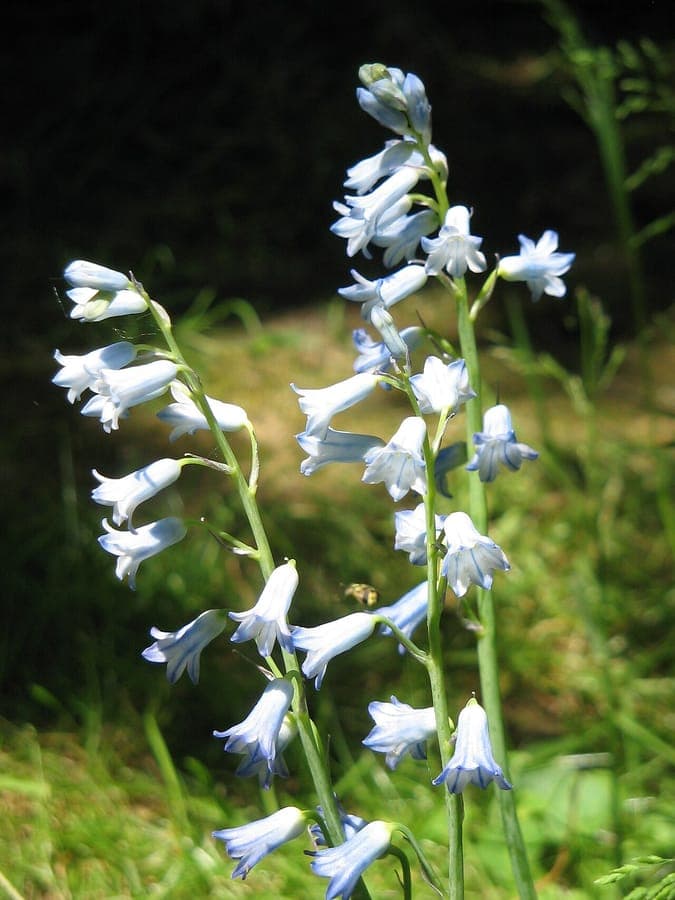
Meneerke bloem / CC BY-SA 4.0, via Wikimedia Commons
Amethyst hyacinth: complete guide
Brimeura amethystina
Want to see Amethyst hyacinth: complete guide in your garden?
1 minute, no credit card
Overview
The amethyst hyacinth (Brimeura amethystina) is a small, graceful bulbous plant native to the Pyrenees and northeastern Spain. It belongs to the family Asparagaceae and was long classified as Scilla amethystina or Hyacinthus hispanicus before receiving its current accepted name in 1930 following a reclassification by botanist Chouard. Despite the common name, this plant has little in common with the showy, heavily perfumed garden hyacinth. It is slender, understated and perfectly suited to naturalistic planting styles that have become so popular in recent years. Gardeners who want a reliable spring-blooming bulb that returns year after year with minimal attention will find the amethyst hyacinth a genuinely rewarding choice. At gardenworld.app you can browse garden design examples where small bulbs like this one play an elegant supporting role in mixed borders and gravel plantings.
Appearance and bloom cycle
The leaves are narrow and upright, typically reaching 15 to 25 cm in length. They emerge early in spring and by the time the flower stalks appear in May the plant is already well established. The flower stalks reach 20 to 30 cm in height and carry a loose, one-sided raceme of six to twelve small, nodding, bell-shaped flowers. Each individual flower is roughly 1 cm long, tubular and pale to mid blue-violet in colour - the hue that gives the plant its specific epithet "amethystina", referring to the semi-precious stone of the same name. The flowers appear in May and June, which is later than most common spring bulbs such as tulips and daffodils, making the amethyst hyacinth particularly useful for extending the spring display into early summer. After flowering, the foliage yellows and dies back naturally as the bulb enters summer dormancy, which is a perfectly normal and healthy process.
Ideal location
In the wild this plant grows on rocky slopes, in dry grassland and at the margins of scrub in the Pyrenees and adjacent mountain ranges, often at elevations above 500 metres. It is accustomed to full sun and well-drained positions that dry out considerably in summer. In garden settings, a sunny to partially shaded spot works best. Rock gardens, dry slopes, gravel beds and raised beds are all excellent environments for this plant. It also works well beneath deciduous shrubs that provide light summer shade once the bulb is dormant. Avoid heavy, waterlogged soils and deep shade, as both reduce vigour and significantly increase the risk of bulb rot.
Soil
The amethyst hyacinth prefers well-drained, relatively poor soil. Its natural habitat features calcareous, stony ground with a pH of 8 to 9, but the plant is adaptable and will perform satisfactorily in neutral to slightly acidic garden soils as long as drainage is genuinely good. On heavy clay soils, work in generous amounts of coarse sand and fine gravel to improve drainage before planting. Avoid high-nitrogen fertilisers as these promote leafy growth at the expense of flowers. Plant bulbs at a depth of 5 to 8 cm, setting them with the pointed end upward and the flat basal plate at the bottom.
Watering
Rainfall is generally sufficient for established plants in temperate climates such as those of northern and western Europe. During the growing season in spring, modest moisture is needed for root development and flower formation. Supplemental watering is rarely necessary unless spring is unusually dry for several consecutive weeks. Once the foliage begins to die back in early summer, reduce watering entirely. Summer dryness helps the bulb ripen properly and prepares it physiologically for the following season. In containers, ensure pots have adequate drainage holes and consider tipping them on their side or moving them undercover during wet summers to mimic the dry Mediterranean summer conditions of the plant's homeland.
Free design
Want to see Amethyst hyacinth: complete guide in your garden? Make a free design now.
Pruning
No pruning is required for this bulb. Remove spent flower stalks after blooming if you want to prevent self-seeding or simply to keep the bed tidy, but always leave the foliage in place until it has turned completely yellow and withered. The leaves are the main photosynthetic organ during the bulb's active season and removing them prematurely will progressively weaken the bulb over successive years, eventually reducing flowering to nothing. If the dying foliage is unsightly, plant low-growing neighbours such as Aubrieta or Veronica prostrata nearby to mask it naturally. Remove any dried leaf material in autumn to reduce slug habitat.
Maintenance calendar
September - October: Plant new bulbs at 5 to 8 cm depth in sharply drained soil. Add grit to the base of the planting hole if drainage is at all questionable. February - March: First leaf tips emerge. No action needed; protect lightly with a layer of coarse sand if hard frost is forecast after the shoots have already emerged above ground. April: Foliage grows and flower stalks begin to elongate. Check for slug damage on young shoots and treat if necessary. May - June: Flowering period. Enjoy the nodding blue racemes. Remove spent stalks to prevent self-seeding if desired. July - August: Foliage dies back completely. Keep soil dry. No fertiliser, no watering needed during this period.
Winter hardiness
Brimeura amethystina is reliably hardy in USDA zones 5 to 9, covering the vast majority of European growing conditions. The bulb tolerates moderate frost without any difficulty. What damages it is a combination of cold and persistent winter wet. Ensure the planting site has excellent drainage, and in regions with wet winters consider raising the bed slightly or adding a layer of coarse grit around the bulbs at planting time. In very cold winters, a light mulch of dry leaves or straw can be applied in November and removed in March. Most gardens in Britain, the Netherlands, Belgium and Germany will need no extra protection at all.
Companion plants
The amethyst hyacinth combines beautifully with other late-spring bulbs and low-growing perennials. Blue muscari, small alliums such as Allium moly, Narcissus triandrus and Ornithogalum umbellatum make natural companions in a naturalistic bulb planting. For a gravel garden or rock garden setting, Aubrieta, Phlox subulata, Iberis sempervirens and low-growing Dianthus species complement the delicate flower spikes perfectly. The amethyst hyacinth also works well alongside decorative grasses such as Festuca glauca, which provides an attractive textural contrast. For purchasing, check specialist bulb suppliers or garden centres in autumn when bulbs are widely available. At gardenworld.app you can explore full planting plans that incorporate small bulbs like this one in cohesive and well-considered border designs.
Closing
The amethyst hyacinth is a quietly beautiful plant that rewards the observant gardener. Its nodding blue flowers in May and June occupy a season gap that very few other bulbs fill as elegantly. It is low maintenance, reliably hardy and brings a touch of mountain meadow character to any garden. Whether planted in a rock garden, a naturalised bulb border or a gravel bed, Brimeura amethystina earns its place through dependability and understated elegance. Give it good drainage, let the foliage die back naturally each summer, and it will reward you with its blue flowers for many years.
Want to see Amethyst hyacinth: complete guide in your garden? Make a free design now.
Upload a photo, pick a style, and get a photorealistic design with plant list in under a minute.
10,000+ gardens designed already
No credit card required

