
Paulo Schwirkowski / CC BY 3.0, via Wikimedia Commons
Wild Birdnest Fern: complete guide
Asplenium serratum
Want to see Wild Birdnest Fern: complete guide in your garden?
1 minute, no credit card
Overview
The Wild Birdnest Fern, scientifically known as Asplenium serratum, is an impressive tropical fern distributed from Mexico through South America. This majestic fern owes its name to the characteristic way its large fronds grow in a nest-like formation. It is a spectacular choice for moist gardens and greenhouses where it can reach its full potential.
This fern belongs to the Aspleniaceae family and is ideal for gardeners seeking a statement plant with dramatic, elegant fronds. With its large, wavy fronds and impressive growth, it creates a true focal point in any moist paradise.
Appearance and Bloom
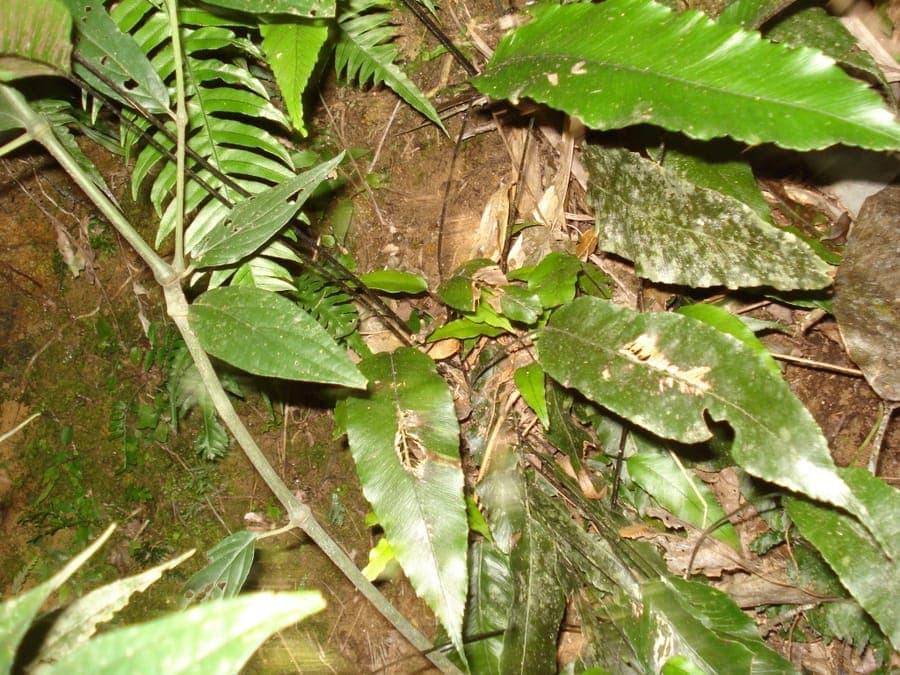
Asplenium serratum is characterized by its large, elongated fronds that can reach 60-100 cm in length. The fronds have a characteristic wavy margin and grow in compact, upright rosettes that strongly resemble a bird's nest. This magnificent arrangement helps channel water toward the heart of the plant.
The foliage is dark green and glossy, giving it a striking appearance. Like all ferns, Asplenium serratum produces no flowers. Sori (spore cases) are found in long rows on the undersides of the fronds.
Ideal Location
This fern thrives best in indirect, filtered light. Avoid direct sunlight, as it can lead to scorched fronds. In tropical regions, it can grow in the shade of larger trees. For indoor cultivation, a location with good daylight without direct sun exposure is ideal.
The plant grows much better in warm, humid environments. Greenhouses, bathrooms, and humid storage rooms are perfect locations. The temperature should remain constant between 20-28 degrees Celsius for optimal growth.
Soil
Asplenium serratum requires a rich, highly moisture-retentive soil mix. The ideal blend consists of 50% peat moss, 30% humus-rich leaf mold, and 20% perlite or fine bark. This ensures good moisture retention while drainage is guaranteed.
The pH should be neutral to slightly acidic (6.0 to 7.0). Ensure the soil remains consistently moist. This plant benefits from regular additions of organic matter and compost.
Free design
Want to see Wild Birdnest Fern: complete guide in your garden? Make a free design now.
Watering
This fern loves moist, almost swampy soil. Water regularly so the soil always feels moist. Avoid waterlogging, but the plant tolerates higher moisture levels better than many other ferns.
In summer you must water regularly. In winter you can reduce moisture retention slightly, but the soil must never dry out completely. Mist the fronds regularly, especially in dry seasons.
Ensure the plant receives plenty of air humidity by regular misting and placing it on a tray with wet stones.
Pruning
Remove only damaged or yellow fronds from the base. This plant requires minimal pruning. Let it maintain its natural, impressive form.
When the plant outgrows its pot, you can gently divide it or move it to a larger pot in spring.
Maintenance Calendar
Spring: Begin monthly feeding with diluted fertilizer. Repot in larger pot if needed. Check for pests.
Summer: Ensure regular watering and very high humidity. Feed monthly. Monitor temperature.
Fall: Gradually reduce feeding. Still ensure moist soil.
Winter: Water less but do not let soil dry out completely. Reduce feeding to minimum.
Winter Hardiness
Asplenium serratum is frost-sensitive and can only grow outdoors in tropical and subtropical regions (USDA zones 10-12). In all other climates it must be cultivated indoors. The plant thrives best between 20-28 degrees Celsius.
The plant can tolerate short periods down to 10 degrees but prefers warmth. Ensure it is never exposed to frost.
Companion Plants
Asplenium serratum grows beautifully with other large tropical ferns and moisture-loving plants. Alocasia, Colocasia, and larger Philodendron species are perfect companions. Bromeliad species also form beautiful combinations.
In greenhouses, create a lush, exotic landscape by placing large growing specimens together.
Closing Remarks
The Wild Birdnest Fern is a spectacular plant for those seeking a statement-making fern. With its large, wavy fronds and impressive nest-like growth, it forms a true focal point. Find it via gardenworld.app for the best selection of exotic tropical ferns.
This fern showcases the grandeur of the tropical botanical world. Its large, elegant fronds and impressive nest formation make it a must-have for the serious plant lover. Discover today this living artwork and create your own tropical paradise!
Want to see Wild Birdnest Fern: complete guide in your garden? Make a free design now.
Upload a photo, pick a style, and get a photorealistic design with plant list in under a minute.
No credit card required


Similar plants
Creeping Spleenwort: complete guide
Asplenium serra
Explore Asplenium serra, a creeping tropical fern with finely dissected foliage. Ideal for moisture-loving gardens and greenhouse cultivation.
West Indian Spleenwort: complete guide
Asplenium pteropus
Explore Asplenium pteropus, an elegant West Indian fern with feathery-like fronds. Ideal for shaded indoor gardens and greenhouse environments.
Walnut Spleenwort: complete guide
Asplenium juglandifolium
Explore Asplenium juglandifolium, a rare tropical fern with delicate, deeply dissected fronds. Perfect for shaded indoor spaces and humid environments.