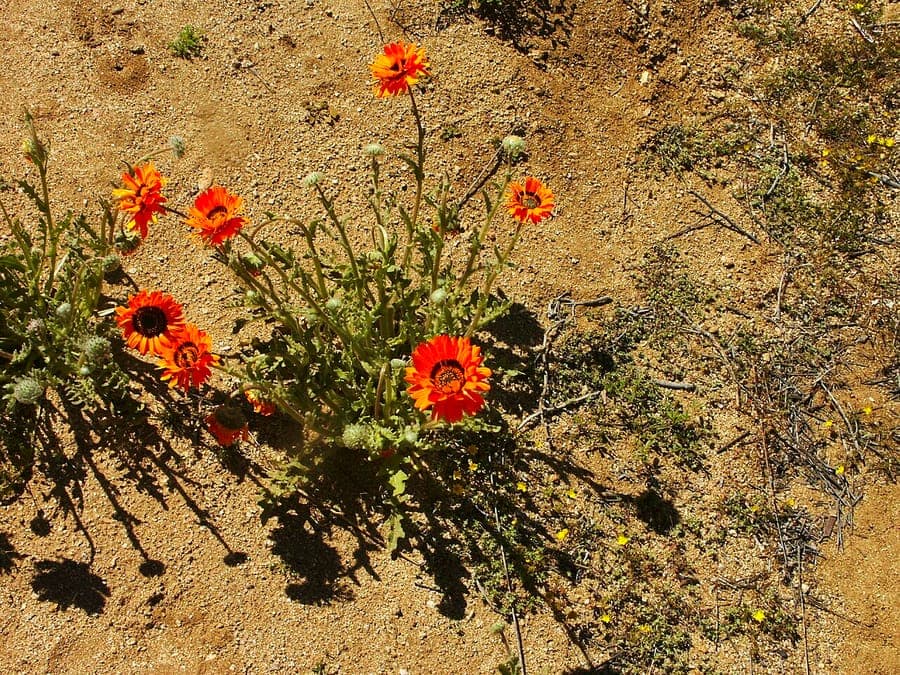
Winfried Bruenken (Amrum) / CC BY-SA 2.5, via Wikimedia Commons
Arctotis fastuosa: complete guide
Arctotis fastuosa
Want to see Arctotis fastuosa: complete guide in your garden?
Full design in HD: €7.99
Look after your Arctotis fastuosa with the GardenWorld app
Identify plants with your camera and get a care calendar with reminders for this plant.


Overview
Arctotis fastuosa, known as Cape daisy or Monarch-of-the-veld, is a striking South African flower producing spectacular orange and yellow blooms with dramatic black markings. This plant is perfect for sunny gardens, pots and balcony containers. With its feathery silvery-green foliage and impressive flowers, it's a true showstopper. Arctotis is remarkably drought tolerant and flowers continuously throughout the warm season. Perfect for modern, Mediterranean or xeriscape gardens.
Appearance and Bloom
Arctotis fastuosa grows to approximately 30-60 cm tall with an open, leafy growth pattern. The leaves are finely divided, silvery-green and hairy, lending soft texture. The flowers are the real attraction - large, daisy-like flower heads up to 8 cm across with deep orange-yellow ray florets and a striking black-purple central disc with dark markings. Each bloom stands proudly on long, sturdy stems. Flowers close in afternoon and reopen each morning. Blooming lasts from June until first frost.
Ideal Location
Arctotis absolutely loves full sun. Plant in a location with at least 6-8 hours of direct sunlight daily. This is not a shade plant - in shade it will grow tall and flower poorly. Ensure good air circulation to prevent fungal disease. Avoid still, humid corners. Place potted plants in full sun on a sunny balcony or patio. South and west-facing locations are ideal.
Soil
Use light, well-draining potting soil or garden soil. Arctotis is not fussy about soil type but appreciates good drainage. Sandy loam, light gravel mix or standard flower compost work well. They also grow well in poor soil without much feeding. No wet, heavy clay. For containers: use standard potting soil mixed with sand for drainage. They prefer pH 6.0-7.5.
Watering
Once established, Arctotis is drought tolerant and needs little water. During the growing season, water when soil feels dry. In extremely dry periods, water regularly. They absolutely dislike waterlogged soil so ensure perfect drainage. For potted plants: water when top centimeter feels dry. In winter, if protected from frost, give minimal water. No fertilizer needed in poor soil - excessive feeding leads to lush foliage but few flowers.
Free preview
Want to see Arctotis fastuosa: complete guide in your garden? Make a free preview of your design.
Pruning
Minimal pruning needed. Remove spent flowers regularly to stimulate new blooms (deadheading). This encourages the plant to flower longer. If plants become tall, prune them back mid-season. Remove any dead leaves and diseased parts. Arctotis naturally grows compact, so prune minimally.
Maintenance Calendar
In spring (March-May) plant out seedlings which grow until flowering. In summer (June-August) is peak bloom with new flowers daily. Water regularly in dry periods. In autumn (September-October) flowering continues until first frost. In winter (November-February) the plant dies back here - it's not a perennial in our climate. Save seed for next season or grow as an annual.
Winter Hardiness
Arctotis fastuosa is not winter hardy in Europe - it's not a perennial plant in Dutch or UK climate. Only in southern regions with mild winters can they overwinter outdoors. In the UK, Germany and Belgium, this is an annual summer bloomer or summer container plant. In South Africa it grows year-round. Plant out in May and enjoy until October. Seed can be stored in a dry, cool place.
Companion Plants
Arctotis combines well with other drought-tolerant summer bloomers. Plant with osteospermum, gaura, salvias or lavender. Silver-foliage composite plants like Senecio or Artemisia provide contrast. For Mediterranean containers: Arctotis as centerpiece with lavender, rosemary and grey foliage.
Closing
Arctotis fastuosa is a tropical showpiece that flowers spectacularly in full sun. With minimal care and drought tolerance, it's perfect for modern, low-maintenance gardens. Plant out in May from seed or nursery plants. Enjoy from June to October then save seed again. Find seeds and plants at garden centers. This is a real summer star for sunny gardens!
Visit gardenworld.app for more plant inspiration and design tips.
Frequently asked questions about Arctotis fastuosa
Is Arctotis fastuosa winter hardy?
Arctotis fastuosa is not winter hardy in Europe - it's not a perennial plant in Dutch or UK climate. Only in southern regions with mild winters can they overwinter outdoors.
When and how do you prune Arctotis fastuosa?
Minimal pruning needed. Remove spent flowers regularly to stimulate new blooms (deadheading).
How much water does Arctotis fastuosa need?
Once established, Arctotis is drought tolerant and needs little water. During the growing season, water when soil feels dry.
Where does Arctotis fastuosa grow best?
Arctotis absolutely loves full sun. Plant in a location with at least 6-8 hours of direct sunlight daily.
What soil does Arctotis fastuosa need?
Use light, well-draining potting soil or garden soil. Arctotis is not fussy about soil type but appreciates good drainage.

See it in your garden
See Arctotis fastuosa in your garden
One photo of your garden and a few questions. You see the result in about a minute.
Try it with a photoIdentify this plant in your own garden. Identify a plant
Similar plants
Frikart's aster (Aster × frikartii): complete guide
Aster × frikartii
Everything about Frikart's aster (Aster × frikartii): position, soil, pruning and hardiness of the aster that flowers lavender-blue from July to October.
False aster (Boltonia asteroides): complete guide
Boltonia asteroides
False aster (Boltonia asteroides) covers itself in white daisies from late August to October. How to plant, cut back and combine this tough, tall perennial.
Daisy bush (Brachyglottis greyi): care guide
Brachyglottis greyi
Brachyglottis greyi, formerly Senecio greyi, pairs silver felted leaves with yellow summer daisies. Advice on position, soil, pruning, hardiness and companions.
