
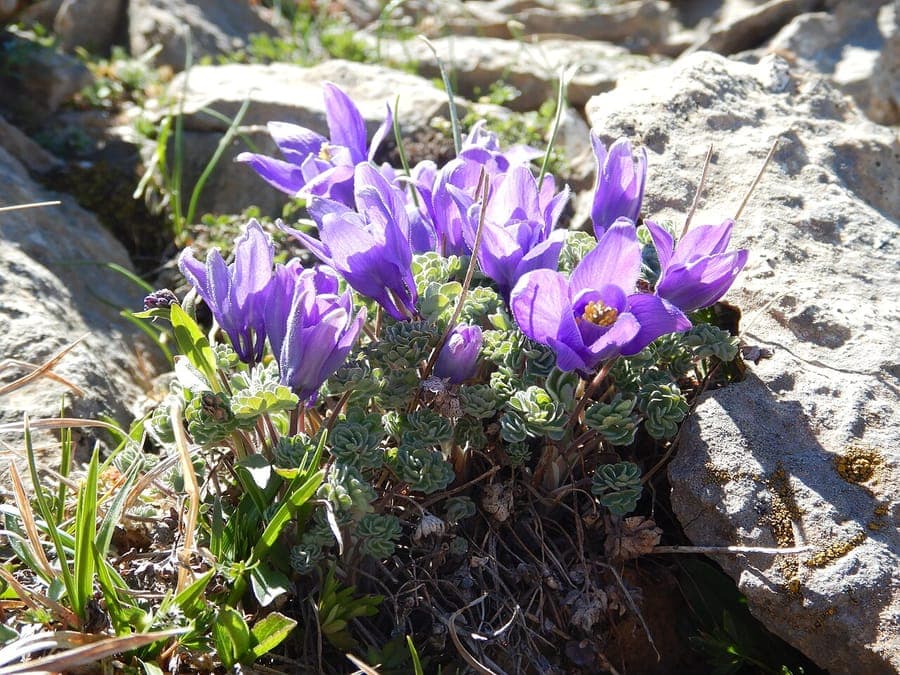
Matt Lavin from Bozeman, Montana, USA / CC BY-SA 2.0, via Wikimedia Commons
Aquilegia jonesii: complete guide
Aquilegia jonesii
Want to see Aquilegia jonesii: complete guide in your garden?
1 minute, no credit card
Aquilegia jonesii, known as Jones' columbine, blue limestone columbine, or Aquilegia jonesii, is a rare, frost-hardy alpine flower from the Ranunculaceae family. Endemic to the Rocky Mountains of Wyoming, Montana and Alberta, this plant grows naturally on limestone-rich mountain slopes at elevations of 2000 to 3500 metres, where snow persists long and growth is restricted. It is a true miniature columbine for the dedicated alpinist, not for the faint-hearted. This plant demands perfect drainage, cool growing conditions and meticulous moisture management.
Overview
Aquilegia jonesii is an exceptionally compact alpine perennial reaching merely 10 to 25 centimetres in height. It forms dense, low rosettes of finely lobed, blue-green foliage. Flowers are small, approximately 2-2.5 centimetres in diameter, with violet to blue petals surrounding short, stout spurs. The plant flowers June to July, usually abundantly relative to its size. After flowering, distinctive seed capsules develop. This is an extremely slow-growing plant with considerable longevity, potentially surviving 10-20 years from a single crown. Exceptionally drought-tolerant once established in appropriate conditions.
Appearance and bloom
Aquilegia jonesii presents a low, compact silhouette even when not flowering. Flowers are small yet distinctive, typically violet to blue with yellow stamens and short spurs. They emerge singly, not in clusters. Flowering duration extends 3-4 weeks. Seed capsules are highly decorative and persist long. The plant is nearly invisible when not in bloom, growing so slowly that visible change is practically undetectable. This is a plant demanding patience, not instant gratification.
Ideal location
Position Aquilegia jonesii in full sun on a cool, ventilated location in an alpine rock garden or scree bed. Minimally 6 hours direct sunlight daily. Provide light protection against intense midday sun in very warm regions, but full sun is optimal. Ensure excellent air movement to prevent moisture problems. In warm, humid climates, this plant is practically impossible outdoors outside containers in controlled conditions. Alpine troughs, raised alpine beds and impeccably drained rock gardens are ideal.
Soil preparation
Aquilegia jonesii demands perfect drainage without compromise. Use a mixture of alpine grit compost (50%) plus additional small gravel or split (50%). The plant thrives in limestone-rich soils in its habitat, thus pH 7.0-8.0 is preferred. Acidifying amendments or excessive organic matter are unwelcome. For container cultivation, mix alpine compost (John Innes Seed Compost) with gritty perlite and small gravel in ratio 50:25:25. This cannot be overstated: perfect drainage is everything for this plant. Heavy, moisture-retentive soils are fatal.
Free design
Want to see Aquilegia jonesii: complete guide in your garden? Make a free design now.
Watering
Watering is critical yet challenging. The plant enjoys moist growth during growing season (May-July) but tolerates neither stagnation nor waterlogging. Water carefully every 2-3 days when actively growing, but ensure water drains rapidly. For container cultivation, water when surface feels dry to 1 centimetre depth. In winter (October-April), water extremely minimally, almost not at all. Overwatering is the principal cause of loss. Better too dry than too wet. In rainfall-heavy regions, supplementary drainage or protection may be necessary.
Pruning and maintenance
Almost no pruning required. Permit seed capsules to remain for seeding and visual interest. After seed maturation (August-September), seed capsules may be removed or left standing. The plant retains foliage throughout winter under favourable conditions. In late winter, you may remove dead material. Monitor for spider mites in dry indoor conditions, though these plants are typically highly resistant. Minimal feeding; no feeding first year, light feeding during growing seasons thereafter.
Maintenance calendar
February-March: Sow fresh seed (very poor germination; fresh seed is essential) in cool medium at 15°C. May: Prick out seedlings very carefully into individual pots with impeccable drainage. June-July: Plant outdoors into alpine garden or raised containers. June-October: Water regularly; feed once in July. October-May: Extremely dry; winter growth ceases.
Winter hardiness
Aquilegia jonesii is exceptionally frost-hardy, withstanding temperatures to -30°C or colder in well-draining soil. In very cold regions, the greatest threat is not frost but winter moisture excess. Wet feet kill this plant faster than any frost. In colder zones, better grown in alpine containers relocated to an unheated cold greenhouse or dry, protected overwinter location. In warm regions (zones 8-10), this plant is extremely challenging; many gardeners succeed by growing it in containers placed outdoors in summer but relocated indoors to a cold greenhouse for winter dormancy.
Companion planting
Aquilegia jonesii fits best in alpine rock gardens, scree beds or alpine troughs with other small alpines demanding similar drainage. Pair with Saxifraga, Androsace, Dianthus alpinus, Sempervivum and other true alpines. It is too small for standard garden borders; reserve it for dedicated alpine settings. Its extremely low stature means it is nearly invisible among larger plants; ensure prominent placement where it may be observed.
Closing remarks
Aquilegia jonesii is for the truly dedicated, knowledgeable alpinist. This is not for beginners or lazy gardeners. It demands perfect drainage, cool growing conditions, meticulous moisture management and patience. Sow in March, plant out in June, water cautiously, grow patiently, and enjoy minuscule blooms across decades. This is an investment in time and care, not instant reward. But for devotees of rare alpines, this Rocky Mountain treasure is unquestionably worthwhile.
Sources: Alpine seed exchanges (ARGS, ASBEC, NARGS) offer your best chances for authentic seed. Standard garden centres do not stock this. Online alpine seed specialists assist greatly. German and Dutch alpine club seed exchanges are invaluable. A true rarity for dedicated collectors!
Want to see Aquilegia jonesii: complete guide in your garden? Make a free design now.
Upload a photo, pick a style, and get a photorealistic design with plant list in under a minute.
10,000+ gardens designed already
No credit card required


Similar plants
Drummond's anemone: complete guide
Anemone drummondii
Discover Drummond's anemone (Anemone drummondii): a silvery-grey mountain plant for cool rock gardens and alpine troughs.
Korean clematis: complete guide
Clematis serratifolia
Clematis serratifolia is a hardy climber with fragrant yellow bell flowers in August-September. Pruning group 3, location and care tips.
Aquilegia brevistyla: complete guide
Aquilegia brevistyla
Discover Aquilegia brevistyla, the elegant North American columbine. Growing tips, shade tolerance, and design ideas for woodland and shadowed gardens.