
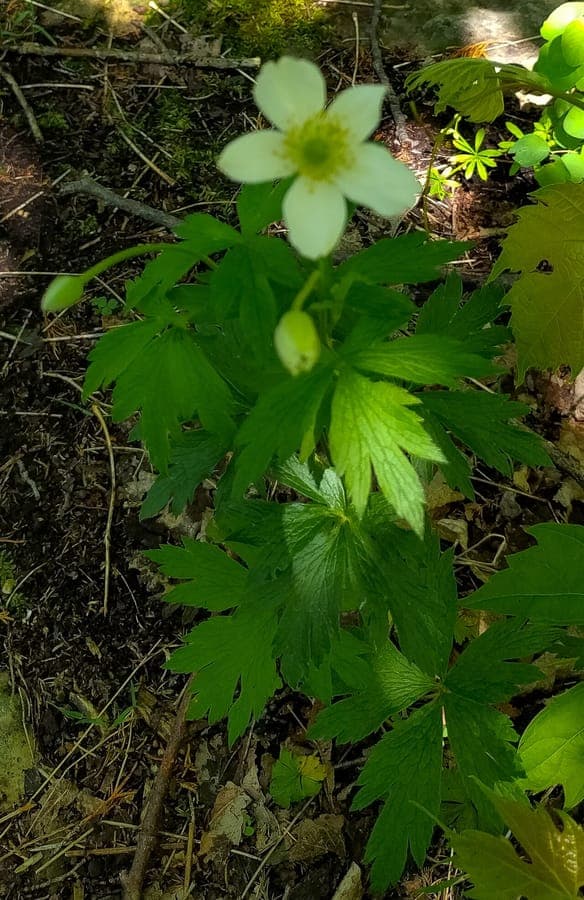
Joshua Mayer from Madison, WI, USA / CC BY-SA 2.0, via Wikimedia Commons
Anemone cylindrica: complete guide
Anemone cylindrica
Want to see Anemone cylindrica: complete guide in your garden?
1 minute, no credit card
Overview
Anemone cylindrica, commonly known as candle anemone, longhead anemone, or thimbleweed, is an elegant native wildflower from North America. This charming plant naturally occurs in prairies and meadows from Canada to the southern United States. The plant is prized for its delicate flowers and interesting seed heads that remain attractive throughout the season.
Although Anemone cylindrica is native to North America, it also grows beautifully in European gardens, especially in regions with moderate summers. It is a valuable addition to wildflower borders and natural garden schemes.
Appearance and Bloom
Anemone cylindrica grows as an upright plant reaching 30-60 cm in height. The stems are smooth and green, with finely divided leaves growing at the base. The basal leaves are deeply lobed and resemble cucumber leaves with a silky texture.
Flowers appear from May through July and are small but numerous. They display a white to pale green color with yellow stamens in the center. After flowering, distinctive, elongated seed heads form that turn from green to beige. These seed heads give the plant its name "candleflower" due to their candle-like silhouette.
Ideal Location
Anemone cylindrica thrives in full sun to light shade. The plant feels most at home in locations with at least 4-6 hours of direct sunlight daily. In warmer climates, light shade can help keep blooms fresh longer.
Place this plant in wildflower borders, prairie gardens, or natural landscapes. It also works well in dappled shade under deciduous trees if the soil drains well.
Soil
Anemone cylindrica grows best in well-drained, moderately moist soils. The plant accepts various soil types, from sandy to clayey, as long as drainage is good. It can also grow in dry situations but blooms more profusely in areas with regular moisture.
The plant is not particular about pH and grows in acidic to neutral terrain. Heavy clay soils are less ideal; add compost to improve structure.
Free design
Want to see Anemone cylindrica: complete guide in your garden? Make a free design now.
Watering
Anemone cylindrica has moderate water requirements. After planting, water regularly until well-established. Once established, the plant is reasonably drought-tolerant, though it blooms more abundantly with regular moisture.
Water during dry periods to stimulate blooming. Ensure water drains well - this plant cannot tolerate standing water and may develop root rot if too wet.
Pruning
Anemone cylindrica requires very little pruning. Leave the seed heads in place so they provide interesting structure and feed birds. Remove only dead or damaged stems in early spring.
If you wish to control the plant, cut off seed heads after they mature (by August). This can stimulate regrowth, though it is not essential.
Maintenance Calendar
Spring (March-May): Remove dead stems, plant new specimens, divide large clumps.
Summer (June-August): Monitor for drought, leave seed heads for bird food.
Autumn (September-October): Leaves can be left in place for shelter.
Winter (November-February): Plant dormancy, no maintenance needed.
Winter Hardiness
Anemone cylindrica is extremely winter hardy and tolerates freezing winters without problems. The plant is suitable for all northern European climate zones. The roots are deep and can endure prolonged dry weather and harsh winters.
The plant dies back in winter and re-emerges from the roots in spring.
Companion Plants
Anemone cylindrica grows well in wildflower combinations with:
- Other anemones (Anemone nemorosa, A. tomentosa)
- Black-eyed Susan (Rudbeckia fulgida)
- Hollyhocks (Alcea rosea)
- Sunflowers (Helianthus species)
- Wild geranium (Geranium species)
- Grass species for texture
Conclusion
Anemone cylindrica is a charming wildflower that brings natural beauty to your garden. With its delicate flowers and striking seed heads, it is a fascinating focal point in wildflower borders and prairie gardens.
This plant is available from specialized suppliers. Try ordering seeds online for the most economical option. Integrate Anemone cylindrica into a wildflower design via gardenworld.app for a more natural, biologically rich garden experience.
Want to see Anemone cylindrica: complete guide in your garden? Make a free design now.
Upload a photo, pick a style, and get a photorealistic design with plant list in under a minute.
No credit card required


Similar plants
Drummond's anemone: complete guide
Anemone drummondii
Discover Drummond's anemone (Anemone drummondii): a silvery-grey mountain plant for cool rock gardens and alpine troughs.
Korean clematis: complete guide
Clematis serratifolia
Clematis serratifolia is a hardy climber with fragrant yellow bell flowers in August-September. Pruning group 3, location and care tips.
Aquilegia brevistyla: complete guide
Aquilegia brevistyla
Discover Aquilegia brevistyla, the elegant North American columbine. Growing tips, shade tolerance, and design ideas for woodland and shadowed gardens.