
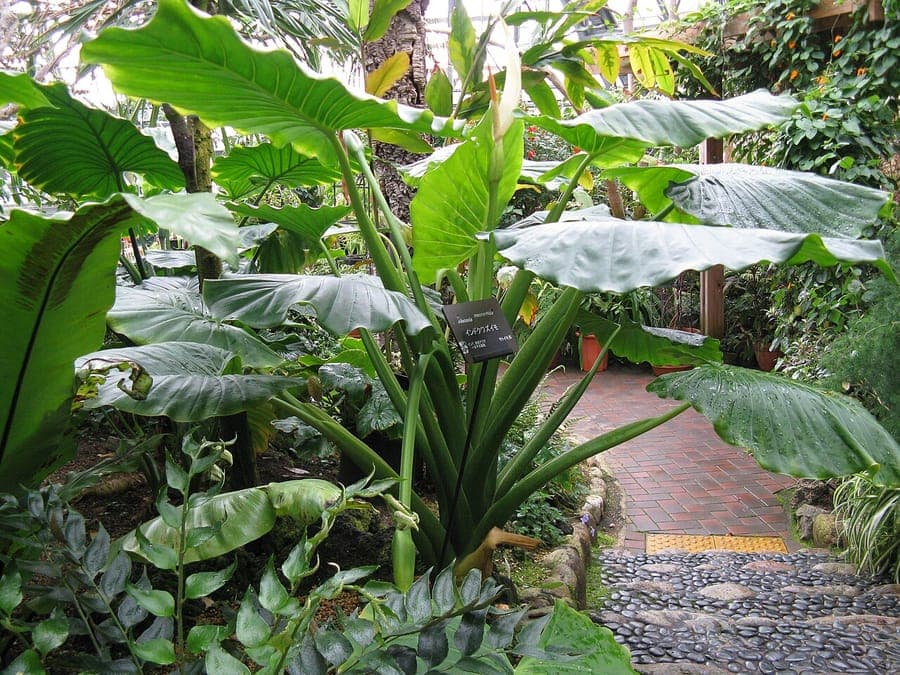
KENPEI / CC BY-SA 3.0, via Wikimedia Commons
Alocasia macrorrhizos: complete guide
Alocasia macrorrhizos
Want to see Alocasia macrorrhizos: complete guide in your garden?
1 minute, no credit card
Overview
Alocasia macrorrhizos, commonly known as the giant taro or ape plant, is a stunning tropical specimen from the Araceae family. Native to Southeast Asian rainforests from Malaysia to Australia, this plant is prized for its enormous arrow-shaped leaves that can reach 90 centimeters in length. In Europe, it thrives best indoors in warm, humid conditions, making it a spectacular houseplant for those willing to provide proper care.
The plant grows rapidly in warm, moist environments and can reach substantial heights within a few years. While outdoor cultivation in Northern Europe is impossible due to climate, the plant rewards indoor gardeners with years of lush growth when properly maintained.
Appearance and bloom
The primary appeal of Alocasia macrorrhizos lies in its foliage. Leaves are massive, glossy green, with prominent veining that provides exceptional texture and visual interest. The leaves emerge from long, sturdy petioles that extend from the tuberous rhizome at the base.
In tropical climates, the plant produces small, inconspicuous yellow spathes, but indoor cultivation rarely triggers flowering. The insignificant flowers pale in comparison to the spectacular foliage anyway.
The stem darkens to grayish-brown as the plant matures and thickens. Many gardeners prune the main stem to encourage bushier growth and multiple branches rather than a single tall stem.
Ideal location
Alocasia macrorrhizos thrives in warm, humid locations with bright, indirect light. Direct sun scorches the foliage, so place the plant a few meters from windows where light is filtered. In Northern Europe, an east-facing window with gentle morning light is ideal.
Warmth is essential. The plant performs optimally between 18 and 25 degrees Celsius. Below 15 degrees, growth nearly stops, and leaf drop accelerates significantly.
While artificial lighting can supplement, the plant grows much stronger with natural light. Position it in a bright spot but away from direct sun exposure.
Soil
This plant demands highly draining yet moisture-retentive soil. A mix of peat, coconut coir, and perlite works excellently. Add sand or fine gravel to improve drainage without sacrificing water-holding capacity. The plant grows faster in nutrient-rich soil, so avoid using pure cactus mix.
Create a balanced medium: peat or coco-coir (50%), perlite (30%), and orchid bark (20%). Alternatively, garden centers (retail chains like Intratuin and Gamma in the Netherlands, OBI and Hornbach in Germany) stock pre-made tropical plant potting mixes that perform well.
Free design
Want to see Alocasia macrorrhizos: complete guide in your garden? Make a free design now.
Watering
Balancing moisture is crucial. Water when the top 2-3 centimeters of soil feels dry to the touch. During the growing season (spring and summer), this might mean watering twice to three times weekly, depending on pot size and ambient humidity.
In winter, growth slows significantly, so reduce watering to once every 1.5 to 2 weeks. Never allow the plant to sit in standing water, as root rot develops rapidly.
Use room-temperature water, preferably rainwater or dechlorinated tap water. Misting the foliage regularly raises humidity and removes dust, both of which the plant appreciates greatly.
Pruning
Pruning is optional but recommended for shaping. Remove yellowing or damaged leaves close to the stem. If the plant becomes too tall, cut the main stem. This encourages branching from lateral buds, creating a fuller, bushier plant. The removed top can be rooted in water and potted as a new plant once roots appear.
Regularly remove dead foliage to reduce pest problems and prevent energy waste.
Maintenance calendar
January to March: Minimal care. Fertilize monthly. Water sparingly (every two weeks). Growth stagnation is normal.
April to May: Growing season begins. Increase watering to 2-3 times weekly. Begin weekly feeding. Watch for new growth.
June to August: Peak growth. Water frequently; check soil daily. Fertilize weekly. Mist foliage regularly. Ensure good air circulation.
September to October: Gradually reduce fertilizer. Water less frequently. Temperatures can drop slightly.
November to December: Minimal feeding. Sparse watering. Move to cooler location (15-18 degrees Celsius) for dormancy.
Winter hardiness
This plant is completely frost-tender and cannot tolerate temperatures below 10 degrees Celsius. It must remain indoors year-round in Northern Europe. Even in warm European summers, move the plant outdoors only from May to September on a sheltered spot, bringing it inside well before autumn chill arrives.
If moving the plant from outdoor to indoor, acclimate it gradually by placing it in shade for two weeks before moving to its permanent indoor location.
Companion plants
If growing the plant indoors, position it away from air conditioning units and radiators, which dry the air. In warmth-controlled conservatories or terrariums, it pairs beautifully with smaller Alocasia amazonica, Caladium varieties, and tropical ferns that share similar warmth and humidity preferences.
Closing
The giant alocasia is a spectacular plant for patient, attentive gardeners. Many abandon the effort when leaf drop occurs during dry winter months. However, with proper environmental adaptation, consistent care, and patience, you'll enjoy years of dramatic tropical foliage. Garden centers and online nurseries regularly stock young plants. Monitor leaf edges for yellowing (indicating watering issues) and check undersides for pests. With dedication, your alocasia will reward you abundantly with luxurious green leaves that transform any space.
Want to see Alocasia macrorrhizos: complete guide in your garden? Make a free design now.
Upload a photo, pick a style, and get a photorealistic design with plant list in under a minute.
10,000+ gardens designed already
No credit card required


Similar plants
Arrowhead vine: complete guide
Syngonium auritum
Everything about Syngonium auritum, the tropical five-fingers houseplant. Care, location, watering, and pruning explained clearly for beginners and enthusiasts.
Minute duckweed: complete guide to Lemna perpusilla
Lemna perpusilla
Everything about Lemna perpusilla, the minute duckweed: ecology, pond management, water quality and care in garden water features.
Dead horse arum lily: complete guide
Helicodiceros muscivorus
Everything about the dead horse arum lily (Helicodiceros muscivorus): growing conditions, spectacular bloom, thermogenesis, and care for this Mediterranean aroid.