
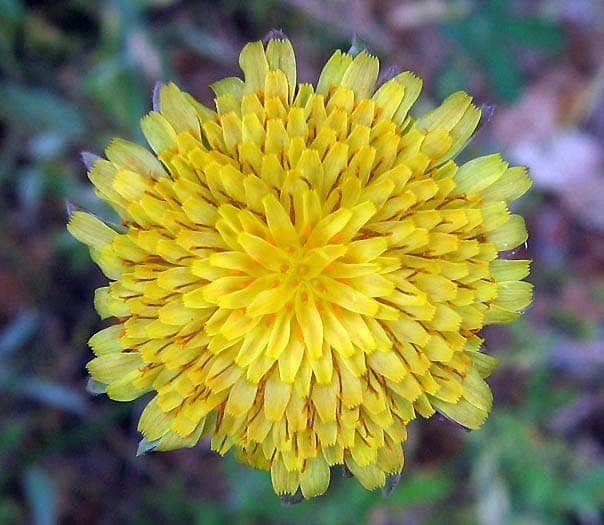
Anthony Valois and the National Park Service / Public domain, via Wikimedia Commons
Grassland agoseris: complete guide
Agoseris grandiflora
Want to see Grassland agoseris: complete guide in your garden?
1 minute, no credit card
Overview
Agoseris grandiflora, commonly known as grassland agoseris or bigflower agoseris, is a striking perennial herb in the daisy family (Asteraceae). Native to the grasslands and mountain meadows of western North America - ranging from British Columbia and Montana south through California, Nevada, Utah, and Idaho - this plant has adapted to open, sunny habitats with well-drained soils and seasonally dry conditions. Its botanical epithet, grandiflora, means 'large-flowered', a name well earned by its conspicuous golden-yellow flower heads.
The genus Agoseris contains roughly twenty species, all native to the Americas. It belongs to the chicory subfamily (Cichorioideae) and is closely related to dandelions (Taraxacum). Common English names include large-flowered false-dandelion, large-flowered goat-chicory, bigflower agoseris, and Puget Sound agoseris. The species was formally described in 1891 by botanist Edward Lee Greene; historical synonyms include Macrorhynchus grandiflorus, Troximon grandiflorum, and Stylopappus grandiflorus.
For gardeners interested in naturalistic or prairie-style planting, Agoseris grandiflora offers real ornamental value. The large, bright yellow flower heads are produced on tall, slender scapes rising from a basal rosette of long leaves - creating a bold, vertical statement in borders and meadow gardens. At gardenworld.app, you can design complete prairie-inspired front garden layouts that incorporate wildflower species like this one alongside compatible perennials and ornamental grasses.
The plant grows at a moderate pace, forming a single-crown forb with a taproot system that makes it notably drought-tolerant once established. It self-seeds freely, which allows it to naturalise in suitable spots and gradually form loose colonies in open, sunny beds.
Appearance & bloom cycle
Agoseris grandiflora forms a compact basal rosette of long, lance-shaped to spatulate leaves with coarse texture. The leaves are light to mid-green and can reach 15 to 40 cm in length, often with slightly wavy or shallowly lobed margins reminiscent of dandelion foliage but considerably larger and more robust. Like most members of the chicory subfamily, the plant produces a milky latex sap when any part is damaged.
Flower stems (scapes) rise straight from the rosette, typically 30 to 60 cm tall and occasionally up to 80 cm in ideal conditions. Each scape bears a single flower head composed entirely of ray florets (there are no disc florets) in brilliant golden-yellow, measuring 3 to 5 cm across - notably larger than the flowers of most other Agoseris species. Bloom time is May through August in the plant's native range; in temperate European gardens, flowering typically occurs from June to August, peaking in July.
After flowering, the plant produces achenes topped with a feathery white pappus, very similar to a dandelion clock. These wind-dispersed fruits give the plant an attractive, airy appearance in late summer and early autumn. The species behaves as a biennial or short-lived perennial, maintaining itself through generous self-seeding in favourable conditions.
Ideal location
Full sun is non-negotiable for Agoseris grandiflora. The plant originates from open grasslands and exposed mountain slopes where it receives direct sunshine for most of the day. In shaded or partially shaded positions, plants become lax and floppy, produce fewer and smaller flowers, and are more susceptible to fungal problems. Aim for at least six hours of direct sunlight daily.
In the garden, this species thrives in dry borders, rock gardens, prairie-style plantings, and wildflower meadows. It pairs well with other sun-loving, drought-tolerant perennials and ornamental grasses. Good air circulation around the plants further reduces the risk of powdery mildew and other fungal diseases. In warm regions with hot summers, some afternoon shade can be beneficial, but morning sun is always important.
For front garden designs with a naturalistic character, Agoseris grandiflora is an excellent building block. Visit gardenworld.app to explore how prairie wildflowers can be combined into cohesive, low-maintenance front garden schemes.
Soil requirements
Agoseris grandiflora is unfussy about soil composition as long as drainage is good. In the wild, it grows on lean to moderately fertile mountain meadow soils - rich, nitrogen-heavy soils produce lush foliage at the expense of flowers and shorten the plant's lifespan. The preferred soil pH is 5.8 to 7.3, meaning the plant tolerates both mildly acid and slightly alkaline conditions.
Sandy loam or stony, gritty soil is ideal. On heavy clay, improve drainage by incorporating coarse sand and fine grit at a ratio of roughly one part amendment to three parts clay, or consider raised beds. Before planting, work in 5 to 8 cm of well-rotted compost to improve structure; avoid excessive organic amendments, as these lead to overly vigorous growth. The taproot system enables the established plant to exploit deep soil moisture during dry spells, so deep, well-drained soil is more valuable than a rich top-dressing.
Avoid waterlogged conditions at all times: prolonged wet soil, especially in winter, will rot the crown and roots. This is the most common cause of failure with this species in cultivation.
Free design
Want to see Grassland agoseris: complete guide in your garden? Make a free design now.
Watering
Once established - typically from the second year onwards - Agoseris grandiflora is a genuinely drought-tolerant plant. In temperate garden climates with moderate annual rainfall (600–800 mm), established specimens rarely need supplemental watering except during prolonged dry spells.
During the first growing season after planting or sowing, regular watering is important to help the taproot develop. Keep the soil evenly moist (but not waterlogged) for the first two to four weeks after transplanting or until seedlings are well established. Once rooted in, switch to deep, infrequent watering: apply 10 to 15 litres per square metre every two weeks during dry periods, letting the water penetrate to the deeper root zone rather than watering little and often.
Overwatering is far more damaging than underwatering for this species. If the soil remains consistently damp, root and crown rot will follow. Drip irrigation or a soaker hose applied at the base of the plant is the best delivery method, keeping foliage dry and reducing fungal risk. Water in the morning whenever possible.
Pruning
Agoseris grandiflora requires minimal pruning. After flowering in late summer, deadhead spent scapes by cutting them back to 5 to 10 cm above the ground. Leave some stems to set seed if you want the plant to self-sow and naturalise in the border - the wind-dispersed achenes will carry the seeds to suitable gaps in nearby soil.
The basal leaf rosette remains evergreen or semi-evergreen and does not need cutting back. In early spring, remove any dead or tatty leaves from the previous year to allow fresh growth to emerge cleanly. There is no need for hard cutting back unless the crown shows signs of rot or pest damage.
In situations where self-seeding is not desired, cut off all flower stems before the pappus opens fully. This simple management step keeps the plant contained and prevents it from spreading into unwanted areas of the garden.
Maintenance calendar
February–March: Remove old dead leaves; apply a thin top-dressing of well-rotted compost around (not on top of) the crown. Check for slug damage on emerging young leaves.
April–May: Begin regular monitoring; water if extended dry spells occur. Note whether any self-sown seedlings need thinning - transplant the strongest to desired positions while they are still small (5–8 cm tall).
June–August: Main flowering period; enjoy the bold golden blooms. Deadhead spent flowers promptly if self-seeding is not wanted. Water during prolonged dry spells.
September: Allow remaining seed heads to ripen if naturalising is desired. Trim back spent stems to 5–10 cm after seed dispersal.
October–November: Apply a light mulch of leaf mould or fine bark around the crown (5–8 cm) to protect from hard frost and to conserve moisture. Do not bury the crown itself.
December–January: Minimal care required. The rosette provides the plant with its own natural protection and adds some winter interest to the border.
Winter hardiness
Agoseris grandiflora is fully winter-hardy in most temperate European gardens. Growing naturally in mountain habitats that regularly experience temperatures of -20 °C or below, the species copes with USDA hardiness zones 4 through 8 without difficulty. This covers the Netherlands, Belgium, the UK, most of Germany, and northern France comfortably.
The main winter risk is not cold but moisture: wet, poorly drained soil in winter is far more likely to kill the plant than low temperatures alone. Ensure good drainage before winter sets in, and apply a light mulch to protect the crown from repeated freeze-thaw cycles. In sheltered gardens or at milder coastal sites, the plant may remain semi-evergreen through winter, retaining much of its basal foliage.
After a hard winter, plants may look ragged by March, but they generally recover fully as temperatures rise in April, sending up fresh leaves and then flower scapes in June or July.
Companion plants
Agoseris grandiflora combines most naturally with plants that share its preference for full sun, good drainage, and moderate fertility. The following pairings work particularly well in naturalistic borders and prairie-style plantings.
Echinacea purpurea and Echinacea pallida (coneflowers) provide purple and white flowers that contrast beautifully with the bright yellow of the agoseris. The bloom periods overlap partially, creating a long-lasting prairie scene. Gaillardia species (blanket flowers) echo the warm tones of the agoseris and extend the colour palette into red and orange.
Ratibida columnifera (prairie coneflower) and Rudbeckia hirta (black-eyed Susan) contribute a complementary yellow palette. Low ornamental grasses - Bouteloua gracilis (blue grama grass) or Koeleria macrantha (crested hair-grass) - provide a fine-textured backdrop that sets off the upright flower scapes. Penstemon species offer early-season colour to extend the display.
Avoid pairing with aggressive spreaders that might out-compete the rosette. Leave adequate space between plants (30–45 cm) to allow for self-seeding and air circulation. Remove surplus self-sown seedlings promptly to prevent overcrowding.
Closing
Agoseris grandiflora is an underused gem for sun-drenched, naturalistic gardens. With large golden flowers on slender stems, easy-going cultural requirements, and genuine drought tolerance, it earns a place in any prairie border, rock garden, or wildflower meadow. Plant it, give it space, keep the drainage sharp, and it will reward you with reliable seasonal beauty and the occasional pleasant surprise of a self-sown seedling in a new spot.
Ready to design a garden that features bold prairie plants like Agoseris grandiflora? Visit gardenworld.app to create a complete, personalised front garden design with professionally chosen plant combinations.
Want to see Grassland agoseris: complete guide in your garden? Make a free design now.
Upload a photo, pick a style, and get a photorealistic design with plant list in under a minute.
10,000+ gardens designed already
No credit card required


Similar plants
Calendula stellata: complete guide
Calendula stellata
Complete guide to Calendula stellata, the star-flowered marigold from Sicily: location, soil, watering and companion planting tips.
Korean chrysanthemum: complete guide
Chrysanthemum x rubellum
Chrysanthemum x rubellum is a hardy autumn perennial with single pink to copper flowers from August to November. Care and combinations.
Helianthus divaricatus: complete guide
Helianthus divaricatus
Helianthus divaricatus is a North American woodland sunflower with yellow summer blooms, ideal for naturalistic borders and shady edges.