
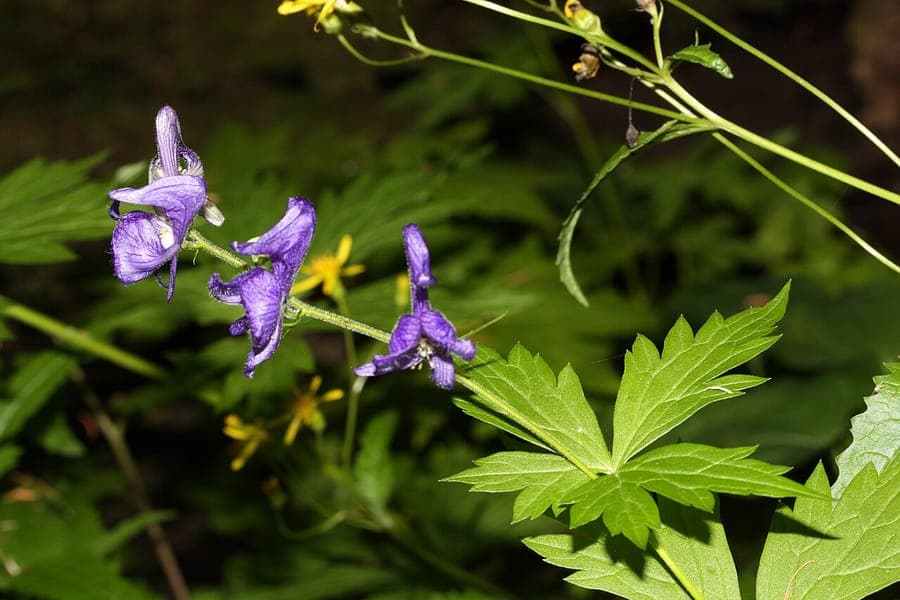
Walter Siegmund (talk) / CC BY-SA 3.0, via Wikimedia Commons
Columbia monkshood: complete guide
Aconitum columbianum
Want to see Columbia monkshood: complete guide in your garden?
1 minute, no credit card
Overview
Aconitum columbianum, commonly known as Columbia monkshood or Columbian monkshood, is a striking perennial belonging to the family Ranunculaceae. Described by botanists Torrey and Gray in 1838, it takes its name from its original range along the Columbia River in western North America. The species occurs naturally from British Columbia in Canada southward through Montana, Wyoming, Colorado, Utah, Oregon, Washington and California, with outlying populations in the Mexican states of Sonora and Chihuahua. This makes it one of the most widely distributed representatives of the genus Aconitum in the western hemisphere.
As a member of genus Aconitum, this plant shares the imposing appearance and notorious toxicity that characterises the entire group. All plant parts contain aconitine and related alkaloids - extraordinarily dangerous compounds that can affect the nervous system and heart even in small doses. The plant must never be placed where young children or pets have access, and hands should be thoroughly washed after handling any plant material. Garden designers wishing to use dramatic but toxic perennials in an aesthetically pleasing composition can find inspiration for safe and beautifully arranged planting designs at gardenworld.app.
Aconitum belongs to the buttercup family (Ranunculaceae), which also includes buttercups, larkspurs, anemones and clematis. The genus counts more than 250 species worldwide, many concentrated in mountain and subalpine regions. Columbia monkshood is a herbaceous perennial with a single crown and a moderate rate of development.
Appearance and bloom cycle
Aconitum columbianum is an upright-growing perennial that in optimal conditions reaches 60 to 150 cm in height. The stems are strong and erect, with medium-textured foliage. The leaves are palmately divided, typically five-lobed, with a deep green, glossy upper surface. The lobes are themselves further incised, giving the plant a finely dissected, somewhat ferny character.
The flowers are the most spectacular feature of this species. As in other monkshoods, they consist of five sepals, the uppermost of which forms a distinctive hood or helmet shape - hence the common name. Flowers of Aconitum columbianum are blue to blue-purple, occasionally creamy white or lilac depending on the population and site conditions. The main flowering period falls in midsummer, typically June through August depending on elevation and latitude. At higher altitudes the plant blooms later, sometimes from August into September.
Flowers are pollinated by bumblebees large enough to push into the hood. After blooming, the seed pods - small, three-part follicles - ripen and split open to release the toxic seeds, sometimes aided by wind dispersal. The above-ground foliage dies back to the ground after the first hard frost, and the plant overwinters as a tuberous rootstock.
Ideal location
In its native range, Aconitum columbianum is a plant of moist mountain meadows, forest edges, stream banks and subalpine grasslands. In the garden, this translates to a preference for semi-shade to shade, although in cooler climates the plant tolerates full sun provided the soil stays sufficiently moist. A position with morning sun and afternoon shade works particularly well in warmer regions: the flowers keep their intense blue colour better when not exposed to strong afternoon heat.
The plant forms a single crown and does not tolerate prolonged waterlogging at the roots. Well-drained but moisture-retentive soil is essential. When spacing, allow 50–60 cm from neighbouring plants to accommodate the considerable spread at flowering. For group plantings in a perennial border, three to five plants spaced 45 cm apart create a full, impressive effect.
Soil requirements
Aconitum columbianum tolerates a soil pH of 5.4 to 7.2 - a relatively broad range encompassing mildly acidic to lightly alkaline conditions. This makes the species suitable for most garden soils in temperate climates. The preference is for humus-rich, slightly acidic to neutral soil with good moisture retention.
When planting in autumn (September–October) or spring (March–April), enrich the soil with a generous amount of well-rotted compost or aged manure - approximately 5 to 8 litres per planting hole. This improves both water retention and soil structure. On very light, sandy soils, monthly additions of organic matter during the first two seasons help support the plant as it establishes.
The species does not tolerate consistently wet, boggy soils or soils with high salt concentrations. On soils with a pH above 7.5, leaf yellowing and reduced vigour may occur; in these cases, apply sulphur granules to gradually lower the pH. At garden centres you will find soil acidifiers suitable for this purpose.
Watering
Aconitum columbianum has clear requirements for soil moisture. Adapted to the moist mountain soils of western North America, where snowmelt and regular summer rainfall maintain consistent moisture levels, the plant must not be allowed to dry out: the soil should feel lightly moist at a depth of 5–10 cm at all times.
During dry summers, regular watering is essential. A generous mulch layer - 5 to 8 cm of bark chips, chopped leaves or straw - around the base of the plant significantly reduces water loss and protects the roots from extreme heat. Avoid wetting the foliage in the evening to reduce the risk of fungal disease; drip irrigation at the base of the plant is the preferred approach.
Newly planted specimens need extra attention during their first summer: water regularly (two to three times per week in dry weather) until a full root system has developed. Established plants are more resilient but still benefit from supplementary watering during extended dry spells.
Free design
Want to see Columbia monkshood: complete guide in your garden? Make a free design now.
Pruning
Aconitum columbianum requires very little pruning. In autumn, once frost has killed the above-ground parts, cut the stems back to 5–8 cm above ground level. This prevents overwintering of disease and pests in the dead stems and keeps the garden looking tidy.
In spring, new shoots emerge from the rootstock; take care not to damage these vulnerable young growth tips when weeding or carrying out other garden tasks. Removing individual flower stems after they have bloomed can sometimes stimulate a second, weaker flush of flowers, but this is not strictly necessary.
The plant does not produce aggressive runners or rhizomes and remains compact, so it will not crowd out neighbouring plants. Maintenance is therefore straightforward and limited to the annual autumn tidy-up and occasional removal of dead leaves during the growing season.
Maintenance calendar
January – February: Dormancy. The rootstock survives underground. No action needed. Ensure the mulch layer remains intact.
March – April: New shoots appear. Partially remove the mulch to allow the soil to warm. Apply a slow-release nitrogen-rich fertiliser (for example, horn meal or a balanced organic granule fertiliser). Plant new specimens when night temperatures remain above 5 °C.
May: The plant grows rapidly. Stake with bamboo canes or plant supports at open, windy sites - the tall flowering stems can topple in strong gusts.
June – August: Flowering period. Enjoy the striking blue hoods. Water regularly in dry weather. Remove spent flowering stems to encourage possible repeat blooming.
September: After flowering, seed pods ripen. Leave some pods for natural seed dispersal or harvest for propagation. Apply a topdressing of compost (3–5 cm) around the base.
October – November: First frosts kill the foliage. Cut stems back to 5–8 cm above ground. Apply an 8 cm winter mulch of bark chips.
December: Full dormancy. No further intervention needed.
Winter hardiness
Aconitum columbianum is an excellent perennial for cold-climate gardens. The species is rated for USDA hardiness zones 3 to 7, meaning it tolerates temperatures down to -40 °C (zone 3) provided the ground does not freeze deeply and continuously through the root zone. In temperate Western European gardens (USDA zones 7–8), the plant is reliably hardy.
The tuberous rootstock functions as a carbohydrate reserve and enables the plant to overwinter without difficulty. A mulch layer of 8–10 cm of bark chips or chopped leaves around the base of the plant provides extra insurance in severe winters and protects the root collar from frost heave. In regions with wet, cold winters, ensure the soil does not become structurally waterlogged, as this can cause the tubers to rot. A gentle slope or improved drainage achieved by adding horticultural grit or coarse sand to the planting mix prevents this problem.
Companion plants
Aconitum columbianum combines beautifully in the garden with other perennials that share similar site requirements. In a semi-shade border, planting alongside astilbes (Astilbe spp., blooming June–August), hostas (Hosta spp.) and yellow daylilies (Hemerocallis 'Stella de Oro') is particularly effective: the alternation of blue monkshood hoods, white or pink astilbe plumes and broad hosta leaves provides textural and colour interest throughout the growing season.
For a planting along a pond or stream, combinations with teasel (Dipsacus spp.), meadowsweet (Filipendula ulmaria) and yellow flag (Iris pseudacorus) are striking. All three thrive in moist to wet soils and together with Aconitum columbianum create an authentic waterside scene.
In a larger border or cottage garden, Columbia monkshood pairs well with delphiniums (Delphinium cultivars), garden phlox (Phlox paniculata) and purple loosestrife (Lythrum salicaria). Note that all four of these are tall-growing species and therefore belong at the back or middle of a border. At gardenworld.app you can commission a personalised garden design that incorporates dramatic perennials like Aconitum into cohesive and safe planting schemes, tailored to your specific front garden dimensions and style preferences.
Closing thoughts
Aconitum columbianum is one of the most majestic perennials for a semi-shade border or a moist planting alongside water. Its tall stems, elegantly cut foliage and deep blue helmet-shaped flowers give the border a powerful vertical accent from June through August. Care requirements are modest - as long as the soil stays consistently moist - and winter hardiness is outstanding. Always respect the plant's toxicity and keep it out of reach of children and pets. Used thoughtfully in a well-designed planting, it rewards the gardener year after year with one of the most spectacular flowering displays available in the temperate garden.
Want to see Columbia monkshood: complete guide in your garden? Make a free design now.
Upload a photo, pick a style, and get a photorealistic design with plant list in under a minute.
10,000+ gardens designed already
No credit card required


Similar plants
Drummond's anemone: complete guide
Anemone drummondii
Discover Drummond's anemone (Anemone drummondii): a silvery-grey mountain plant for cool rock gardens and alpine troughs.
Korean clematis: complete guide
Clematis serratifolia
Clematis serratifolia is a hardy climber with fragrant yellow bell flowers in August-September. Pruning group 3, location and care tips.
Aquilegia brevistyla: complete guide
Aquilegia brevistyla
Discover Aquilegia brevistyla, the elegant North American columbine. Growing tips, shade tolerance, and design ideas for woodland and shadowed gardens.