
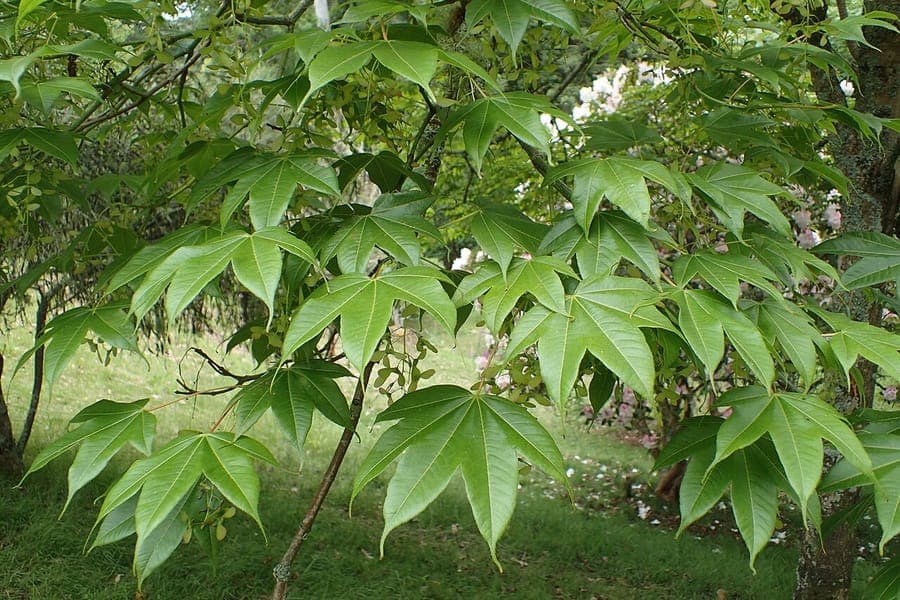
Krzysztof Ziarnek, Kenraiz / CC BY-SA 4.0, via Wikimedia Commons
Acer campbellii: complete guide
Acer campbellii
Want to see Acer campbellii: complete guide in your garden?
1 minute, no credit card
Overview
Acer campbellii, commonly known as Campbell's maple, is a graceful deciduous tree that originates from the Himalayan region, including areas in eastern Nepal, Bhutan, India, and Myanmar. This tree also grows in southeastern China and northern Indo-China. The tree is named after Campbell, a botanist who greatly contributed to knowledge of Himalayan plants.
Acer campbellii is a valuable addition to gardens in temperate climates, especially for its elegant appearance and stunning fall foliage. The tree forms a natural canopy and provides shade and shelter in landscape designs. In its natural habitat, this tree grows at elevations of approximately 2,000 to 3,000 meters, where it has adapted to challenging growing conditions.
Appearance and Bloom
Acer campbellii is a medium-sized deciduous tree that can reach heights of 10 to 20 meters. The tree has a slender, elegant tree form with a narrow crown. The leaves are opposite and have typical maple leaf shapes with five to seven pointed lobes. In spring, the leaves are bright green, and in fall, they turn beautiful shades of orange, red, and yellow.
The flowers of this maple are small, inconspicuous red or purplish flowers that appear in spring before the leaves fully develop. The flowers appear in elongated flower clusters (racemes) and are followed by characteristic winged seeds (samaras) that are also red or purple colored.
Ideal Location
Acer campbellii grows best in a location with full sun to partial shade. In warmer regions, the tree may benefit from some afternoon shade, especially during very hot summers. Ensure the tree is sheltered from wind, as heavy wind gusts can damage the slender branches.
The tree grows best in climates with distinct seasonal changes. It does not thrive in very hot, dry climates and prefers temperate to cold winters. In areas with prolonged drought, the tree will need supplemental water.
Soil
Acer campbellii prefers nutrient-rich, well-draining soils. A pH between 5.5 and 6.5 is ideal. The tree can grow in various soil types, as long as the soil is not compacted or poorly drained.
Add organic material, such as composted leaves or rotted wood, to the soil around the tree. This helps improve soil structure and retains more moisture. In very poor soils, fertilizer in spring can be beneficial.
Ensure the tree has well-drained water, as waterlogged soils can cause root rot.
Watering
Acer campbellii requires regular water, especially during the growing season and in dry periods. Water thoroughly at planting and throughout the first growing season until the tree is well established.
Once the tree is established, it requires less water, although it benefits from supplemental irrigation during dry summers. Mulch around the tree with 5-10 cm of mulch to help retain moisture.
In winter, when the tree loses its leaves, watering is much less necessary.
Free design
Want to see Acer campbellii: complete guide in your garden? Make a free design now.
Pruning
Acer campbellii does not require much pruning. Pruning can primarily be done to remove dead branches and shape the tree. This is best done in late fall or early winter, when the tree is dormant.
Make pruning cuts clean with a sharp tool to prevent tissue damage. Remove branches that cross or grow inward, as well as dead or weakened branches.
Make careful cuts and allow the tree to grow naturally for a graceful appearance.
Maintenance Calendar
FEBRUARY-MARCH: Spring growth begins. Check the tree for damaged branches and make pruning cuts as needed.
APRIL-MAY: Blooming occurs and leaves grow out. Water regularly if there is little rain.
JUNE-AUGUST: Peak growing period. Provide sufficient water during dry periods. Mulch can be renewed.
SEPTEMBER-OCTOBER: Fall foliage occurs. This is an exceptional period for the tree. No extra care needed.
NOVEMBER-JANUARY: Winter dormancy. The tree loses its leaves. Limited water needs. This is a good time for pruning.
Winter Hardiness
Acer campbellii is a hardy tree that can tolerate temperatures down to approximately -15 degrees Celsius. However, the tree grows best in areas with moderate winters. In very severe winter situations, young trees can be damaged, especially by frost after warmer periods.
In cold climates, protection may be useful for young trees, such as wind shelters or protective tree wraps during extreme winter.
Companion Plants
Acer campbellii combines well with other Himalayan plants in landscape designs. Some suitable companions are:
- Rhododendron species (especially hardy cultivars)
- Other maples (Acer pensylvanicum, Acer circinatum)
- Magnolia species
- Cornus species (Japanese dogwood)
- Shade-tolerant understory such as hostas and ferns
These combinations create an attractive woodland landscape with diverse height levels and seasonal changes.
Closing Remarks
Acer campbellii is a fascinating ornamental tree that adds elegance and fall color to any temperate climate garden. With well-drained soil, regular watering, and minimal pruning, this tree will grow for decades. The beautiful fall foliage makes it worthwhile to plant in your landscape.
Plant Campbell's maple in a prominent location where its elegant form and seasonal changes can be fully appreciated. This tree is a real showstopper that will amaze visitors with its growth and beauty. Available at your favorite garden center!
Find more information about Acer campbellii on gardenworld.app, where you can also discover other tree types and garden designs on gardenworld.app.
Want to see Acer campbellii: complete guide in your garden? Make a free design now.
Upload a photo, pick a style, and get a photorealistic design with plant list in under a minute.
No credit card required


Similar plants
Acer pycnanthum: complete guide
Acer pycnanthum
Acer pycnanthum, the Japanese swamp maple, is a fast-growing tree with early red flowers and brilliant autumn color, ideal for damp garden settings.
Freeman maple: complete guide
Acer × freemanii
Everything about the Freeman maple (Acer x freemanii): a fast-growing shade tree with spectacular autumn colour for large gardens.
Wild ackee: complete guide
Cupania americana
A comprehensive guide to Cupania americana, a tropical tree from the Sapindaceae family with conspicuous white flowers and brown fruits, native to tropical America.