Antoniocarlosbrasil / CC BY-SA 4.0, via Wikimedia Commons
Acalypha wilkesiana: complete guide
Acalypha wilkesiana
Want to see Acalypha wilkesiana: complete guide in your garden?
Full design in HD: €7.99
Look after your Acalypha wilkesiana with the GardenWorld app
Identify plants with your camera and get a care calendar with reminders for this plant.


Overview
Acalypha wilkesiana, better known as Jacob's coat, Capa de obispo, or copper-leafed acalypha, is a beautiful tropical shrub native to the Pacific region. This plant belongs to the Euphorbiaceae family. Acalypha wilkesiana is popular for its remarkable foliage variegation and compact growth habit.
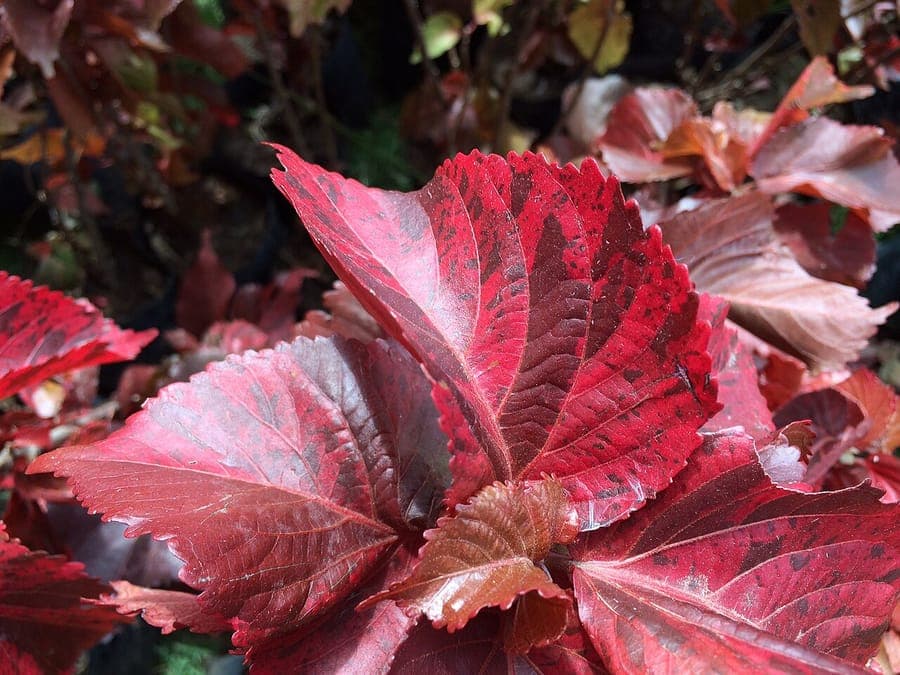
The plant is known for its dramatic leaf colors varying from red to yellow, with many intermediate shades. With its tropical appearance and relatively easy maintenance, Acalypha wilkesiana is a favorite among gardeners seeking exotic colors.
Appearance and Bloom
Acalypha wilkesiana is a medium to large shrub usually reaching 1.5 to 3 meters in height. The leaves are large, wavy, and can be very colorful. The foliage ranges from red, deep red, orange, yellow to green, usually with mixed patterning.
The flowers are small and inconspicuous, though they have elongated, drooping red-pink flower spikes. The real show, however, is the colorful foliage, not the flowers. The flowers typically appear during warmer months.
Ideal Location
Acalypha wilkesiana thrives best in full sun to partial light. The plant requires at least 4-6 hours of direct sunlight daily for full color development. More sun results in richer, more saturated colors.
The plant prefers warm, sheltered locations. Wind can damage the leaves. Plant it where it receives protection from larger trees or walls. In very hot climates, light afternoon shade can be beneficial.
Soil
Acalypha wilkesiana prefers well-draining, fertile soil. A mixture of potting compost, sand, and compost is ideal. The plant tolerates a wider pH range, from slightly acidic to neutral (pH 5.5-7.5).
Well-draining soil is essential. Heavy clay soils must be improved. Regularly adding organic matter helps maintain healthy soil.
Free preview
Want to see Acalypha wilkesiana: complete guide in your garden? Make a free preview of your design.
Watering
During the growing season, Acalypha wilkesiana requires regular watering. Water well, but always ensure excess water can drain away. The soil should be moist but not waterlogged.
During dry periods, extra water may be necessary. In winter, as growth slows, you can reduce watering. Once established, the plant can tolerate some drought.
Adjust watering according to weather conditions. During rainy seasons, the plant needs less water.
Pruning
Acalypha wilkesiana responds well to moderate pruning. This encourages compact, full growth. Prune best in late winter, just before active growth begins.
Remove crossing branches, dead wood, and long growers. This improves foliage colors and growth pattern. You can also lightly prune branch tips to encourage more branching.
Hard pruning can be done to keep the plant in shape.
Maintenance Calendar
Spring (March-May): Begin regular watering. Perform moderate pruning. Begin slow feeding.
Summer (June-August): Ensure adequate watering. Check for insect damage. Enjoy the colorful foliage.
Fall (September-October): Gradually reduce watering. Stop feeding. Prepare for winter.
Winter (November-February): Minimal watering. No feeding. Protect from cold.
Winter Hardiness
Acalypha wilkesiana is frost-sensitive. In zones with temperatures below 10 degrees Celsius, protection or relocation is needed. In Mediterranean zones, it can overwinter outdoors with protection.
In more temperate climates, this plant thrives best in large containers, allowing indoor relocation during winter.
Companion Plants
Acalypha wilkesiana pairs beautifully with other tropical plants. Underplant it with shade-loving structural plants. Contrast the red foliage with silver-leaved plants or with green structural plants.
On gardenworld.app, find inspiration for tropical garden design.
Closing
Acalypha wilkesiana is a bird-friendly, colorful addition to warmer gardens. With minimal maintenance but maximum visual appeal, it remains a splendid choice for those seeking dramatic foliage colors. Create your perfect tropical garden with help from gardenworld.app.
Frequently asked questions about Acalypha wilkesiana
Is Acalypha wilkesiana winter hardy?
Acalypha wilkesiana is frost-sensitive. In zones with temperatures below 10 degrees Celsius, protection or relocation is needed.
When and how do you prune Acalypha wilkesiana?
Acalypha wilkesiana responds well to moderate pruning. This encourages compact, full growth.
How much water does Acalypha wilkesiana need?
During the growing season, Acalypha wilkesiana requires regular watering. Water well, but always ensure excess water can drain away.
Where does Acalypha wilkesiana grow best?
Acalypha wilkesiana thrives best in full sun to partial light. The plant requires at least 4-6 hours of direct sunlight daily for full color development.
What soil does Acalypha wilkesiana need?
Acalypha wilkesiana prefers well-draining, fertile soil. A mixture of potting compost, sand, and compost is ideal.

See it in your garden
See Acalypha wilkesiana in your garden
One photo of your garden and a few questions. You see the result in about a minute.
Try it with a photoIdentify this plant in your own garden. Identify a plant
Similar plants
Woolly mercury: complete guide
Mercurialis tomentosa
All about Mercurialis tomentosa, the woolly mercury from southwestern Europe: site, soil, watering, care and garden design tips.
Shurur: complete guide
Euphorbia fruticosa
Everything about Shurur: cultivation in dry climates, xeriscaping, care and tips for drought-resistant gardens in warm climates
Glary spurge: complete guide
Euphorbia glareosa
Everything about glary spurge: cultivation, maintenance, frost hardiness and use in Mediterranean and mountain-inspired gardens
