
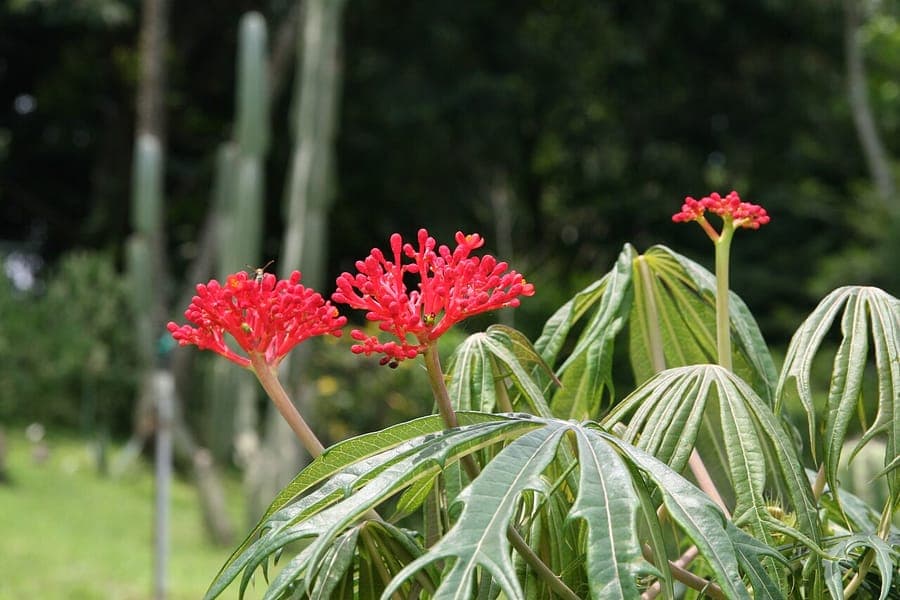
Photo by David J. Stang / CC BY-SA 4.0, via Wikimedia Commons
Jatropha multifida: complete guide
Jatropha multifida
Mochten Sie Jatropha multifida: complete guide in Ihrem Garten sehen?
1 Minute, keine Kreditkarte
Overview
Jatropha multifida, known as Coralplant, is a tropical ornamental shrub from the Euphorbiaceae family. This species is native to Mexico and the Caribbean and is renowned for its extremely striking red flowers. The plant reaches 1.5 to 3 meters in ideal conditions and grows with palm-like, divided leaves. It blooms from spring through autumn with spectacular red, coral-like flower clusters.
Jatropha multifida is exclusively suitable for container cultivation in temperate climates, as the plant is not winter-hardy. The plant requires abundant warmth and light and is often used as a patio or decorative specimen in Mediterranean and tropical gardens. The flowers are extremely striking and command attention from passersby.
This plant is not difficult to cultivate, but does require warmth, good light, and regular maintenance care. With proper care, Jatropha multifida produces an extended period of red flowers. Many gardeners use this plant as a focal specimen in summer gardens.
Appearance and Bloom
Jatropha multifida grows as a shrub with palm-like foliage. The leaves are deeply lobed, usually into 5-7 segments, creating a very decorative, wing-shaped impression. The foliage is glossy green and feels slightly textured.
The flowers are the true show-stoppers: dense clusters of small red flowers (3-5 mm) that together form extremely striking, coral-red "plumes." These flower clusters appear at stem terminals and can reach 10-15 centimeters in length. The color is intense red to coral, sometimes with orange tones.
The bloom period runs from May through October, providing an extremely long color period. Each flower cluster lasts several weeks, and the plant continuously produces new blooms. After flowering, small, toxic seeds form in characteristic fruits.
Ideal Location
Jatropha multifida requires full sun for optimal blooming. At least 6-8 hours of direct sunlight daily is essential. In shade, the plant becomes leggy and blooms very poorly. This should therefore be a sunny patio or balcony location.
The plant is extremely frost-sensitive and tolerates no frost. In temperate and cold climates (zones 5-8), the plant must be brought indoors by October for overwintering. The plant grows best at temperatures above 20 degrees Celsius; in cool periods it grows hardly at all.
Essential is protection from strong wind, which can damage and blow off flowers. A sheltered spot on a patio, balcony, or against a south-facing wall is ideal. Also ensure sufficient air circulation to prevent fungi.
Soil
Jatropha multifida requires well-draining potting mix. Waterlogging is very harmful and quickly leads to root rot. For container cultivation, use a light mix: universal potting soil (40%), coconut coir (30%), and perlite (30%).
The pH should be neutral to slightly acidic (pH 6.0-7.0). The plant also grows in somewhat alkaline soils (up to pH 7.5). Always add a drainage layer (gravel/pottery shards) to the bottom of the pot to avoid water pooling.
Essential is regularly refreshing the potting mix. Every 2-3 years, repot the plant into a larger pot with fresh potting mix. This prevents roots from becoming root-bound and prevents disease.
Watering
Jatropha multifida grows quickly and requires regular water during the growing season. The soil should remain moist but never waterlogged. Check daily by inserting your finger into the soil (2-3 cm); if dry, it's time to water.
In warm summers, daily watering may be necessary. Water at the base of the plant, not over foliage, to prevent fungi. Early morning watering is ideal. Use lukewarm water if possible; very cold water can hinder growth.
In autumn and winter (dormancy indoors): reduce watering significantly. Water only when the top soil feels very dry. Overwintering requires only minimal moisture. Too much water during this period leads to disease and rot.
Kostenloses Design
Mochten Sie Jatropha multifida: complete guide in Ihrem Garten sehen? Erstellen Sie jetzt ein kostenloses Design.
Pruning
Pruning encourages more blooms and compact growth habit. In early spring (March-April), remove about one-third of the previous season's growth. This seems drastic but stimulates the plant to branch from multiple points.
During the growing season, continuously remove dead branches and adjust form. Regularly pinch off growing tips to encourage bushier habit. Also remove spent flowers (deadheading) to direct energy toward new foliage and blooms.
Be careful; all parts of this plant contain toxic sap. Always wear gloves when pruning. Sap can cause irritation; wash hands thoroughly after pruning.
Maintenance Calendar
Spring (March-May): Perform vigorous pruning. Repot container plants into larger pots. Begin weekly feeding. Check for pests. Begin moving outside in zone 8+.
Summer (June-September): Regular water and feeding. Monitor for spider mites, whitefly. Deadhead flowers. Enjoy spectacular blooming.
Autumn (October-November): For non-hardy plants: bring indoors before first frost. Reduce feeding and watering. Ensure abundant light indoors.
Winter (December-February): Cool overwintering location around 10-15 degrees Celsius. Minimal watering. No feeding. Check regularly for fungi.
Winter Hardiness
Jatropha multifida is not winter-hardy in temperate and cold climates. Frost of just a few degrees kills the plant. Therefore, in most European gardens, it is treated as a seasonal container plant.
In zones 9-10 (southern Spain, southern Portugal, southern France), the plant may remain outdoors, though protected against harsh winters. In warm regions, it can grow year-round.
For all other regions: bring container plants indoors by October. Place them in a cool (10-15 degrees), very bright location (for example, greenhouse or sunny window) with low humidity. After the last frost (late May), they can go back outside.
Support and Training
Jatropha multifida grows as a compact shrub and normally requires no support. However, in very windy locations or with heavy flowering, long branches may occasionally need support. Soft tie-ups prevent stem damage.
The plant can also be trained against a support for more vertical growth. This works well on patios where height is desired. With regular pruning, you can also create ball-shaped forms.
Jatropha multifida also works well as a focal plant in large containers on patios and terraces. Combine with other tropical or Mediterranean plants in large group plantings for spectacular summer gardens.
Plant Care
Feed from May to September weekly to bi-weekly. Use universal fertilizer (10-10-10) or bloom fertilizer (5-10-10 for more flowers). Follow package directions; never give more than recommended dose.
Repot container plants every 2-3 years into larger pots. Use fresh potting mix each time. This stimulates growth and prevents roots from becoming root-bound.
Pest protection: Spider mites thrive in dry air; frequent misting helps. Whitefly can be problematic indoors; monitor regularly and treat with biological methods.
Toxic Parts
WARNING: All parts of Jatropha multifida contain toxic alkaloids. The seeds are particularly poisonous. Keep the plant away from children and pets. Always wear gloves when handling.
Poison symptoms (if ingested): abdominal pain, diarrhea, nausea. Not usually fatal but very unpleasant. If seeds are ingested, seek immediate medical advice.
Conclusion
Jatropha multifida is a spectacular tropical plant perfect for summer container gardens in temperate climates. The red flowers and palm-like foliage create a tropical atmosphere. For gardeners seeking striking, long-flowering container plants, Jatropha multifida is an excellent choice.
GardenWorld can help you position Jatropha multifida optimally in your summer garden plan. Our design services select perfect patio locations and blend complementary plants. Let us transform your summer terrace into tropical splendor! Visit gardenworld.app and begin your design today.
Mochten Sie Jatropha multifida: complete guide in Ihrem Garten sehen? Erstellen Sie jetzt ein kostenloses Design.
Foto hochladen, Stil wahlen und in unter einer Minute ein fotorealistisches Design inklusive Pflanzenliste erhalten.
Schon 10.000+ Garten gestaltet
Keine Kreditkarte erforderlich


Ähnliche Pflanzen
Filz-Bingelkraut: kompletter Ratgeber
Mercurialis tomentosa
Alles ueber Mercurialis tomentosa, das Filz-Bingelkraut aus Suedwesteuropa: Standort, Boden, Pflege und Tipps fuer den Trockengarten.
Shurur: kompletter Ratgeber
Euphorbia fruticosa
Alles über Shurur: Anbau in trockenen Klimaten, Trockenlandschaftsbau, Pflege und Tipps für dürreresistente Gärten in warmem Klima
Glänzende Wolfsmilch: kompletter Ratgeber
Euphorbia glareosa
Alles über Glänzende Wolfsmilch: Anbau, Pflege, Winterhärte und Verwendung in Mittelmeer- und berginspirierten Gärten