
Potentilla brauneana: complete guide
Potentilla brauneana
Want to see Potentilla brauneana: complete guide in your garden?
1 minute, no credit card
Overview
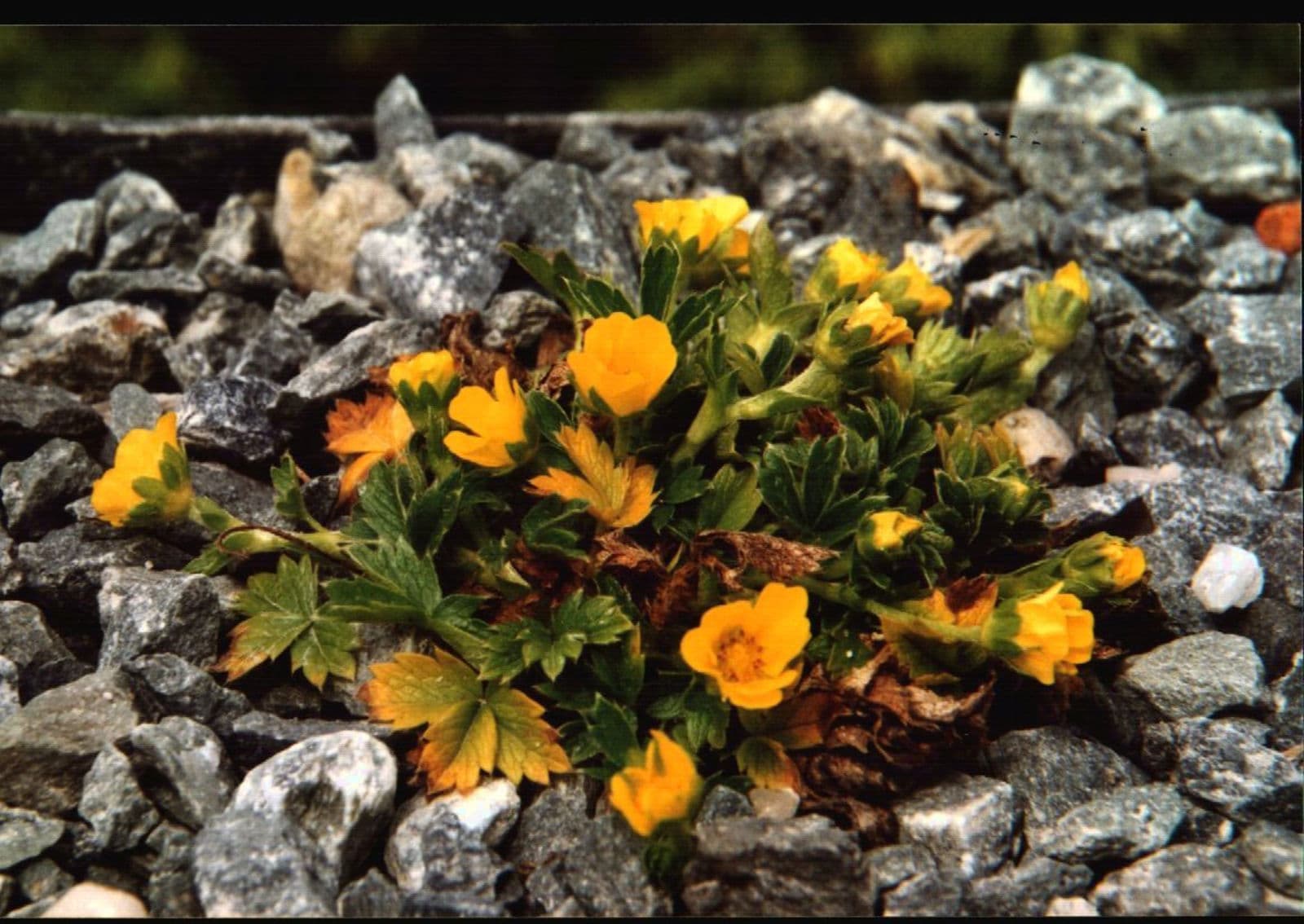
Potentilla brauneana is a rare alpine perennial from the Rosaceae family, native to mountain ranges of central Europe and northern Spain. This miniature gem is distinguished by compact growth, delicate yellow flowers, and excellent suitability for rock gardens, alpine troughs, and stone paving crevices. Known by the German common name Zwerg-Fingerkraut (dwarf cinquefoil), the plant represents the acme of alpine miniaturization.
With dense mats rarely exceeding 10-20 centimeters in height and similar width, Potentilla brauneana suits small gardens, container cultivation, and even growth between stones or in paving joints. Blooming in July and August yields bright yellow flowers in continuous succession. This alpine specialist is invaluable for designers seeking subtle elevation changes and fine textural contrast.
Appearance and bloom cycle
The plant forms tight, compact rosette mats with finely divided leaves displaying silky luster. Leaves measure approximately 1-2 centimeters, composed of 5-7 narrow leaflets per leaf, creating exceptionally elegant texture. Foliage remains green throughout winter, providing extended ornamental interest.
Flowers are small but striking, approximately 1.5 centimeters across, with five yellow petals and prominent yellow stamens. Blooms appear continuously from July through August, sometimes extending into September in mild climates. Following bloom, small seed capsules develop but lack the ornamental value of larger Potentilla species.
Ideal location
Full sun to light shade; minimum four to six hours of direct daily sunlight ensures optimal flowering. In deep shade, plants become leggy with reduced blooming. Alpine culture requires excellent air circulation to prevent moisture-related diseases. Well-ventilated locations are thus essential.
In garden design, Potentilla brauneana excels at border edges, in rock gardens, between paving stones and step treads, or in underplantings of hanging stone constructions. Container cultivation is highly successful; small pots or alpine troughs measuring 15-20 centimeters with excellent drainage are ideal. Combination with other alpine plants like Saxifraga, Sedum, and Dianthus creates authentic mountain atmosphere.
Soil requirements
Excellent drainage is absolutely critical; Potentilla brauneana cannot tolerate waterlogging. Heavy clay soils are unsuitable without substantial modification. Ideal growing medium consists of 50% sharp sand, 25% gravel, 15% leaf mold, and 10% compost. pH should be lightly acidic to neutral (6.0-7.5).
Alpine soil with low fertility is actually beneficial; this species naturally grows in lean mountain substrates. Rich garden soils lead to excessive foliage growth at the expense of flowering. In containers, use specialized alpine soil mixtures or prepare according to the formula above.
Watering
Once established, Potentilla brauneana is extremely drought-tolerant, requiring minimal supplemental watering. In containers: water when upper 2-3 centimeters feel dry. In garden beds, water only during prolonged drought.
Standing water must be prevented absolutely; drainage holes in containers are essential. Overhead watering should be avoided due to susceptibility to leaf spotting and fungal diseases. Winter watering: keep dry during cold periods; apply water only if soil becomes very dry.
Pruning
Minimal pruning is needed. Remove only dead foliage and spent flowers in spring. Compact form can be maintained through very light pinching of growing tips in May-June, though this is usually unnecessary. Established mats can be rejuvenated after 4-5 years through division.
Maintenance calendar
March-April: Removal of dead foliage. May-July: No active maintenance needed; water only during dry spells. July-August: Continuous blooming; no active care required. September-October: Optional deadheading of faded flowers. November-February: Keep dry; avoid watering in cold periods.
Free design
Want to see Potentilla brauneana: complete guide in your garden? Make a free design now.
Winter hardiness
Potentilla brauneana is extremely cold-hardy, suitable for USDA zone 4 (-30 to -23°C). It overwinters reliably throughout the Netherlands and Northern Europe. The plant remains semi-evergreen without typical dormancy.
Even in extreme winters with severe frost and snow, minimal foliage loss may occur, but complete death is exceedingly rare. In containers, protection is beneficial: shelter from extreme wind or relocation to partial shade during severe winters. Drainage remains critical during winter to prevent moisture problems.
Companion plants
Potentilla brauneana combines beautifully with:
- Saxifraga species for complementary texture
- Sedum and other succulents for contrast
- Dianthus (carnation) for red to pink tones
- Festuca grasses for fine texture
- Phlox subulata for spring flower effect
- Thymus (thyme) for fragrance and texture
- Geranium sanguineum for purple contrast
Propagation
Seed propagation is the most common method for Potentilla brauneana. Collect seed in September once seed capsules have turned brown and dry. Sow directly into a mixture of sand and seed compost (1:1) and keep the seedbed lightly moist in a cool, bright location. Germination typically takes 4 to 8 weeks and can be uneven; some seed benefits from cold stratification of 4 to 6 weeks at 2-5 degrees Celsius in the refrigerator before sowing.
Division of established mats is a faster method and produces flowering-size plants immediately. Carry this out in early spring (March) or in September, when the plant is not in full bloom. Lift the mat gently with a fork, divide into sections at least 5 centimeters across with their own root system, and replant immediately into well-draining soil. Keep new divisions lightly moist for the first few weeks until rooted.
Semi-ripe cuttings taken in June-July are also possible, though less common. Take cuttings 3-4 centimeters long, remove lower leaves, and insert into a mixture of perlite and sand. Rooting takes 4 to 6 weeks under consistent moisture in a sheltered, bright location.
Pests and diseases
Potentilla brauneana is generally low-maintenance regarding pests and disease, provided growing conditions are correct. Root rot is the greatest risk and almost always results from poor drainage or overly wet soil; this is preventable by strictly following the soil mixtures described above.
Aphids can occasionally appear on young shoots in May-June, particularly on plants given excess fertility. A simple rinse with water or treatment with mild insecticidal soap is usually sufficient. Slugs may damage young plantings during damp springs; grit or crushed shell around the plant keeps them at bay.
Fungal diseases such as powdery mildew can occur with poor air circulation or excessive humidity, particularly in enclosed garden corners. Ensure adequate spacing between plants and avoid overhead irrigation to minimize this risk.
Use in xeriscape and alpine gardens
Beyond rock gardens, Potentilla brauneana suits green roofs with minimal soil depth, dry-stone wall plantings, and Japanese-style gravel gardens where subtle flowering is desired alongside dominant stone structures. Combined with gravel or chip pathways, it creates a naturally low-maintenance garden picture. For further guidance on designing alpine and rock garden features, gardenworld.app's plant database offers curated combinations suited to different regional climates.
Closing remarks
Potentilla brauneana represents a rare choice for informed designers seeking alpine beauty in miniature form. While not found at standard garden centers, specialized alpine growers regularly stock this species. Seed propagation is also successful for patient gardeners. For inspiration on creating authentic rock gardens and alpine troughs, explore gardenworld.app's comprehensive alpine plant collection. With proper soil and drainage, Potentilla brauneana remains a compact, continuously blooming alpine jewel for years to come.
Want to see Potentilla brauneana: complete guide in your garden? Make a free design now.
Upload a photo, pick a style, and get a photorealistic design with plant list in under a minute.
10,000+ gardens designed already
No credit card required


Similar plants
Siberian crab apple: complete guide
Malus x robusta
Complete guide to the Siberian crab apple (Malus x robusta): location, soil, pruning, winter hardiness and the best companion plants for your garden.
Chinese flowering crabapple (Malus x spectabilis): complete guide
Malus x spectabilis
Meet the Chinese flowering crabapple (Malus x spectabilis): a classic spring bloomer with carmine buds and pink blossom.
Potentilla crassinervia: complete guide
Potentilla crassinervia
Potentilla crassinervia, the Corsican cinquefoil, grows wild on Corsica and Sardinia's peaks. Discover how to grow this hardy alpine rock garden gem.