
Daderot / CC0, via Wikimedia Commons
Eelgrass: complete guide
Zostera marina
¿Quieres ver Eelgrass: complete guide en tu jardín?
1 minuto, sin tarjeta de crédito
Overview
Eelgrass (Zostera marina), commonly called seagrass or common eelgrass, is a vital underwater plant species supporting coastal ecosystems worldwide. This marine grass grows submerged in saltwater and brackish habitats, particularly along temperate coasts of North America, Europe, and Asia. Eelgrass plays a crucial ecological role, providing habitat for countless marine animals whilst contributing to water purification and carbon sequestration.
Appearance & Growth
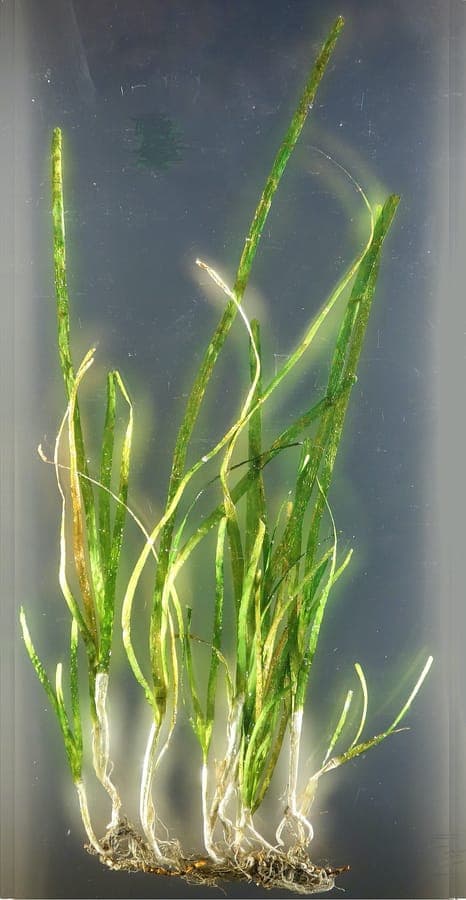
Zostera marina grows as underwater meadows of elongated, linear leaves reaching 30-100 centimeters long. The plant spreads via horizontal rhizomes producing roots into seabed sediments. Leaves are dark green to reddish-brown, growing in bundles. Underwater flowering occurs with inconspicuous greenish flowers. The plant reaches depths of 10-15 meters depending on water clarity.
Ideal Environment
Eelgrass thrives in stable saltwater and brackish habitats with moderate water movement. It prefers clearer water where sufficient sunlight penetrates for photosynthesis. Optimal growth occurs in sheltered bays, estuaries, and lagoons where water movement remains moderate. Sandy and silty sediments with adequate nutrients support robust growth. Temperature range: 0 to 20 degrees Celsius, though best growth occurs 5-15 degrees.
Substrate & Sediments
Eelgrass roots in underwater sediments ranging from sand to clay. The plant obtains nutrients via rhizomes whilst absorbing nutrients directly from water column. Sediments rich in organic matter and nutrients support healthier populations. Muddy, oxygen-poor sediments may limit growth. Restoration projects show positive effects from clean sediment input and nutrient management.
Water Conditions
Zostera marina requires saltwater of 5-35 practical salinity units (PSU) depending on population. The plant is sensitive to temperature fluctuations, preferring stable conditions. Water clarity is critical: minimum 1 meter visibility needed for adequate light penetration. Pollution, eutrophication, and algae growth that cloud water damage seagrass colonies. Slightly acidic to neutral pH supports optimal growth.
Diseño gratis
¿Quieres ver Eelgrass: complete guide en tu jardín? Crea un diseño gratis ahora.
Ecological Role
Eelgrass ecosystems provide habitat for dozens of fish and crustacean species, including commercially important ones. Blades furnish food and shelter for juvenile fish. Rhizome networks stabilize seabed, preventing erosion. Dense meadows reduce wave action, protecting shorelines. The plant sequesters carbon in biomass, contributing to climate regulation.
Threats & Conservation
Eelgrass populations declined dramatically during the 20th century through water pollution, coastal development, seabed disturbance, and disease. Current threats include climate change, warming seawater, hypoxia, and overfishing. Conservation initiatives include habitat protection, water quality improvement, and active restoration projects. Many agencies successfully restore eelgrass meadows in sheltered coastal areas.
Maintenance Calendar (Ecosystem)
Spring (March-May): Growth begins as temperatures warm, reproduction via flowering. Summer (June-August): Peak biomass, maximum habitat value, bird migration dependent. Autumn (September-October): Leaf fall, nutrient return to sediments. Winter (November-February): Minimal growth, underwater biomass core value.
Human Uses & Values
Eelgrass possesses cultural values: traditional harvesting for compost in some regions, historical use as thatch roofing. Modern interest in seagrass for sustainable food production and biomass energy grows. Aquaculture applications and bioremediation research advance. Recreational activities like diving and snorkelling in seagrass meadows support ecotourism.
Closing
Eelgrass exemplifies underwater ecosystem importance for marine life and coastal health. Protecting and restoring these vital habitats contributes to biodiversity conservation and climate mitigation. Support local initiatives and conservation projects focused on marine ecosystem restoration. For insights into sustainable garden practices and ecosystem protection, visit gardenworld.app/en. Understand ecosystem value through our resources on gardenworld.app/en.
¿Quieres ver Eelgrass: complete guide en tu jardín? Crea un diseño gratis ahora.
Sube una foto, elige un estilo y obtén un diseño fotorrealista con lista de plantas en menos de un minuto.
Más de 10.000 jardines diseñados
Sin tarjeta de crédito


Plantas similares
Acer pycnanthum: complete guide
Acer pycnanthum
Acer pycnanthum, the Japanese swamp maple, is a fast-growing tree with early red flowers and brilliant autumn color, ideal for damp garden settings.
Freeman maple: complete guide
Acer × freemanii
Everything about the Freeman maple (Acer x freemanii): a fast-growing shade tree with spectacular autumn colour for large gardens.
Silver vine: complete guide
Actinidia polygama
Discover silver vine (Actinidia polygama): a hardy climbing plant with silvery foliage, loved by gardeners and cats alike.