
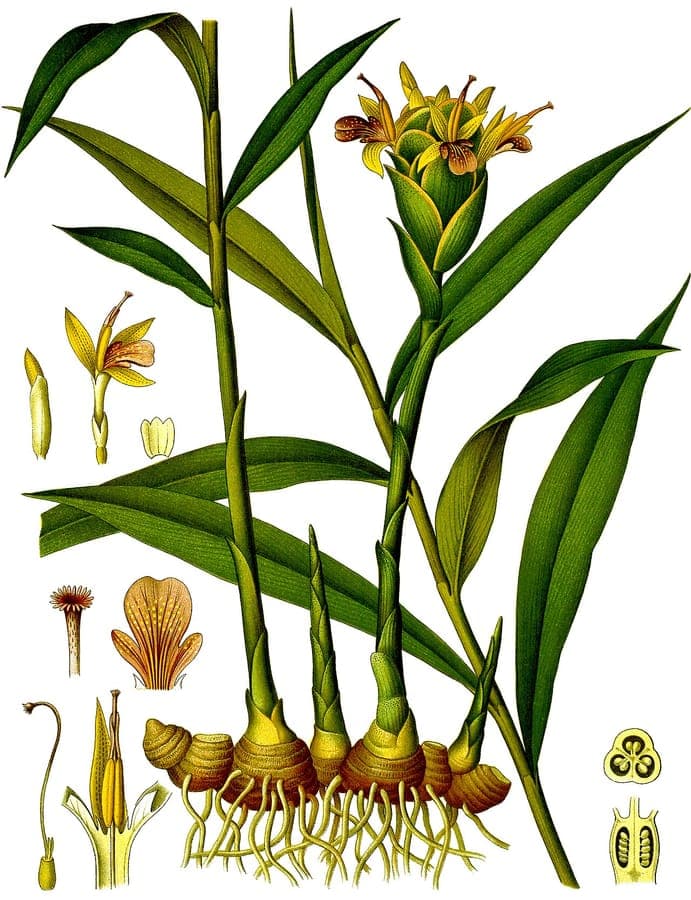
Franz Eugen Köhler, Köhler's Medizinal-Pflanzen / Public domain, via Wikimedia Commons
Ginger: complete guide
Zingiber officinale
¿Quieres ver Ginger: complete guide en tu jardín?
1 minuto, sin tarjeta de crédito
Overview
Zingiber officinale, commonly known as ginger, is a tropical herb native to South and Southeast Asia. This aromatic plant has been valued for thousands of years in traditional medicine and global cuisine. Warm, peppery ginger root is rich in essential oils and compounds believed to support wellness. Home cultivation is possible in temperate climates by growing ginger in containers.
Appearance and bloom
Ginger grows as a soft-stemmed herbaceous plant with long, narrow leaves displaying fine texture and vibrant green color. Plants typically reach 60-90 centimeters in height. Small, inconspicuous flowers appear at the end of the growing season in yellows and purples. The valuable underground portion consists of finely branched, fleshy rhizomes containing the characteristic aromatic compounds.
Ideal location
Cultivate ginger in a warm, sheltered location with dappled light. Although ginger tolerates partial shade, it thrives with 4-6 hours of indirect sunlight daily. Maintain temperatures between 15-30 degrees Celsius year-round. In cooler climates, container cultivation is essential, with plants moved indoors for winter dormancy.
Soil
Ginger demands rich, well-draining soil abundant in organic matter. Mix garden or potting soil with 40% compost, 30% peat moss, and 30% perlite. Ensure excellent drainage while maintaining moisture retention. Supplement monthly with liquid compost tea for continued nutrient availability.
Diseño gratis
¿Quieres ver Ginger: complete guide en tu jardín? Crea un diseño gratis ahora.
Watering
Ginger prefers moist but never waterlogged soil. Water regularly during the growing season when the top centimeter feels dry. Ensure excellent drainage to prevent rhizome rot. As fall approaches and the plant begins dormancy, gradually reduce watering frequency.
Pruning
Ginger requires minimal pruning. Remove yellowed or diseased foliage as needed. The plant naturally dies back at season's end, gradually reducing water before removing entirely. Carefully strip older outer leaves to improve air circulation within the plant canopy.
Maintenance calendar
Spring: Plant ginger rhizomes once frost danger passes. Summer: Water regularly and apply monthly compost tea. Fall: Gradually reduce watering as dormancy approaches. Winter: Cease watering or store harvested rhizomes in cool darkness.
Winter hardiness
Ginger cannot tolerate freezing temperatures. The plant dies back when temperatures drop below 15 degrees Celsius. Carefully harvest rhizomes at season's end, dry them, and store in cool (10-15 degrees Celsius), dark conditions. Replant in spring for another season of growth.
Companion plants
Ginger pairs beautifully with other tropical herbs like turmeric, galangal, and lemongrass. Combining with flowering aromatics such as jasmine and gardenia creates a sensory-rich garden space that appeals to all senses.
Closing thoughts
Ginger is a fascinating crop for home gardeners interested in culinary herbs and wellness. Though requiring careful handling in cool climates, ginger rewards growers with aromatic foliage and nutritious rhizomes. Visit gardenworld.app for more herb gardening tips. In the UK, check garden centers for quality rhizome starts.
¿Quieres ver Ginger: complete guide en tu jardín? Crea un diseño gratis ahora.
Sube una foto, elige un estilo y obtén un diseño fotorrealista con lista de plantas en menos de un minuto.
Más de 10.000 jardines diseñados
Sin tarjeta de crédito


Plantas similares
Etlingera elatior: complete guide
Etlingera elatior
Grow this exotic Torch Ginger indoors. Expert tips on warm conditions, humid soil, and care for spectacular blooms.
Indian crocus: complete guide
Kaempferia rotunda
Indian crocus offers purple flowers and tropical atmosphere. Discover how to successfully grow this fascinating bulbous plant in cooler climates.
Zingiber zerumbet: complete guide
Zingiber zerumbet
Discover Shampoo ginger (Zingiber zerumbet) - a tropical ornamental plant with spectacular flowers and exotic allure. Perfect addition to refined front garden designs.