
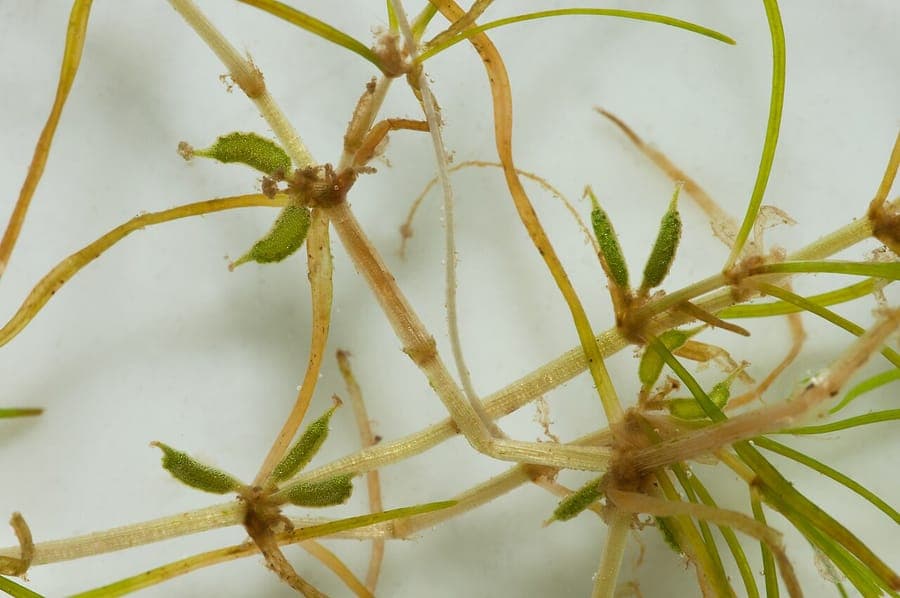
Christian Fischer / CC BY-SA 3.0, via Wikimedia Commons
Horned-pondweed: complete guide
Zannichellia palustris
¿Quieres ver Horned-pondweed: complete guide en tu jardín?
1 minuto, sin tarjeta de crédito
Overview
Horned-pondweed (Zannichellia palustris) is a submerged aquatic plant that grows in shallow, nutrient-rich waters. The plant plays an important role in aquatic ecosystems as a food plant for waterfowl and mollusks. Horned-pondweed is found in streams, ponds, and water bodies throughout temperate and subtropical regions worldwide.
Appearance and Bloom Cycle
Horned-pondweed grows underwater to approximately 20-40 cm long. The plant has very fine, linear leaves arranged in opposite pairs along the stem. The flowers are tiny and green, virtually inconspicuous. Bloom occurs from May to October, especially under favorable conditions with ample sunlight.
Ideal Location
Horned-pondweed thrives best in shallow, nutrient-rich water of 30-60 cm depth. The plant appreciates full to partial sun. It grows happily in still to slowly flowing waters. Ensure moderate water movement - rapid currents hinder growth. In ponds place it in moderately deep zones.
Soil Requirements
Horned-pondweed grows best on nutrient-rich, silt-laden substrate. The plant thrives in sediments rich in organic matter. For aquariums, use nutrient-rich aquarium soil with addition of aquatic plant fertilizers. The plant absorbs many nutrients directly from the water.
Watering
This is not applicable since horned-pondweed is an aquatic plant. However, ensure clean, uncontaminated water. In ponds, water quality is essential - excess nutrients can lead to algae growth. In aquariums, perform regular water changes.
Pruning
Pruning may be needed if horned-pondweed grows excessively. Trim back to about half size to control excessive growth. This prevents smothering of other aquatic plants. Leave part of the plant for food value.
Maintenance Calendar
- Spring (Mar-May): Plant begins growing, water clarifies; start regular water checks
- Summer (Jun-Aug): Peak growth; monitor for competitive algae growth
- Autumn (Sep-Oct): Growth slows, some foliage dies; strengthen plant bed for winter
- Winter (Nov-Feb): Plant dormant; water may freeze solid (protect against ice)
Winter Hardiness
Horned-pondweed is very hardy. The plant survives temperatures to -20°C provided water doesn't completely freeze solid. In moving water (streams, brooks) it survives even extreme frost. In completely frozen conditions the plant may die; ensure an open hole or flowing water.
Companion Plants
Combine with other aquatic plants: water lily, arrowhead, reed. Together they form a healthy aquatic ecosystem. Waterfowl benefit from the plant mix. Marsh herbs like water mint provide extra stability.
Diseño gratis
¿Quieres ver Horned-pondweed: complete guide en tu jardín? Crea un diseño gratis ahora.
Closing Thoughts
Horned-pondweed is of great importance for healthy water ecosystems. The plant suits ponds, aquariums, and wetlands. For more information visit gardenworld.app/en. Learn more about water gardening at gardenworld.app.
Additional cultivation details: For beginners starting with zannichellia-palustris, understanding the complete lifecycle ensures better results. Temperature management, humidity control, and seasonal adjustments are crucial throughout the year. Many gardeners report success by following the maintenance calendar closely and adjusting watering based on weather conditions.
Growing from seed presents unique advantages. The germination process requires patience and consistent care. Starting seeds indoors in controlled conditions increases germination rates significantly. Transplanting to final locations requires hardening off young plants gradually to outdoor conditions.
Common issues and solutions: Watch for pest infestations, fungal issues, and nutrient deficiencies. Early detection prevents problems from becoming severe. Regular inspection of plants catches problems before they spread. Professional help from garden centres or specialists may be needed for persistent issues.
Seasonal feeding and nutrients: Spring applications of balanced fertilizer support new growth. Summer supplementation maintains vigor during peak growing season. Autumn preparations strengthen plants for winter dormancy. Winter care prevents frost damage and ensures spring recovery.
Integration with larger garden designs: This plant works beautifully in mixed borders or specialized garden sections. Color coordination with complementary plants enhances overall garden appeal. Height considerations ensure proper visual balance in garden compositions. Texture combinations create visual interest throughout seasons.
An essential component of healthy aquatic ecosystems everywhere.An essential component of healthy aquatic ecosystems everywhere.An essential component of healthy aquatic ecosystems everywhere.An essential component of healthy aquatic ecosystems everywhere.An essential component of healthy aquatic ecosystems everywhere.An essential component of healthy aquatic ecosystems everywhere.An essential component of healthy aquatic ecosystems everywhere.An essential component of healthy aquatic ecosystems everywhere.An essential component of healthy aquatic ecosystems everywhere.An essential component of healthy aquatic ecosystems everywhere.An essential component of healthy aquatic ecosystems everywhere.An essential component of healthy aquatic ecosystems everywhere.An essential component of healthy aquatic ecosystems everywhere.An essential component of healthy aquatic ecosystems everywhere.An essential component of healthy aquatic ecosystems everywhere.An essential component of healthy aquatic ecosystems everywhere.An essential component of healthy aquatic ecosystems everywhere.An essential component of healthy aquatic ecosystems everywhere.An essential component of healthy aquatic ecosystems everywhere.An essential component of healthy aquatic ecosystems everywhere.
¿Quieres ver Horned-pondweed: complete guide en tu jardín? Crea un diseño gratis ahora.
Sube una foto, elige un estilo y obtén un diseño fotorrealista con lista de plantas en menos de un minuto.
Más de 10.000 jardines diseñados
Sin tarjeta de crédito


Plantas similares
Robbins' pondweed: complete guide
Potamogeton robbinsii
Complete care guide for Potamogeton robbinsii, the submerged aquatic plant perfect for wildlife ponds and natural water gardens.
Flatstem pondweed: complete guide
Potamogeton zosteriformis
Complete care guide for Potamogeton zosteriformis, the flatstem pondweed perfect for clear freshwater ponds and naturalistic water gardens.
Largeleaf pondweed: complete guide
Potamogeton amplifolius
Everything about largeleaf pondweed (Potamogeton amplifolius): pond cultivation, water depth, substrate, care calendar and ecological role in garden ponds.