
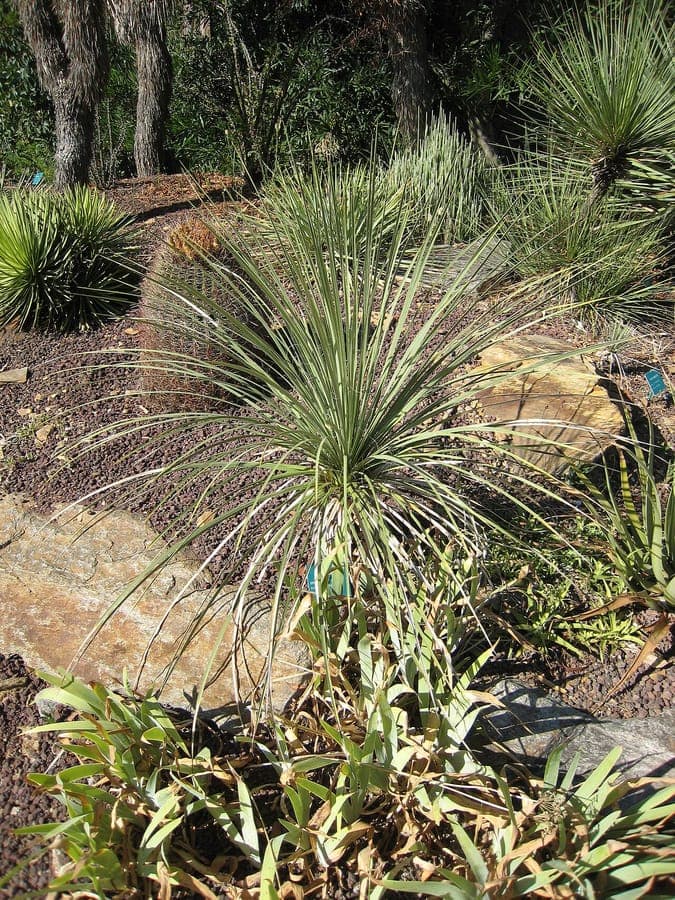
This photo has been taken by Matthieu Sontag (User:Mirgolth) and released under the licenses stated below. You are free to use it for any purpose as long as you credit me as author, Wikimedia Commons as site and follow the terms of the licenses. Could you be kind enough to leave me a message on this page to inform me about your use of this picture. / CC BY-SA 4.0, via Wikimedia Commons
Yucca baileyi: complete guide
Yucca baileyi
¿Quieres ver Yucca baileyi: complete guide en tu jardín?
1 minuto, sin tarjeta de crédito
Overview
Yucca baileyi, commonly known as Alpine yucca, is a compact, clustering yucca from the Asparagaceae family. This plant is native to the mountainous regions of the southwestern United States, from Colorado to Utah and western New Mexico. The plant is named after botanist Bailey and is renowned for its exceptional cold hardiness and drought tolerance. In the wild, it grows on high, dry plateaus where water is scarce. As a garden plant, Alpine yucca is an excellent choice for dry alpine gardens and xeriscaping, with its compact form and stately white flowers.
Appearance and Bloom
Yucca baileyi grows as a dense, clustering rosette of narrow, pointed leaves. The leaves are stiff and blue-green to dark green in color, sometimes with light yellowish-green marginal stripes. The plant produces rigid flower spikes that grow upward from the rosette, bearing white or pale yellow, pleasantly fragrant flowers. The blooms appear in late spring through early summer, forming impressive, branching inflorescences. Following bloom, hard, dry fruits develop that persist on the plant for an extended period.
Ideal Location
Alpine yucca grows best in full sun at a location receiving at least six to eight hours of direct daily sunshine. In full shade, the plant will not bloom and may become leggy. The plant is exceptionally cold hardy and can tolerate temperatures down to -30 degrees Celsius. It is ideal for rock and alpine gardens, as an accent plant in xeriscape designs, and for planting along roadways or in hillside landscapes.
Soil
Alpine yucca prefers very well-draining, stony or sandy soil. In its native habitat, it grows on rocky plateaus with minimal humus. A neutral to slightly acidic pH (around 6.5-7.5) is optimal. The plant cannot tolerate waterlogging or heavy clay soils. Use grit, sand, or small stones to improve drainage if planting in standard garden beds.
Diseño gratis
¿Quieres ver Yucca baileyi: complete guide en tu jardín? Crea un diseño gratis ahora.
Watering
Once established, Alpine yucca is highly drought-tolerant. Young plants should be watered regularly during their first growing season to establish strong root systems. Adult plants require minimal water and can endure extended drought periods. Water only during prolonged dry spells. Ensure water drains well; waterlogging is lethal for this plant.
Pruning
Alpine yucca requires minimal pruning. Remove spent flower spikes after blooming. Remove any dead or damaged leaves as needed. Wear gloves when pruning, as the leaf tips are sharp and can cause injury.
Maintenance Calendar
Spring: Check for winter damage. Add grit or sand if drainage improvement is needed. Summer: Water regularly if extremely dry. Remove spent flower spikes for neatness. Autumn: Monitor for harmful insects. Winter: Remove heavy snow that may weigh on the plant.
Winter Hardiness
Alpine yucca is exceptionally cold hardy and can tolerate temperatures down to -30 degrees Celsius and below. This makes it an ideal choice for mountainous areas and regions with harsh winters. Light snow cover is well tolerated, but heavy snow loads can damage branches.
Companion Plants
Alpine yucca combines well with other drought-tolerant alpine plants. Pair it with Penstemon species, Opuntia, Festuca and other grasses for textural contrast. Plant it alongside other succulents such as sedums and saxifragas for a true xeriscape composition.
Closing
Yucca baileyi is a jewel for alpine gardens and dry xeriscape designs. With its compact form, exceptional winter hardiness, and spectacular white flowers, it offers years of beauty with minimal maintenance. Available at nurseries in mountainous regions and online, or visit gardenworld.app for more plant advice.
¿Quieres ver Yucca baileyi: complete guide en tu jardín? Crea un diseño gratis ahora.
Sube una foto, elige un estilo y obtén un diseño fotorrealista con lista de plantas en menos de un minuto.
Más de 10.000 jardines diseñados
Sin tarjeta de crédito


Plantas similares
Narrow-leaved dracaena: complete guide
Dracaena angustifolia
Everything about Dracaena angustifolia - the narrow-leaved dracaena: location, care, overwintering and use as a houseplant or patio plant.
Chaparral yucca: complete guide to Hesperoyucca whipplei
Hesperoyucca whipplei
Hesperoyucca whipplei (Our Lord's candle) is a dramatic rosette-forming plant from California that produces a towering flower spike, ideal for dry and gravel gardens.
False lily-of-the-valley: complete guide
Maianthemum dilatatum
Everything about Maianthemum dilatatum, the false lily-of-the-valley. Care, shade location, propagation and garden combinations for this popular shade ground cover.