
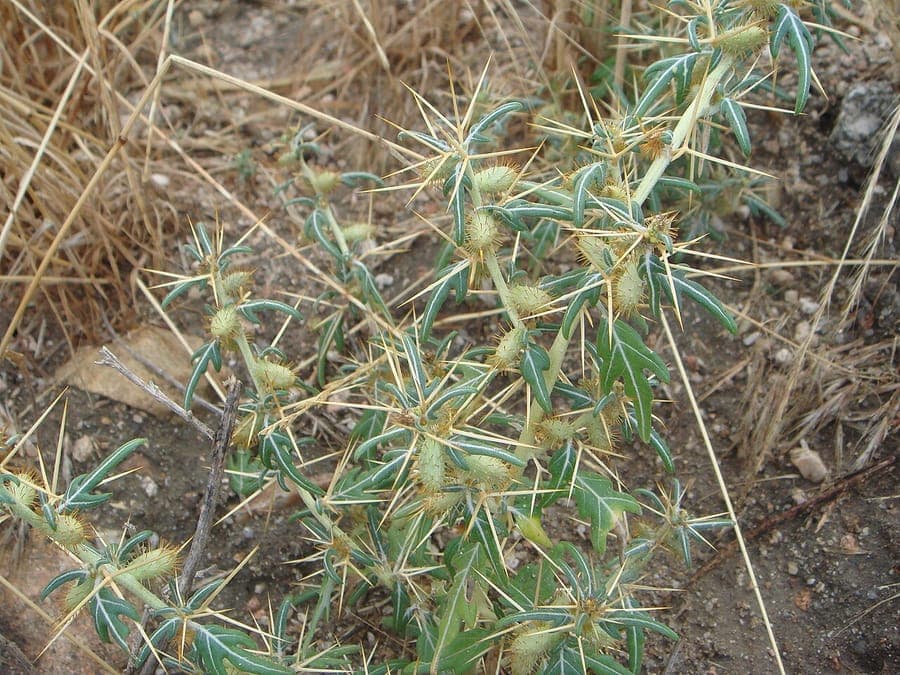
Xemenendura / CC BY-SA 4.0, via Wikimedia Commons
Clotweed: complete guide
Xanthium spinosum
¿Quieres ver Clotweed: complete guide en tu jardín?
1 minuto, sin tarjeta de crédito
Overview
Clotweed (Xanthium spinosum) is an annual plant that spreads rapidly via its spiky seed pods. This plant predominates in warm, dry areas and is classified as a weed in many countries. Despite its reputation, clotweed has interesting ecological properties. Note: this plant is listed as invasive in many regions globally.
Appearance and Bloom Cycle
Clotweed grows to approximately 60-90 cm tall. The plant bears dark green, three-lobed leaves with light hairiness. The flowers are inconspicuous and greenish. Characteristic spiny fruits form from July to October, displaying two long spines at the top. These fruits spread easily via animals and clothing.
Ideal Location
Clotweed thrives in warm, sunny locations. The plant prefers dry to moderately moist conditions. It grows readily along roadsides, on abandoned land, and in disturbed areas. Since it can be invasive, container cultivation is safer than direct garden planting.
Soil Requirements
Clotweed grows on virtually all soil types, from acidic to neutral. The plant is not fussy and accepts even poor, compacted soils. For pot culture, use standard potting soil with some added sand. The plant needs no special feeding.
Watering
Water moderately, especially during dry periods. Clotweed tolerates drought better than most garden plants. Too much water can lead to bacterial diseases. In container culture, let the soil dry slightly between waterings. During the rainy season, additional watering is usually unnecessary.
Pruning
Pruning is unnecessary. The plant grows reasonably compact. For aesthetic reasons, you can shorten strongly protruding branches. Protect your hands when touching the plant - the spines are sharp and cause injury.
Maintenance Calendar
- Spring (Mar-May): Sow seeds, remove weeds around the plant
- Summer (Jun-Aug): Water only during drought, observe flowering and early fruiting
- Autumn (Sep-Oct): Seed balls ripen, harvest carefully (use gloves)
- Winter (Nov-Feb): Plant dies in hard frosts; remove promptly to prevent spread
Winter Hardiness
Clotweed is very frost-sensitive. In northern Europe, the plant does not survive outdoors in winter. In warmer regions (southern Europe) the plant can overwinter and becomes problematically invasive. Resow from seed annually.
Companion Plants
In garden experiments, combine clotweed with other drought-tolerant annuals: sunflower, cosmos, or zinnia. Always maintain sufficient distance for safety reasons.
Diseño gratis
¿Quieres ver Clotweed: complete guide en tu jardín? Crea un diseño gratis ahora.
Closing Thoughts
Clotweed is more scientifically interesting than a true garden favorite. For those interested in ethnobotany or invasion biology, the plant offers educational value. Visit gardenworld.app/en for more plant knowledge. Learn more about garden planning at gardenworld.app.
Additional cultivation details: For beginners starting with xanthium-spinosum, understanding the complete lifecycle ensures better results. Temperature management, humidity control, and seasonal adjustments are crucial throughout the year. Many gardeners report success by following the maintenance calendar closely and adjusting watering based on weather conditions.
Growing from seed presents unique advantages. The germination process requires patience and consistent care. Starting seeds indoors in controlled conditions increases germination rates significantly. Transplanting to final locations requires hardening off young plants gradually to outdoor conditions.
Common issues and solutions: Watch for pest infestations, fungal issues, and nutrient deficiencies. Early detection prevents problems from becoming severe. Regular inspection of plants catches problems before they spread. Professional help from garden centres or specialists may be needed for persistent issues.
Seasonal feeding and nutrients: Spring applications of balanced fertilizer support new growth. Summer supplementation maintains vigor during peak growing season. Autumn preparations strengthen plants for winter dormancy. Winter care prevents frost damage and ensures spring recovery.
Integration with larger garden designs: This plant works beautifully in mixed borders or specialized garden sections. Color coordination with complementary plants enhances overall garden appeal. Height considerations ensure proper visual balance in garden compositions. Texture combinations create visual interest throughout seasons.
This plant grows quickly in warm conditions and produces abundant seed.This plant grows quickly in warm conditions and produces abundant seed.This plant grows quickly in warm conditions and produces abundant seed.This plant grows quickly in warm conditions and produces abundant seed.This plant grows quickly in warm conditions and produces abundant seed.This plant grows quickly in warm conditions and produces abundant seed.This plant grows quickly in warm conditions and produces abundant seed.This plant grows quickly in warm conditions and produces abundant seed.This plant grows quickly in warm conditions and produces abundant seed.This plant grows quickly in warm conditions and produces abundant seed.This plant grows quickly in warm conditions and produces abundant seed.This plant grows quickly in warm conditions and produces abundant seed.This plant grows quickly in warm conditions and produces abundant seed.This plant grows quickly in warm conditions and produces abundant seed.This plant grows quickly in warm conditions and produces abundant seed.This plant grows quickly in warm conditions and produces abundant seed.This plant grows quickly in warm conditions and produces abundant seed.This plant grows quickly in warm conditions and produces abundant seed.This plant grows quickly in warm conditions and produces abundant seed.This plant grows quickly in warm conditions and produces abundant seed.
¿Quieres ver Clotweed: complete guide en tu jardín? Crea un diseño gratis ahora.
Sube una foto, elige un estilo y obtén un diseño fotorrealista con lista de plantas en menos de un minuto.
Más de 10.000 jardines diseñados
Sin tarjeta de crédito


Plantas similares
Calendula stellata: complete guide
Calendula stellata
Complete guide to Calendula stellata, the star-flowered marigold from Sicily: location, soil, watering and companion planting tips.
Korean chrysanthemum: complete guide
Chrysanthemum x rubellum
Chrysanthemum x rubellum is a hardy autumn perennial with single pink to copper flowers from August to November. Care and combinations.
Helianthus divaricatus: complete guide
Helianthus divaricatus
Helianthus divaricatus is a North American woodland sunflower with yellow summer blooms, ideal for naturalistic borders and shady edges.