
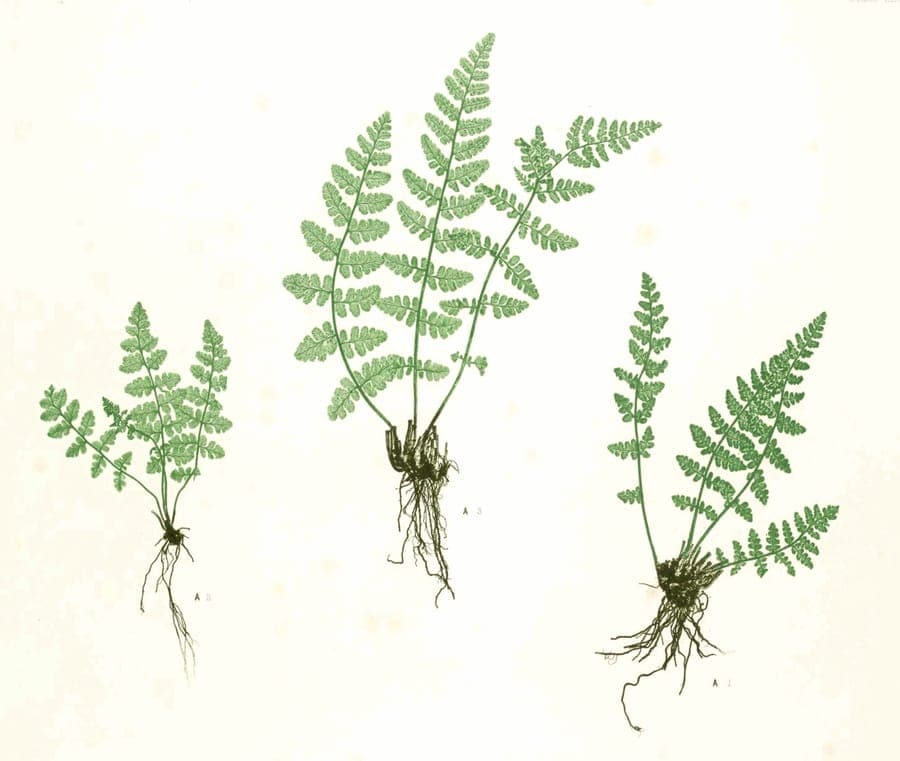
by Thomas Moore ; edited by John Lindley ; nature-printed by Henry Bradbury. / Public domain, via Wikimedia Commons
Rusty Woodsia: complete guide
Woodsia ilvensis
¿Quieres ver Rusty Woodsia: complete guide en tu jardín?
1 minuto, sin tarjeta de crédito
Overview
Rusty woodsia (Woodsia ilvensis) is a delicate, small fern found in subarctic and temperate climates worldwide. This plant is perfect for rocky terrain, alpine gardens, and shaded corners. With its low growth habit and elegant foliage, it adds character to miniature gardens and stone troughs. Garden centres stock this rare find for specialist collectors.
Appearance and Bloom Cycle
Rusty woodsia grows to about 15-20 cm tall. The fronds are elliptical and display a characteristic rusty-brown colour, especially at the base and along the veins. Rather than flowers, the plant produces spores on the undersides of fronds during summer. Spore production peaks from June through August.
Ideal Location
This fern thrives in partial to full shade. The plant appreciates a cool, moist environment. It grows happily on rock walls, between stones, and in alpine gardens where other plants struggle. North or west-facing positions provide optimal growing conditions and prevent scorching.
Soil Requirements
While rusty woodsia is modest in its demands, this fern prefers well-draining soil. A mix of peat, sand, and small gravel ensures excellent drainage. Waterlogged soil leads to rot and decline. For container culture, use alpine soil mixed with extra sand and gravel for drainage.
Watering
Water regularly, but allow the soil surface to dry slightly between waterings. During the growing season (spring and summer), keep the plant more consistently moist. In winter, reduce watering significantly. Use rainwater if possible, as this fern is sensitive to hard water and lime.
Pruning
Remove dead or damaged fronds as they appear. The plant requires minimal pruning maintenance. In spring, clear away old fronds to make room for new growth. Handle the plant gently, as it is quite delicate and easily damaged.
Maintenance Calendar
- Spring (Mar-May): Remove dead fronds, begin regular watering
- Summer (Jun-Aug): Keep moist, provide shade, observe spore production
- Autumn (Sep-Oct): Reduce watering, prepare for dormancy
- Winter (Nov-Feb): Minimal water, plant rests, protect from hard frost
Winter Hardiness
Rusty woodsia is extremely hardy and survives USDA zones 2 through 8. In severe winters, provide additional protective mulch around the plant for extra security. In milder regions it persists without protection.
Companion Plants
Combine with other alpine ferns and shade-lovers: solomon's seal, bleeding heart, lady's mantle. Add small flowering alpines like alpine violet or edelweiss for colour contrast and year-round interest.
Diseño gratis
¿Quieres ver Rusty Woodsia: complete guide en tu jardín? Crea un diseño gratis ahora.
Closing Thoughts
Rusty woodsia is an excellent choice for alpine garden enthusiasts. Although requiring careful handling, this small beauty brings great pleasure. For more fern guidance visit gardenworld.app/en. Explore more garden plans at gardenworld.app.
Additional cultivation details: For beginners starting with woodsia-ilvensis, understanding the complete lifecycle ensures better results. Temperature management, humidity control, and seasonal adjustments are crucial throughout the year. Many gardeners report success by following the maintenance calendar closely and adjusting watering based on weather conditions.
Growing from seed presents unique advantages. The germination process requires patience and consistent care. Starting seeds indoors in controlled conditions increases germination rates significantly. Transplanting to final locations requires hardening off young plants gradually to outdoor conditions.
Common issues and solutions: Watch for pest infestations, fungal issues, and nutrient deficiencies. Early detection prevents problems from becoming severe. Regular inspection of plants catches problems before they spread. Professional help from garden centres or specialists may be needed for persistent issues.
Seasonal feeding and nutrients: Spring applications of balanced fertilizer support new growth. Summer supplementation maintains vigor during peak growing season. Autumn preparations strengthen plants for winter dormancy. Winter care prevents frost damage and ensures spring recovery.
Integration with larger garden designs: This plant works beautifully in mixed borders or specialized garden sections. Color coordination with complementary plants enhances overall garden appeal. Height considerations ensure proper visual balance in garden compositions. Texture combinations create visual interest throughout seasons.
Growth under optimal conditions requires stable temperatures throughout the year.Growth under optimal conditions requires stable temperatures throughout the year.Growth under optimal conditions requires stable temperatures throughout the year.Growth under optimal conditions requires stable temperatures throughout the year.Growth under optimal conditions requires stable temperatures throughout the year.Growth under optimal conditions requires stable temperatures throughout the year.Growth under optimal conditions requires stable temperatures throughout the year.Growth under optimal conditions requires stable temperatures throughout the year.Growth under optimal conditions requires stable temperatures throughout the year.Growth under optimal conditions requires stable temperatures throughout the year.Growth under optimal conditions requires stable temperatures throughout the year.Growth under optimal conditions requires stable temperatures throughout the year.Growth under optimal conditions requires stable temperatures throughout the year.Growth under optimal conditions requires stable temperatures throughout the year.Growth under optimal conditions requires stable temperatures throughout the year.Growth under optimal conditions requires stable temperatures throughout the year.Growth under optimal conditions requires stable temperatures throughout the year.Growth under optimal conditions requires stable temperatures throughout the year.Growth under optimal conditions requires stable temperatures throughout the year.Growth under optimal conditions requires stable temperatures throughout the year.
¿Quieres ver Rusty Woodsia: complete guide en tu jardín? Crea un diseño gratis ahora.
Sube una foto, elige un estilo y obtén un diseño fotorrealista con lista de plantas en menos de un minuto.
Más de 10.000 jardines diseñados
Sin tarjeta de crédito


Plantas similares
Mountain spleenwort: complete guide
Asplenium montanum
Everything about mountain spleenwort fern: cultivation, care, growing conditions and proper maintenance for your garden
Western spleenwort: complete guide
Asplenium vespertinum
The Western spleenwort (Asplenium vespertinum) is a delicate fern from California with fine, feathery fronds. Learn about care, location, and overwintering in this comprehensive guide.
Asplenium cirrhatum: complete guide
Asplenium cirrhatum
Discover the chestnut scale spleenwort, a tropical fern full of elegance. Learn how to care for this exotic plant at home.