
Wikimedia Commons / Public domain, via Wikimedia Commons
Muscadine Grape: complete guide
Vitis rotundifolia
¿Quieres ver Muscadine Grape: complete guide en tu jardín?
1 minuto, sin tarjeta de crédito
Overview
Muscadine grape (Vitis rotundifolia), also called muscadine, is an American climbing vine distinguished by its delicious, edible fruits. This vigorous grower belongs to the Vitaceae family and originates from the southeastern United States, from the Gulf region to the northeast. The plant is perfect for gardeners wishing to transform their front yard into a productive fruit paradise with beautiful green vines and delicious purple grapes.
Appearance and Bloom
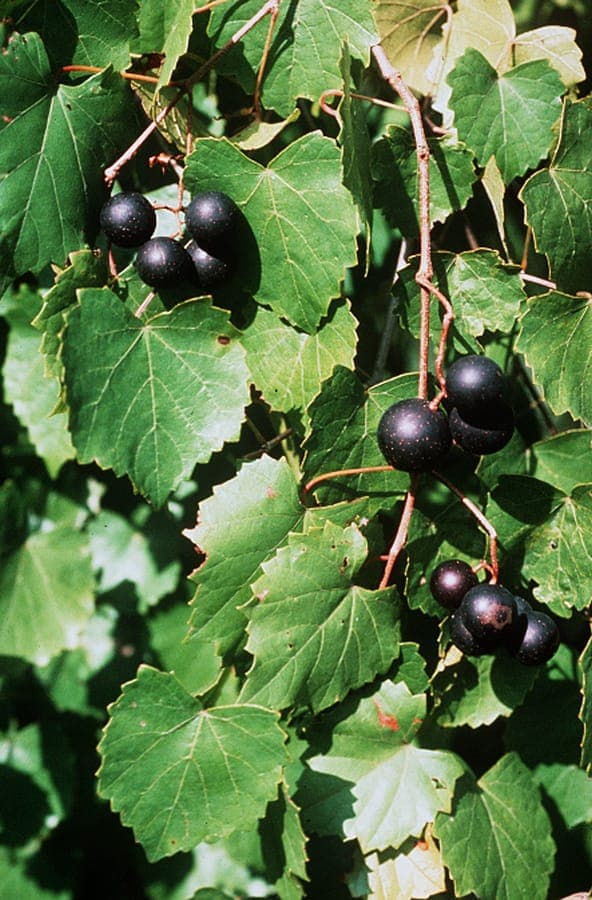
Muscadine grape grows as a vigorous, climbing vine capable of covering tall structures. The plant reaches considerable height and width, depending on support and pruning. The leaves are round and fuzzy, which is unique among grape species. In May and June, inconspicuous green flowers appear. Fruits form in summer and autumn, ripening into glossy purple to black grapes with thick skins and a pleasant musky aroma.
Ideal Location
Muscadine grape thrives best in a sunny location with at least 6-8 hours of direct sunlight daily. Without sufficient sun, fruits will not ripen well and the plant will be less productive. Provide a sturdy framework or pergola for support, as the plant can become quite heavy when fully grown against a structure.
Soil
Muscadine grape is relatively tolerant of various soil types and grows in soils with pH 6-8. However, the plant performs best in well-draining, moderately fertile soil. In heavy clay soils, it is recommended to work in sand and compost. Ensure water drains well, as waterlogging can cause problems.
Diseño gratis
¿Quieres ver Muscadine Grape: complete guide en tu jardín? Crea un diseño gratis ahora.
Watering
During the growing season, water regularly, especially during long dry periods. The plant should not remain waterlogged. Once established, muscadine grape is fairly drought-tolerant. In winter, watering can be significantly reduced.
Pruning
Muscadine grape requires regular pruning to maintain form and productivity. In late winter or early spring, remove old, weak, or diseased branches. Allow a number of strong young branches to grow for the next season. The plant recovers well from heavy pruning.
Maintenance Calendar
January-February: Heavy dormant pruning. March-April: New growth emerges. May-June: Flowering. July-September: Fruit set and ripening. October-November: Harvest. December: Dormancy preparation.
Winter Hardiness
Muscadine grape is hardy and can tolerate temperatures down to -10°C. This makes it suitable for temperate climates. In colder regions, the strongest canes may require protection.
Companion Plants
Muscadine grape can be combined with other climbers and bird-attracting plants. Ideal companions include clematis, honeysuckle, and other climbing plants with moderate water needs. The vine also provides excellent shelter for birds.
Closing Thoughts
Muscadine grape is a productive and attractive plant for gardeners with sufficient space. With its delicious fruits and attractive vines, it brings practical value and beauty to your front yard. Discover more fruit-growing possibilities at gardenworld.app/en.
¿Quieres ver Muscadine Grape: complete guide en tu jardín? Crea un diseño gratis ahora.
Sube una foto, elige un estilo y obtén un diseño fotorrealista con lista de plantas en menos de un minuto.
Más de 10.000 jardines diseñados
Sin tarjeta de crédito


Plantas similares
Catbird grape: complete guide
Vitis palmata
Discover the Catbird grape (Vitis palmata), a hardy wild grapevine that draws songbirds. Learn about location, pruning, and year-round care.
Monkshoodvine: complete guide
Ampelopsis aconitifolia
Discover Monkshoodvine. Learn how to care for this plant in your garden.
Vitis girdiana: complete guide to this resilient desert wild grape
Vitis girdiana
Discover Vitis girdiana, the Desert Wild Grape: a resilient native vine from California and Mexico. Perfect for dry, warm gardens and pergola screening.