
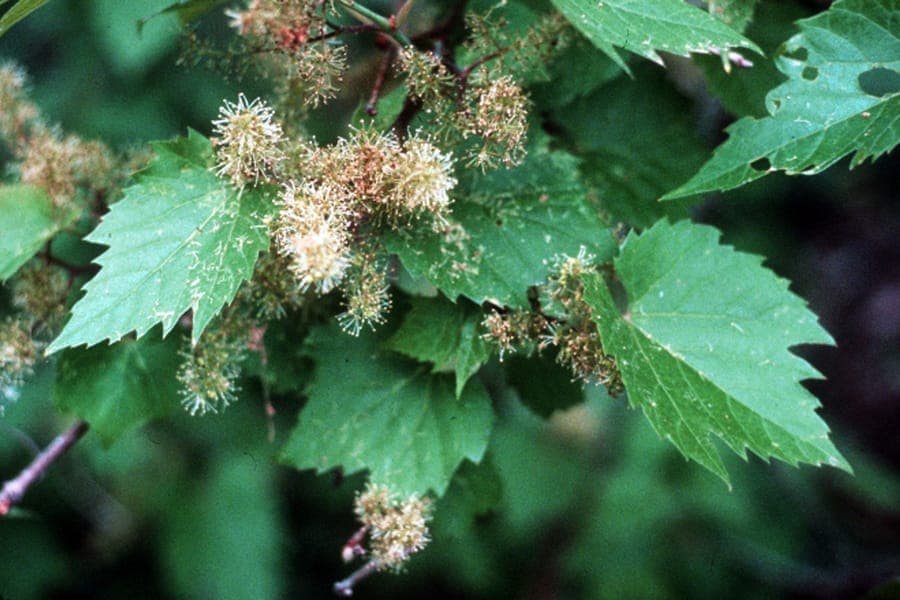
Bill Summers. USDA SCS. 1991. Southern wetland flora: Field office guide to plant species. South National Technical Center, Fort Worth. Courtesy of USDA NRCS Wetland Science Institute. / Public domain, via Wikimedia Commons
Riverbank Grape (Vitis riparia): complete guide
Vitis riparia
¿Quieres ver Riverbank Grape (Vitis riparia): complete guide en tu jardín?
1 minuto, sin tarjeta de crédito
Overview
The riverbank grape (Vitis riparia) is a powerful climbing vine from North America that has proven itself a reliable partner in gardens across temperate climates. This vigorous grower provides lush green foliage, dense coverage, and spectacular reddish-brown autumn color. Unlike its European cousins that produce fruit, this species is valued primarily for its growth rate, hardiness, and self-sufficiency.
Vitis riparia is ideal for gardeners seeking natural, green privacy with minimal fuss. The plant resists many common pests and diseases, outperforms commercial grape varieties in cold climates, and thrives with benign neglect once established.
Appearance & bloom cycle
The riverbank grape develops into a twining vine reaching 6 to 12 meters, depending on support structure and pruning. Leaves are small to medium-sized (5-10 cm), three-lobed to serrated, displaying fresh green color throughout summer. Autumn transforms the foliage to orange and deep burgundy, creating dramatic seasonal effects.
Flowers are inconspicuous greenish clusters appearing May-June, followed by small blue-black berries (pea-sized). This bird food attracts wildlife, enhancing your garden's ecological value.
Ideal location
Plant Vitis riparia in locations receiving 4-6 hours of direct sunlight daily. While tolerating partial shade, full sun produces the densest foliage and most dramatic autumn display. Provide sturdy support: pergolas, trellis walls, or strong mesh.
This vine tolerates wind well, develops strong root systems, and establishes quickly across diverse climatic zones. Suitable for both urban gardens and rural landscapes.
Soil requirements
Riverbank grape is remarkably undemanding regarding soil type. It grows in sandy, loamy, and heavy clay soils, provided drainage is adequate. Optimal pH ranges from 5.5 to 7.5, though broader tolerance exists.
In poor soils, growth is slower but still satisfying. Mix compost into the planting hole for early nutrition. Mulching aids moisture retention and root protection.
Diseño gratis
¿Quieres ver Riverbank Grape (Vitis riparia): complete guide en tu jardín? Crea un diseño gratis ahora.
Watering
Once established (after year 1-2), Vitis riparia ranks among the most drought-tolerant climbing vines. Young plants require regular watering until they develop extensive root systems, especially during dry spells. Mature specimens need supplemental water only during exceptional droughts.
Avoid waterlogging; this vine prefers normally moist over wet soil. Well-drained planting holes prevent root rot.
Pruning
Riverbank grape grows vigorously and tolerates annual pruning. In late winter (February-March), cut back canes extending beyond the support structure. Remove dead, damaged, or diseased wood. Summer pruning in June maintains shape and encourages new shoots.
This plant produces abundant foliage; heavy pruning in year one promotes strong branching. Thereafter, regular pruning keeps the plant compact and prevents unruly growth.
Maintenance calendar
January-February: Prune excessive growth and remove deadwood. March: Apply compost or slow-release fertilizer. May-June: Monitor for disease; conduct summer pruning. July-September: Water during dry periods. October-November: Enjoy autumn color; no action needed. December: Winter preparation.
Winter hardiness
Vitis riparia is exceptionally hardy, suitable for USDA zones 3-9, equivalent to most temperate climates. This vine tolerates temperatures to -30 degrees Celsius. It proves hardier than most commercial grape cultivars in cold winters.
Companion plants
Pair riverbank grape with complementary climbers for textural layering: Hedera helix (ivy) for winter interest, Clematis for summer color, or Jasminum officinale for fragrance. At the base, plant Vinca minor or low-growing Euonymus. These underplantings mask bare soil and improve moisture retention.
Closing
Riverbank grape is an underrated ally for gardeners seeking fast-growing, low-maintenance green privacy. With minimal inputs, this North American climber delivers structure, seasonal beauty, and ecological benefits. Find established specimens at local garden centers. Learn more about garden design and planting strategies at gardenworld.app. For comprehensive garden planning and design consultation, visit gardenworld.app.
¿Quieres ver Riverbank Grape (Vitis riparia): complete guide en tu jardín? Crea un diseño gratis ahora.
Sube una foto, elige un estilo y obtén un diseño fotorrealista con lista de plantas en menos de un minuto.
Más de 10.000 jardines diseñados
Sin tarjeta de crédito


Plantas similares
Catbird grape: complete guide
Vitis palmata
Discover the Catbird grape (Vitis palmata), a hardy wild grapevine that draws songbirds. Learn about location, pruning, and year-round care.
Monkshoodvine: complete guide
Ampelopsis aconitifolia
Discover Monkshoodvine. Learn how to care for this plant in your garden.
Vitis girdiana: complete guide to this resilient desert wild grape
Vitis girdiana
Discover Vitis girdiana, the Desert Wild Grape: a resilient native vine from California and Mexico. Perfect for dry, warm gardens and pergola screening.