
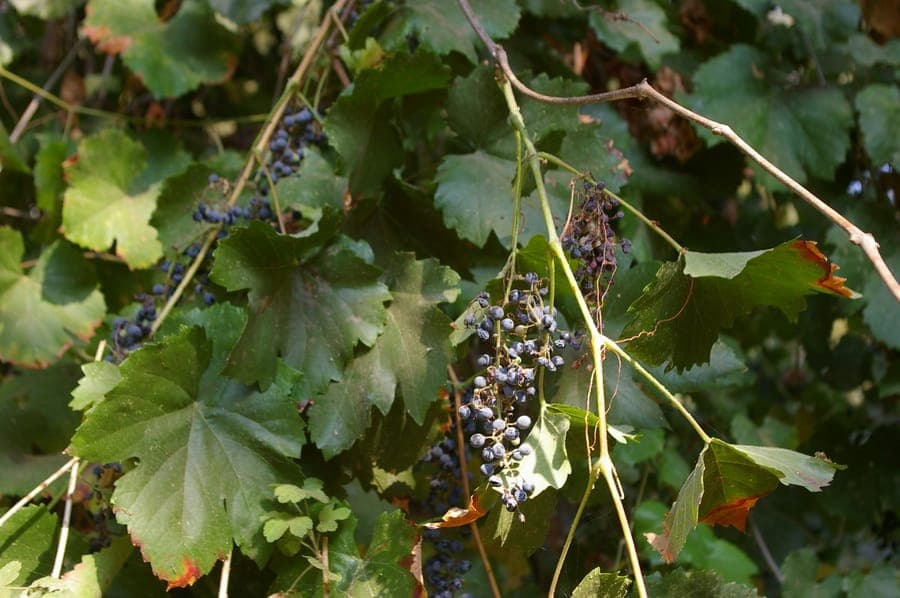
Wikimedia Commons / Public domain, via Wikimedia Commons
California wild grape: complete guide
Vitis californica
¿Quieres ver California wild grape: complete guide en tu jardín?
1 minuto, sin tarjeta de crédito
Overview
Vitis californica, commonly called California wild grape or Pacific grape, is a robust native American climbing plant found naturally in Oregon and California. This hardy vine is an excellent choice for gardeners seeking something authentic and low-maintenance. With elegant foliage, delicate flowers, and useful fruit, this plant offers a versatile addition to any front garden.
The plant belongs to the Vitaceae family and shares the same growth habits as cultivated grapes, but far hardier. It grows vigorously along trellises, pergolas, and even trees. Moreover, it tolerates drought exceptionally well once established, making it ideal for water-efficient and low-maintenance gardens.
Appearance and Bloom
California wild grape features distinctive palmate leaves with three to five lobes, green and averaging 7-10 cm wide. The foliage turns beautiful shades of red and gold in autumn. From May to June, small yellowish-green flowers appear in clusters with a pleasant fragrance.
After flowering come small grape clusters that transition from green to reddish, eventually becoming nearly black. These berries are much smaller than cultivated grapes (roughly 8-10 mm diameter) but share the same sweet taste. Birds readily consume these fruits, making the plant a bonus for bird enthusiasts.
The stems begin reddish, later turning brown and developing interesting bark texture. This strong, woody growth means canes aged 3-4 years become quite impressive.
Ideal Location
California wild grape thrives in full sun to partial shade. Minimum 6 hours of direct sunlight daily is essential for optimal growth and fruiting. In very hot climates, light afternoon shade can be beneficial.
This climbing plant works perfectly on south-facing pergolas, trellises above doors, garden sheds, and along fences. It can also be grown in large containers, though ground planting yields better results. Ensure the plant has support - wires, rope, or sturdy wooden structures work excellently.
Because this plant originates from the dry, open California hills, it tolerates full sun well and grows even faster as conditions become warmer and sunnier.
Soil
California wild grape is undemanding regarding soil type, making it accessible. It grows well in both light sandy and heavy clay soils. Drainage is however essential - waterlogging leads to root rot. If your soil contains much clay, improve it with compost or leaf mold.
A pH between 6.0 and 7.5 is ideal. In nutrient-rich soils, the plant grows faster, but it also thrives in lean soil. This makes it suitable for locations where other climbers struggle.
When planting, work 2-3 cm of compost into the planting hole. Mulching with 5 cm of leaf mold after planting helps retain moisture and suppress weeds. This is particularly important in the first year.
Watering
Once established (after the first season), California wild grape needs very little water. This is one of its principal advantages. It tolerates drought exceptionally and can survive long periods without supplemental water.
In the first year after planting, regular watering (1-2 times weekly) is needed until the root system is well-developed. In rainy periods, extra water is seldom necessary.
Once established, water only during prolonged drought (more than 3 weeks without rain). Excessive water causes more damage than drought. In winter, watering is unnecessary.
Diseño gratis
¿Quieres ver California wild grape: complete guide en tu jardín? Crea un diseño gratis ahora.
Pruning
Pruning is optional but recommended to control shape and size. Pruning is best done January through February, before sap begins flowing. Remove dead or damaged canes and thin young growth if it becomes too dense.
Be aware this grape can grow vigorously - canes can expand 1-2 meters per season. Regular cutback maintains a more compact plant. Post-bloom pruning helps limit unwanted growth.
Old, thick canes can be carefully removed to make room for younger, more vigorous wood. This encourages better flowering and fruiting in subsequent seasons.
Maintenance Calendar
In March, apply slow-release fertilizer or spread compost around the plant's base. This provides nutrition for the growing season.
May through June is flowering time - observe whether you get abundant flowers. Check for pests (see below).
July through September is the fruit-development period. Ensure the climber is well-secured to its support.
October-November is leaf fall and winter preparation. Remove fallen leaves around the base.
December through February is pruning season. Perform all pruning work during this period.
Winter Hardiness
California wild grape is fairly winter hardy and grows in zones 8-11, roughly from southern Germany to the Mediterranean. In the Netherlands, it survives outdoors in milder areas. In colder regions, container growing is advisable; move the plant to a cold greenhouse in winter.
Even in zones experiencing frost, the plant can regrow from its roots if the above-ground portion suffers freeze damage. In very cold winters, protection can be useful: bind young wood together and protect with burlap.
Companion Plants
California wild grape harmonizes well with Mediterranean and xerophytic plants. Pair it with rosemary, lavender, ornamental grasses, and lemon verbena. These plants prefer the same dry conditions and bloom simultaneously.
In partial shade, ornamental ferns and ivy (Hedera) grow well alongside. Both tolerate the same moisture levels.
Underplant with stonecrop (Sedum), houseleek (Sempervivum), or alpine marigold. These low-growing plants help outcompete weeds.
Summary
Vitis californica is a bird-friendly, nearly carefree climbing plant that attracts birds, provides food, and beautifully disguises garden structures. Once planted, it demands minimal care. It naturally selects its growth rate, tolerates drought and frost well, and delivers visible flowers and fruit yearly.
For more information and plant material, contact major garden retailers in your region. They have experience with native American climbers and can advise on suitable varieties for your location.
This plant is an investment in the future - the longer you let it grow, the more impressive your pergola or fence becomes. Start now and enjoy this beautiful, bird-friendly climber in years to come!
For a free design of your front garden featuring climbers like California wild grape, visit gardenworld.app and share your photo. Our experts will help you create a beautiful, flower-filled garden.
¿Quieres ver California wild grape: complete guide en tu jardín? Crea un diseño gratis ahora.
Sube una foto, elige un estilo y obtén un diseño fotorrealista con lista de plantas en menos de un minuto.
Más de 10.000 jardines diseñados
Sin tarjeta de crédito


Plantas similares
Catbird grape: complete guide
Vitis palmata
Discover the Catbird grape (Vitis palmata), a hardy wild grapevine that draws songbirds. Learn about location, pruning, and year-round care.
Monkshoodvine: complete guide
Ampelopsis aconitifolia
Discover Monkshoodvine. Learn how to care for this plant in your garden.
Vitis girdiana: complete guide to this resilient desert wild grape
Vitis girdiana
Discover Vitis girdiana, the Desert Wild Grape: a resilient native vine from California and Mexico. Perfect for dry, warm gardens and pergola screening.