
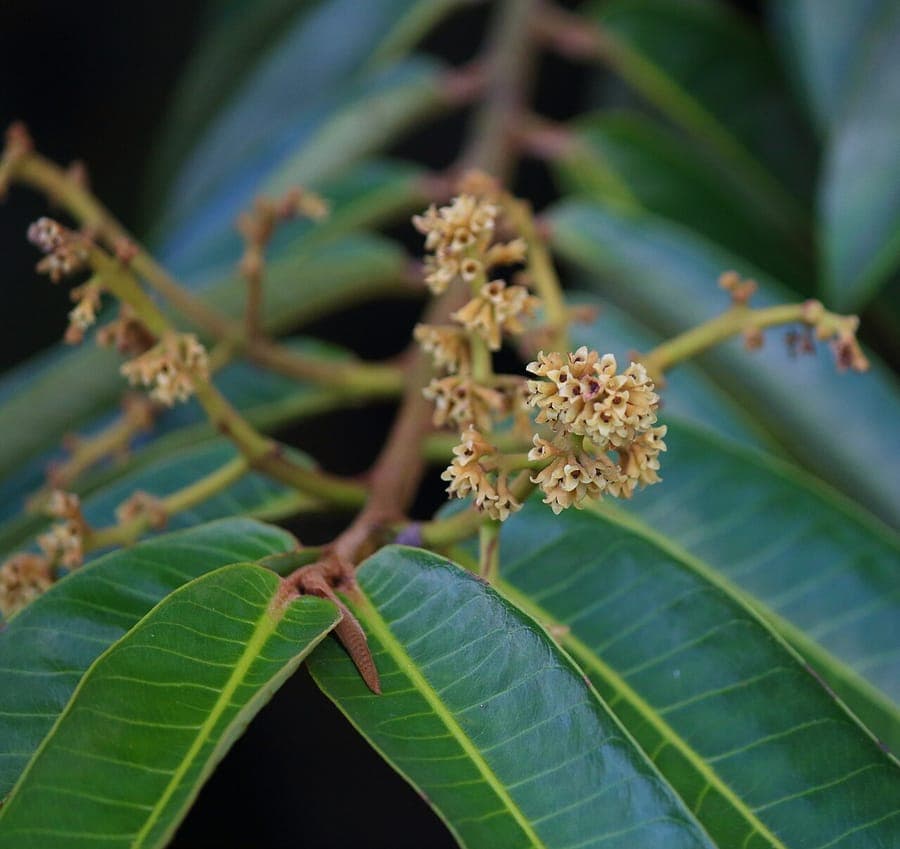
Feroze Omardeen / CC BY 2.0, via Wikimedia Commons
Virola surinamensis (Ucahuba-nut): complete guide
Virola surinamensis
¿Quieres ver Virola surinamensis (Ucahuba-nut): complete guide en tu jardín?
1 minuto, sin tarjeta de crédito
Overview
Virola surinamensis, commonly known as ucahuba-nut, white ucuba, or baboonwood, is an impressive tropical timber tree native to the Amazon rainforest and surrounding regions from Suriname through northern Brazil. This tree is valued for its medicinal applications, economically important seeds, and role in traditional medicine systems.
Virola surinamensis is a large, fast-growing tree primarily cultivated in tropical and subtropical gardens and agroforestry systems. With its height, valuable timber, and important seeds, it represents a significant tree crop in South America.
Appearance and Bloom
This is a large canopy species reaching 25-30 metres tall, sometimes taller in primary forest. The trunk is straight with grey bark marked by vertical grooves. The crown is dense and finely branched.
Leaves are compound, approximately 20-30 cm long, with glossy dark green colouration. Flowers are small and inconspicuous - yellowish-white in dense clusters. Fruits are ovoid to pear-shaped capsules about 2-3 cm long, containing seeds enclosed in a red-brown aril.
A characteristic feature is the red-brown resinous latex found in bark and seeds - containing myristicin compounds with medicinal properties.
Ideal Location
In tropical climates, Virola surinamensis grows best in warm, humid lowland environments. The tree tolerates diverse soil types, from sandy to clay soils, across moderate elevations.
This tree flourishes in full sun to light shade. While it functions as an understory tree in dense forests, cultivated specimens perform better with adequate light exposure for shape and productivity.
The tree is unsuitable for temperate-zone gardens - this is strictly a tropical species.
Soil
Virola surinamensis adapts to diverse soil types, from sandy to clay. In high-rainfall tropical zones, good drainage is preferable despite the tree's moisture requirements. Waterlogged conditions lead to root disease.
The tree prefers neutral to slightly acidic soils (pH 6.0-7.0). In cultivation, selected cultivars may show greater pH tolerance.
Incorporating organic matter improves water retention and nutrient availability.
Diseño gratis
¿Quieres ver Virola surinamensis (Ucahuba-nut): complete guide en tu jardín? Crea un diseño gratis ahora.
Watering
In its native habitat, Virola surinamensis receives substantial rainfall - typically 2000-3000 mm annually. Under cultivation, regular water promotes growth, especially during dry seasons.
Young trees require frequent water for establishment. Once mature, the tree exhibits moderate drought tolerance, though growth and fruiting are optimal with consistent moisture availability.
Avoid standing water, which promotes fungal diseases and root rot.
Pruning
In natural forests, Virola grows upright with minimal interference. In cultivation, formative pruning can maintain a single main stem and remove lower branches for safety and clearance.
Once established, little pruning is needed. In commercial timber production, pruning focuses on wood quality rather than form.
Maintenance Calendar
Year-Round (Tropical): This tree grows continuously in tropical climates. Regular fertilization and watering support vigorous growth. Monitor for pests and diseases.
Growth Phase (Seedling to Subcanopy): The tree can grow remarkably fast - exceeding 1 metre annually under favourable conditions. Regular nutrition and water are essential.
Productive Phase: Once reaching reproductive age (5-7 years), seeds can be harvested for nutmeg-like applications and commercial extraction.
Winter Hardiness
Virola surinamensis lacks winter hardiness outside tropical and subtropical regions. Temperatures below 15°C cause damage; frost is fatal.
The tree grows only in very warm zones (USDA 11-12 equivalent) with tropical or subtropical climates.
Companion Plants
In tropical agroforestry, Virola surinamensis grows alongside timber species, fruit trees, and medicinal plants. Underemergence might include bananas, cacao, and shade-tolerant crops.
Commercial polyculture systems integrate the tree with citrus, cacao, and other timber-producing species for economic diversification.
Closing
Virola surinamensis is an impressive tropical timber tree with substantial value for seed production, medicinal applications, and timber. For growers in tropical climates, the tree offers rapid growth, structural form, and harvesting potential.
Seedlings and seed material may be obtained from tropical forestry specialists. For more information on tropical cultivation, visit gardenworld.app. Grow Virola with purpose and foresight!
¿Quieres ver Virola surinamensis (Ucahuba-nut): complete guide en tu jardín? Crea un diseño gratis ahora.
Sube una foto, elige un estilo y obtén un diseño fotorrealista con lista de plantas en menos de un minuto.
Más de 10.000 jardines diseñados
Sin tarjeta de crédito


Plantas similares
Acer pycnanthum: complete guide
Acer pycnanthum
Acer pycnanthum, the Japanese swamp maple, is a fast-growing tree with early red flowers and brilliant autumn color, ideal for damp garden settings.
Freeman maple: complete guide
Acer × freemanii
Everything about the Freeman maple (Acer x freemanii): a fast-growing shade tree with spectacular autumn colour for large gardens.
Silver vine: complete guide
Actinidia polygama
Discover silver vine (Actinidia polygama): a hardy climbing plant with silvery foliage, loved by gardeners and cats alike.