
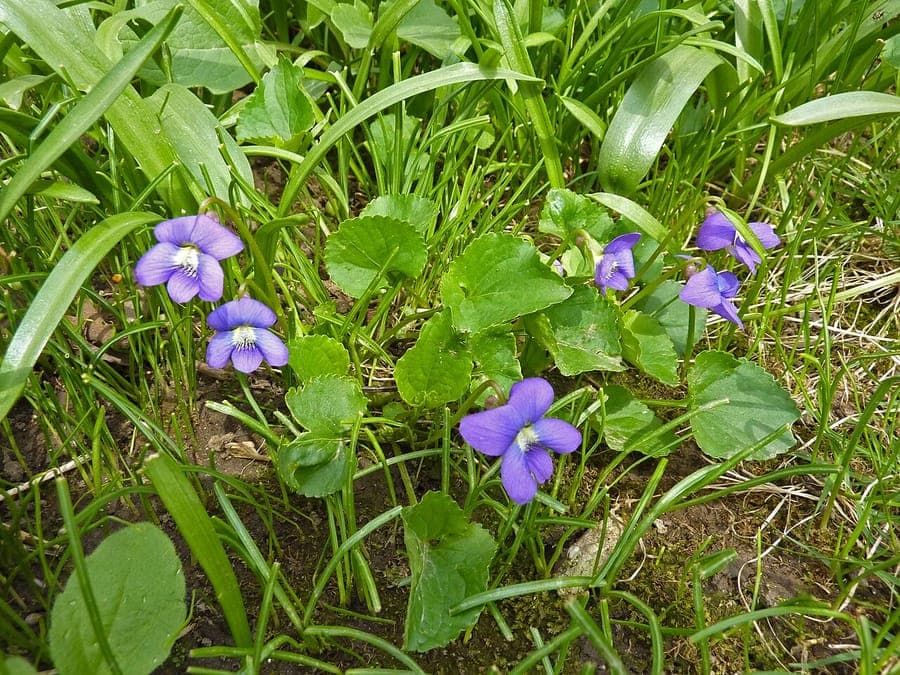
James Steakley / CC BY-SA 3.0, via Wikimedia Commons
Viola sororia: complete guide
Viola sororia
¿Quieres ver Viola sororia: complete guide en tu jardín?
1 minuto, sin tarjeta de crédito
Overview
Viola sororia, known as common blue violet, sister violet, or blue prairie violet, is a robust woodland violet from North America. This compact plant grows only 10-15 cm tall but spreads through underground runners to form larger colonies. It bears numerous blue flowers in spring and is ideal for natural woodland gardens and partially shaded spots.
Appearance & Bloom
The common blue violet has heart-shaped, glossy green leaves. The flowers are distinctly blue to violet-colored with characteristic blue-white patterns. Some cultivars have nearly white flowers. The main flowering period is April to May, with sometimes a second bloom in September. The plant spreads via underground rhizomes.
Ideal Location
This violet thrives in partial to light shade under deciduous trees. It can also grow in full sun but prefers some protection from afternoon sun. The plant is highly frost-resistant and grows throughout temperate climates. Locations under trees or in woodland settings are ideal.
Soil
Viola sororia grows in virtually any soil type, from acidic to basic. The plant tolerates even moderately poor soils well. Moisture retention is important - the plant thrives best in moderately moist soils. Well-draining sandy loams are ideal, but heavier soils are also accepted.
Diseño gratis
¿Quieres ver Viola sororia: complete guide en tu jardín? Crea un diseño gratis ahora.
Watering
Once established, this violet needs regular moisture supply. The plant thrives in moderately moist soils but can also endure dry periods. Watering during dry weeks is sufficient. In potting soil, lightly moist conditions without waterlogging are preferred.
Pruning
Pruning is not necessary. Remove only faded flowers for attractive appearance. The plant spreads naturally and can become aggressive - if desired, overgrown colonies can be trimmed back in autumn.
Maintenance Calendar
- March: First growth, no pruning needed
- April-May: Peak flowering period
- June-August: Rest period, leaf growth
- September: Possible second bloom
- October-November: Winter preparation
- December-February: Winter dormancy under snow
Winter Hardiness
The common blue violet is extremely frost-hardy, surviving temperatures to -30 degrees Celsius. It disappears under snow in the North but returns every spring. This makes it very suitable for cold climates and woodland gardens.
Companion Plants
Viola sororia combines beautifully with:
- Other wild violets
- Spring bulbs (snowdrops, wild forms)
- Woodland plants like Geranium sylvaticum
- Fern species
- Forest mosses
Closing Thoughts
Viola sororia is an exceptional choice for natural woodland gardens and shaded locations. With its robustness, abundance of flowers, and ease of cultivation, it is a valuable addition. The plant feels at home under trees and gradually spreads into beautiful blue carpets.
A true woodland classic!
¿Quieres ver Viola sororia: complete guide en tu jardín? Crea un diseño gratis ahora.
Sube una foto, elige un estilo y obtén un diseño fotorrealista con lista de plantas en menos de un minuto.
Más de 10.000 jardines diseñados
Sin tarjeta de crédito


Plantas similares
Woodland white violet: complete guide
Viola blanda
Discover the woodland white violet (Viola blanda), a fragrant North American groundcover for shady gardens. Site, soil, and care covered in full.
Canada violet: complete guide
Viola canadensis
Learn to grow the Canada violet (Viola canadensis), a tall, fragrant woodland violet for shade borders. Site, soil, pruning, and hardiness explained.
Mont Cenis violet: complete guide
Viola cenisia
Grow the Mont Cenis violet (Viola cenisia), an alpine cushion plant from the Alps for rock gardens and troughs. Site, soil, and hardiness explained.