
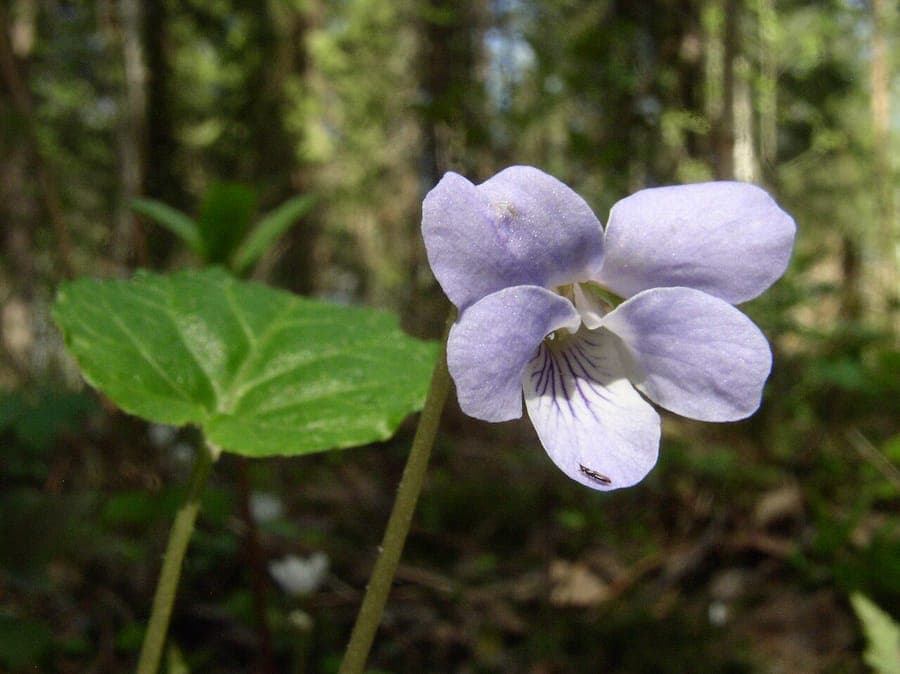
Antti Bilund / CC BY-SA 3.0, via Wikimedia Commons
Selkirk's violet: complete guide
Viola selkirkii
¿Quieres ver Selkirk's violet: complete guide en tu jardín?
1 minuto, sin tarjeta de crédito
Overview
Viola selkirkii, known as Selkirk's violet or great-spurred violet, is a charming alpine violet native to Northern Europe through Japan and subarctic America through North and west-central America. This small yet distinctive violet is known for its lovely purple flowers with long, pointed spurs. With its compact growth and elegant flowers, it is a valuable addition to alpine gardens and rock gardens. The plant grows in its natural habitat on moister mountain slopes and calcareous soils.
Appearance and bloom
Viola selkirkii grows as a very small herb typically not exceeding 10-15 centimeters in height. The leaves are nearly heart-shaped, small and soft-green. They form tight, compact rosettes. The flowers are purple to violet, sometimes with white tint, and have noticeably long spurs at the base. They appear from May through July in small but numerous flowers. The flowers attract many bees and insects. The aroma of the flowers is subtly pleasant. The spurs are characteristic and distinguish this species from other Viola species. The plant forms compact clusters that gain more volume over time.
Ideal location
Selkirk's violet grows best in half-shade to shaded locations. It can tolerate direct sun in colder climates, but in warmer areas shade is better. Plant in locations with stable moisture, e.g. in rock crevices, in rock gardens or in protected borders. It refuses full direct exposed sun especially in warm climates. A north or east-facing location is ideal.
Soil
Provide very well-draining, cool soil. Alpine soil mixture with plenty of sand, gravel and organic matter works best. The plant grows well on poor to moderate fertility soils. A mixture of alpine compost, sand and gravel gives ideal results. Lime may be present. Good drainage is absolutely essential, as water stagnation is fatal. The plant comes from mountain areas where water drains quickly.
Diseño gratis
¿Quieres ver Selkirk's violet: complete guide en tu jardín? Crea un diseño gratis ahora.
Watering
Keep the soil evenly but not waterlogged moist. It is better slightly under-watered than over-watered. Regular misting can be useful, especially in dry areas. Water minimally in fall and winter. The plant grows in cool summers and mist from mountain areas, so try to mimic these conditions. Drip irrigation is better than overhead watering.
Pruning
Pruning is not really necessary. You can carefully remove dead or damaged leaves. Spent flowers can be removed, but this is optional. The plant will naturally recover into a beautiful shape. Much caution is needed due to the fragile nature.
Maintenance calendar
Early spring (March-April): growth begins with first little leaves. May through July: full bloom with many small purple flowers. August through September: slower growth after bloom. October through November: preparation for winter with withering of above-ground foliage. December through February: dormancy with possible snow cover.
Winter hardiness
Viola selkirkii is very winter-hardy and can tolerate temperatures to -30C or even lower. It is adapted to mountain winters and subarctic conditions. However, wet winters can be problematic. Ensure good drainage to prevent root rot. Snow cover is actually beneficial and protective. The plant grows in its natural habitat under months of snow.
Companion plants
Selkirk's violet combines nicely with other small alpine plants. Try together with Saxifrage, small alpine Phlox, Edraianthus, Dianthus alpestris and other mountain bloomers. Also good together with small Sempervivum and alpine Sedums. Avoid large, aggressive growers that could overshadow the violet. Small moss-like ground covers are ideal neighbors.
Closing remarks
Viola selkirkii is a delicate beauty for the specialized alpine garden. With its long spurs and purple flowers, it adds character and elegance to rock gardens. For mountain plant enthusiasts, this is a must-have. Available from specialty alpine plant nurseries or online via gardenworld.app. Start with a few plants in well-drained rockery and you will enjoy this for years. A true masterpiece for the discerning garden designer!
¿Quieres ver Selkirk's violet: complete guide en tu jardín? Crea un diseño gratis ahora.
Sube una foto, elige un estilo y obtén un diseño fotorrealista con lista de plantas en menos de un minuto.
Más de 10.000 jardines diseñados
Sin tarjeta de crédito


Plantas similares
Woodland white violet: complete guide
Viola blanda
Discover the woodland white violet (Viola blanda), a fragrant North American groundcover for shady gardens. Site, soil, and care covered in full.
Canada violet: complete guide
Viola canadensis
Learn to grow the Canada violet (Viola canadensis), a tall, fragrant woodland violet for shade borders. Site, soil, pruning, and hardiness explained.
Mont Cenis violet: complete guide
Viola cenisia
Grow the Mont Cenis violet (Viola cenisia), an alpine cushion plant from the Alps for rock gardens and troughs. Site, soil, and hardiness explained.