
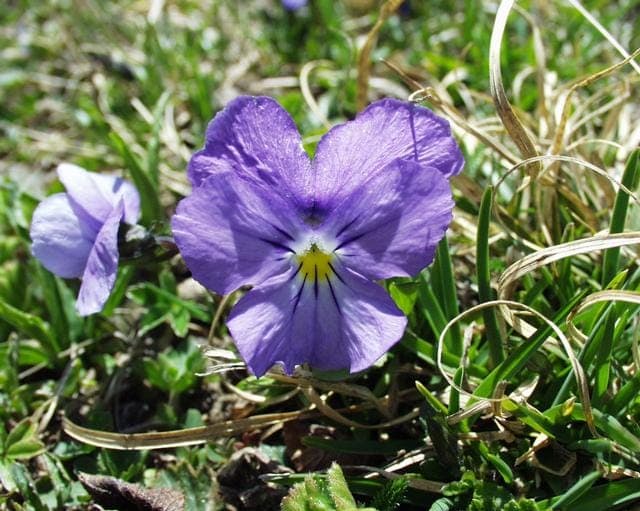
Henry Brisse (upload by user:Abalg) / CC BY-SA 3.0, via Wikimedia Commons
Viola calcarata: complete guide
Viola calcarata
¿Quieres ver Viola calcarata: complete guide en tu jardín?
1 minuto, sin tarjeta de crédito
Overview
Viola calcarata, known as spurred pansy or long-spurred pansy, is a charming alpine plant from the Alps. This compact plant grows only 10-20 cm tall and bears attractive purple flowers with a distinctive long spur for months. It is perfect for rock gardens, alpine troughs, and alpine plantings.
Appearance & Bloom
The spurred pansy is characterized by small, heart-shaped leaves and very striking flowers with a long, distinct spur on the back. The flowers appear in various shades of purple, lilac, and violet, sometimes with white. The flowering period extends from May to September, providing a long bloom period. The plant forms dense cushions with many flowers.
Ideal Location
This plant thrives in full sun to partial shade in mountainous terrain. Full sun is appreciated, but the plant also grows well in partial shade. The plant prefers well-ventilated locations with fresh morning sun. In hot climates, some afternoon shade is preferable.
Soil
Viola calcarata requires well-draining, preferably slightly alkaline soil. The plant naturally grows on calcareous soils in the Alps. Add gravel, stone grit or calcareous amendments to garden or potting soil. The plant tolerates moderately fertile soil well and grows even in poor soil.
Diseño gratis
¿Quieres ver Viola calcarata: complete guide en tu jardín? Crea un diseño gratis ahora.
Watering
Once established, the spurred pansy needs moderate watering. Water regularly during the growing season, especially after planting. Ensure good drainage and allow the surface to dry slightly between waterings. In pots, regular but not constantly wet conditions are preferred.
Pruning
Pruning is not necessary. Remove only faded flowers ('deadheading') to stimulate longer flowering. In spring, dead leaves can be removed. The plant grows naturally into a neat, compact form.
Maintenance Calendar
- March-April: Spring begins, light watering
- May-June: First bloom wave, water regularly
- July-August: High water needs due to heat
- September: Second bloom phase
- October-November: Winter preparation
- December-February: Winter dormancy, minimal water
Winter Hardiness
The spurred pansy is frost-hardy (-15 to -20 degrees C) and overwinters well outdoors in mixed climates. The plant suffers less from winter moisture than other violets, but frost protection helps against extreme freezing. A mulch layer of gravel can provide protection.
Companion Plants
Viola calcarata combines beautifully with:
- Saxifraga species
- Phlox subulata (moss pink)
- Sedum species
- Dianthus (pinks)
- Other alpine violets
Closing Thoughts
Viola calcarata is an essential plant for any alpine or rock garden. With its long flowering period, compact growth, and frost hardiness, it is a valuable addition. The characteristic long spur makes it unmistakable and attractive for garden enthusiasts.
A true alpine classic!
¿Quieres ver Viola calcarata: complete guide en tu jardín? Crea un diseño gratis ahora.
Sube una foto, elige un estilo y obtén un diseño fotorrealista con lista de plantas en menos de un minuto.
Más de 10.000 jardines diseñados
Sin tarjeta de crédito


Plantas similares
Woodland white violet: complete guide
Viola blanda
Discover the woodland white violet (Viola blanda), a fragrant North American groundcover for shady gardens. Site, soil, and care covered in full.
Canada violet: complete guide
Viola canadensis
Learn to grow the Canada violet (Viola canadensis), a tall, fragrant woodland violet for shade borders. Site, soil, pruning, and hardiness explained.
Mont Cenis violet: complete guide
Viola cenisia
Grow the Mont Cenis violet (Viola cenisia), an alpine cushion plant from the Alps for rock gardens and troughs. Site, soil, and hardiness explained.