
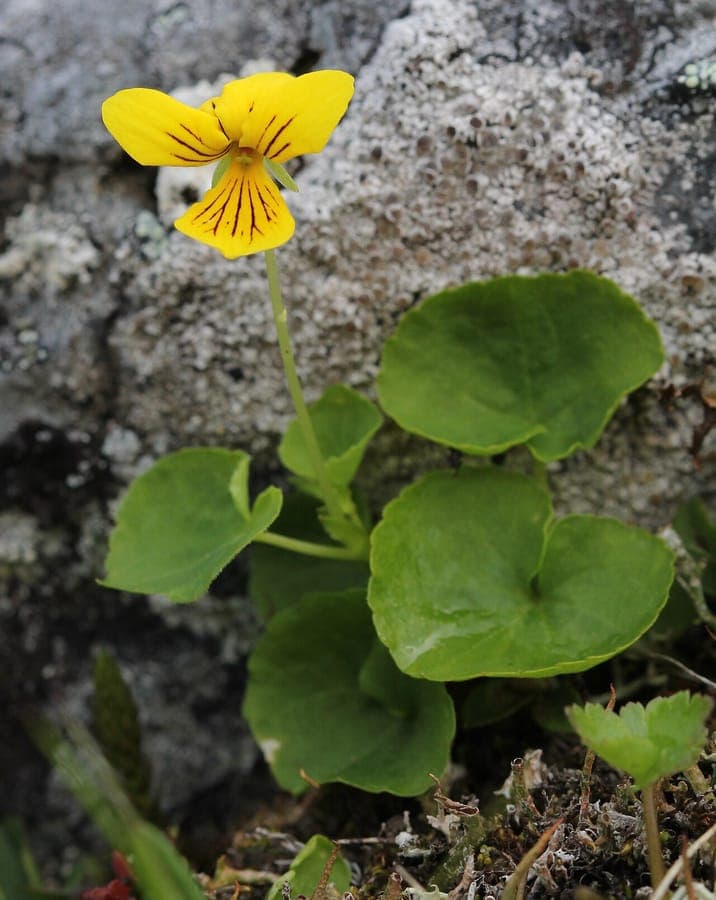
Alinja / CC BY-SA 3.0, via Wikimedia Commons
Alpine yellow violet: complete guide
Viola biflora
¿Quieres ver Alpine yellow violet: complete guide en tu jardín?
1 minuto, sin tarjeta de crédito
Overview
Distribution: The Alpine yellow violet (Viola biflora) is native to cold mountain regions of Europe, Asia, and North America. These hardy mountain dwellers bloom at elevations of 1,200-3,500 meters in alpine meadows and rocky scree. The species thrives where many garden plants struggle, in harsh mountain climates with extended cold seasons.
Growth Habit: A diminutive groundcover reaching only 10-15 centimeters tall, Viola biflora forms compact rosettes of densely packed foliage. Perfect for rock gardens, alpine troughs, and container cultivation in cool regions.
Distinctive Features: Named "twinflower violet" for its unique characteristic of producing two yellow flowers per flower stalk during peak bloom season. This distinguishes it from most other Viola species that bear solitary flowers. The blooms appear from April through July, brightening alpine gardens when few other plants flower.
Appearance and Bloom
Foliage: Heart-shaped leaves emerge from basal rosettes, measuring 1-2 centimeters long with fine hairs. Foliage is vibrant green during active growth and disappears after frost in cooler climates. The texture is soft and delicate despite the plant's toughness.
Flowers: Two to five millimeter yellow petals create charming blooms approximately one centimeter in diameter. Each of the five petals has a distinctive character. The flowers emit a subtle fragrance attractive to early-season pollinators.
Growth Pattern: This semi-hardy perennial exhibits summer dormancy in warmer zones. Foliage yellows and disappears during dry, hot periods, reappearing when conditions cool and moisture increases.
Ideal Location
Light: Prefers partial shade in garden settings, mimicking alpine conditions where plants grow beneath larger rocks and vegetation. However, with adequate moisture, tolerates more sun in cooler northern climates.
Wind Protection: Although alpine plants are inherently wind-resistant, shelter from strong winds prevents leaf scorch and stem breakage.
Temperature: Thrives in cool climates with extended winters. Requires a minimum of 100-150 frost-free days for full maturation. In warm-summer regions, provide afternoon shade and ensure cool evening temperatures.
Moisture: Grows beautifully on moist alpine hillsides where snowmelt provides consistent moisture without waterlogging.
Soil
Soil pH: Viola biflora adapts to neutral to slightly acidic soil (pH 5.5-7.0). Highly alkaline limestone soils can induce chlorosis (yellowing) of leaves.
Drainage: Critical for success. Alpine natives cannot tolerate waterlogged conditions. Amend heavy soils with sharp sand and grit to improve drainage significantly. At minimum, create raised beds or containers with excellent drainage.
Soil Composition: Prefers mineral-rich, gritty soil with low organic matter. Heavy clay requires substantial amendment with gravel and coarse sand to prevent root rot.
Fertility: Alpine soils are naturally nutrient-poor. Viola biflora thrives in lean conditions; excess feeding promotes vegetative growth at the expense of flowers.
Diseño gratis
¿Quieres ver Alpine yellow violet: complete guide en tu jardín? Crea un diseño gratis ahora.
Watering
Water Needs: Keep soil consistently moist during the growing season (April-September). Foliage dies back during drought stress.
Watering Frequency: Water twice weekly during dry periods. Sandy soils may require more frequent application. Always ensure drainage prevents pooling.
Winter Watering: During dormancy, reduce moisture significantly. The plant tolerates dry winter conditions exceptionally well, requiring minimal water during rest periods.
Containers: Container-grown specimens need daily watering during hot weather, as alpine soils dry rapidly.
Pruning
Deadheading: Remove faded flowers regularly to encourage continuous blooming throughout the season. This extends the floral display considerably.
Leaf Management: Clear brown or frost-damaged foliage after winter to promote fresh growth in spring.
No Hard Pruning: Viola biflora requires no severe cutting; the plant naturally maintains its compact form. Allow it to grow naturally without restrictive pruning.
Maintenance Calendar
February/March: Prepare soil with balanced fertilizer, remove winter debris, check for early growth.
April/May: Begin regular watering, monitor for flower initiation, provide support if needed.
June/July: Peak blooming period; deadhead spent flowers daily, maintain consistent moisture.
August/September: Reduce watering as foliage yellows, cease feeding to harden growth for winter.
October/November: Minimal care required; add light mulch in very cold zones only.
December/January: Dormant period; rarely needs intervention except snow removal from sensitive alpine origins.
Winter Hardiness
Hardiness: Extremely cold-hardy, tolerating temperatures to -30 degrees Celsius. Native to zones where winter temperatures plunge far below zero regularly.
Protection: In temperate zones, no winter protection required. In extremely cold regions above zone 3, a thin layer of dry mulch can prevent wind-scorch.
Autumn Dormancy: This fall-germinating alpine adapts quickly to garden dormancy cycles. Growth resumes reliably in early spring.
Companion Planting
Alpine Rock Garden Companions: Saxifraga, Sempervivum, Armeria maritima, Sedum alpestre.
Other Viola Species: Viola lutea, Viola cornuta 'Broughton Blue', Viola pedata.
Groundcover Combinations: Thymus, creeping phlox, Alchemilla alpina, Dryas octopetala.
Height Layering: Compact conifers like Juniperus communis 'Compressa' create vertical interest.
Closing Thoughts
Viola biflora represents the pinnacle of alpine plant hardiness and charm. Its brilliant yellow twin-flower displays, combined with extreme resilience, offer years of reliable color with minimal care. Ideal for serious alpine gardeners and cold-climate regions seeking authentic mountain beauty. Visit gardenworld.app/en for additional alpine plant guidance. Availability in UK at specialist alpine nurseries and garden centers with alpine plant selections.
¿Quieres ver Alpine yellow violet: complete guide en tu jardín? Crea un diseño gratis ahora.
Sube una foto, elige un estilo y obtén un diseño fotorrealista con lista de plantas en menos de un minuto.
Más de 10.000 jardines diseñados
Sin tarjeta de crédito


Plantas similares
Woodland white violet: complete guide
Viola blanda
Discover the woodland white violet (Viola blanda), a fragrant North American groundcover for shady gardens. Site, soil, and care covered in full.
Canada violet: complete guide
Viola canadensis
Learn to grow the Canada violet (Viola canadensis), a tall, fragrant woodland violet for shade borders. Site, soil, pruning, and hardiness explained.
Mont Cenis violet: complete guide
Viola cenisia
Grow the Mont Cenis violet (Viola cenisia), an alpine cushion plant from the Alps for rock gardens and troughs. Site, soil, and hardiness explained.