
Ivar Leidus / CC BY-SA 4.0, via Wikimedia Commons
Viola arvensis: complete guide
Viola arvensis
¿Quieres ver Viola arvensis: complete guide en tu jardín?
1 minuto, sin tarjeta de crédito
Overview
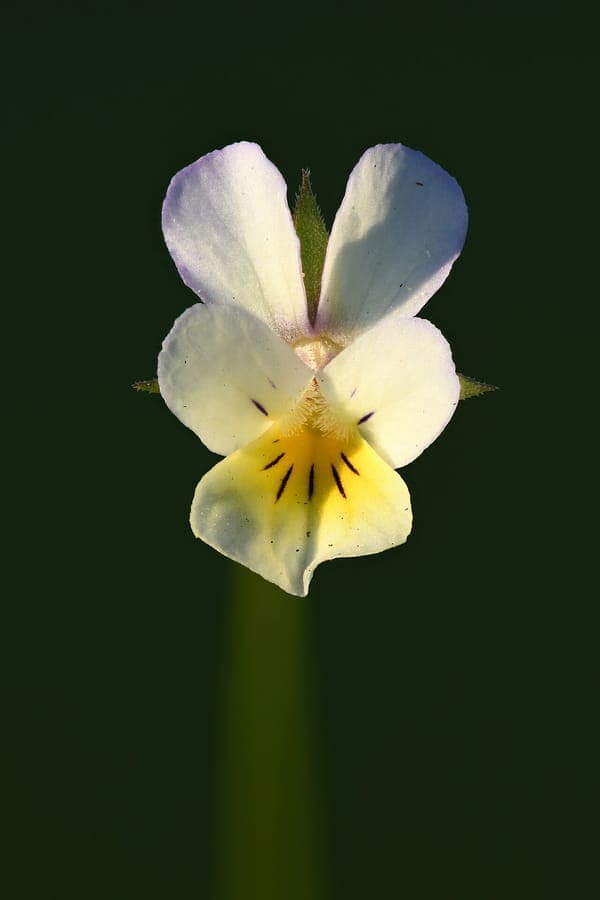
Viola arvensis, the field pansy or European field pansy, is a delicate wildflower bringing rural meadow charm to gardens. Growing wild across much of Europe, it colonises fields, grasslands and neglected corners. This is a charming plant with fascinating purple and white flowers.
Field pansy is relatively easy to grow and thrives in borders, wildflower meadows and semi-natural garden spaces. Once sown, it readily self-seeds, returning year after year. The seeds are eaten by insects and birds, making it a nourishing addition to wildlife gardens.
Field pansy is a friendly plant for anyone wanting summer flowers with minimal effort. Sow it in April-May and you'll have blooms all summer.
Appearance and bloom cycle
Field pansy grows as a low, delicate plant 15 to 30 cm tall. Leaves are small, oblong to heart-shaped, green with fine veining. Growth habit is graceful and modest.
Flowers appear May through September depending on sowing time. Each bloom is small and highly variable in colour: typically purple-white striped, sometimes nearly white, occasionally more purple. Flowers have the characteristic five-petalled pansy form. After pollination, small seed pods develop.
Ideal location
Field pansy thrives in full sun to partial shade. At least four to six hours daily sunlight ensures good flowering. In partial shade, growth slows but remains acceptable.
The plant feels at home in borders, wildflower meadows, paving cracks and other semi-neglected corners. It's perfect for an English cottage garden where flowers roam freely.
Soil requirements
Field pansy is very tolerant regarding soil quality. It grows in poor sandy soil, average soil, and even somewhat richer soil. The plant accepts nearly everything.
Whatever your soil type - sandy, loamy or clay - provided it doesn't permanently waterlog, field pansy accepts it. Well-draining soil is better than wet soil. In very poor soil, work in some compost.
Diseño gratis
¿Quieres ver Viola arvensis: complete guide en tu jardín? Crea un diseño gratis ahora.
Watering
Once field pansy emerges, water regularly but not excessively. Once well-established (after two to three weeks), it tolerates most moisture variations well.
During dry periods, water carefully. Waterlogging damages it, so ensure water drains away. Once mature, it's surprisingly drought-tolerant.
Pruning
Field pansy needs no real pruning. Let it grow and flower as it wishes. After flowering (September-October), gently remove dead leaves. For complete renewal, cut to ground level in March.
Maintenance calendar
April-May: Sow directly into ground or start seedlings in containers. Water carefully. Seedlings emerge in one and a half to two weeks.
June-July: Growth accelerates. Water regularly. Flowering begins.
August-September: Flowering peaks. Seeds begin ripening. Water during dry spells.
October-November: Seeds dry and drop. Plant begins dying back. Much seed falls for next year.
December-March: Dormancy. New seedlings grow slowly. By March, growth accelerates.
Winter hardiness
Field pansy is frost-hardy to about -10 degrees Celsius. In temperate winter regions, it survives without issue in protected locations. In very severe winters, damage may occur, but it usually recovers from seed.
It usually grows as a spring annual: sow in April, flower in summer, set seed in autumn, die back in winter and return from seed in spring.
Companion plants
Pair field pansy with other wildflowers: cornflower, poppy, larkspur and other meadow flowers. Also lovely in borders alongside lower-growing plants.
For wildlife gardens: plant with other seed-bearing flowers so you provide food year-round.
Closing thoughts
Field pansy is an elegant answer for anyone wanting garden flowers without much work. Sow it once and it self-seeds year after year. The small purple and white flowers create a cottage garden feel. Source seeds from garden centres and bring your garden to life. Find more inspiration on gardenworld.app where you discover how simple wildflower growing is.
Want a wild, flowering front yard without much maintenance? Visit gardenworld.app for plans and practical growing tips.
¿Quieres ver Viola arvensis: complete guide en tu jardín? Crea un diseño gratis ahora.
Sube una foto, elige un estilo y obtén un diseño fotorrealista con lista de plantas en menos de un minuto.
Más de 10.000 jardines diseñados
Sin tarjeta de crédito


Plantas similares
Woodland white violet: complete guide
Viola blanda
Discover the woodland white violet (Viola blanda), a fragrant North American groundcover for shady gardens. Site, soil, and care covered in full.
Canada violet: complete guide
Viola canadensis
Learn to grow the Canada violet (Viola canadensis), a tall, fragrant woodland violet for shade borders. Site, soil, pruning, and hardiness explained.
Mont Cenis violet: complete guide
Viola cenisia
Grow the Mont Cenis violet (Viola cenisia), an alpine cushion plant from the Alps for rock gardens and troughs. Site, soil, and hardiness explained.