
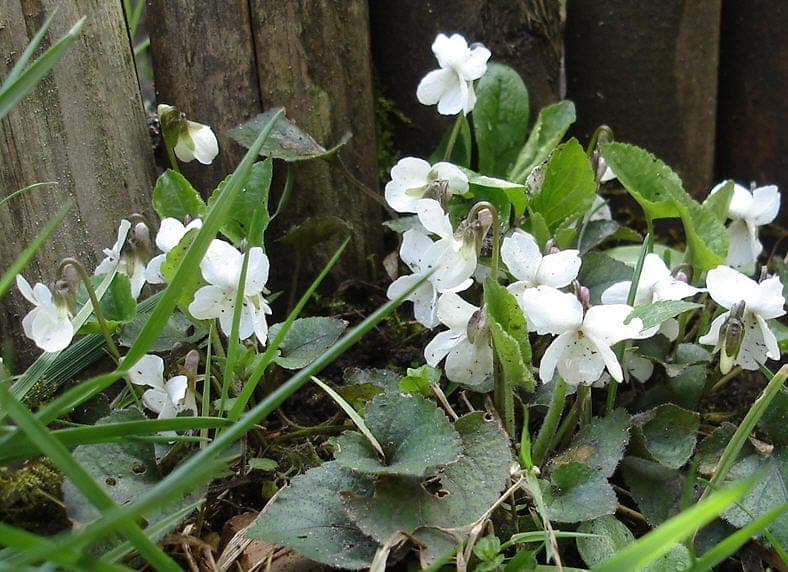
Original uploader was Bourrel at fr.wikipedia / CC BY-SA 3.0, via Wikimedia Commons
Viola alba: complete guide
Viola alba
¿Quieres ver Viola alba: complete guide en tu jardín?
1 minuto, sin tarjeta de crédito
Overview
Viola alba, the white violet, is a delicate wildflower thriving in shaded garden corners. Growing wild in southern European forests, it brings early spring elegance to temperate gardens. This dainty plant offers pure white flowers in late winter through spring.
White violet is modest in its growth habits yet reliable when placed correctly. Once established in suitable conditions, it returns year after year with minimal fuss. The seeds are distributed by ants - a fascinating ecological story playing out in your garden.
This plant is invaluable for wildlife gardens. Seeds provide bird food, leaves feed caterpillars of certain butterfly species. Altogether, white violet is an essential addition to wild gardens.
Appearance and bloom cycle
White violet grows as a low, compact plant 10 to 20 cm tall. Leaves are heart-shaped, green, arranged densely in a rosette at ground level. Short stems keep the entire plant remarkably compact.
Flowers appear March through May depending on weather. Each bloom is white, sometimes with purple nectar guides, small but charming. After flowering, small seed pods form, dispersed by ants.
Ideal location
White violet loves partial shade and dappled light. It's the plant for understory planting beneath deciduous trees, along hedgerows, and in other shaded garden corners. It tolerates full sun but doesn't truly thrive there.
Find a quiet spot where it won't be disturbed. The plant appreciates protection from harsh wind.
Soil requirements
White violet prefers nutrient-rich, humus-laden soil. Mix compost into the soil before planting - this helps establish the plant well. It prefers slightly acidic soil, common in many gardens.
Whatever your soil type - provided it retains moisture and doesn't waterlog - white violet accepts it. In very poor sandy soil, work in extra compost.
Diseño gratis
¿Quieres ver Viola alba: complete guide en tu jardín? Crea un diseño gratis ahora.
Watering
After planting, keep soil consistently moist but not waterlogged. During dry periods, water carefully at the base. Waterlogging damages roots, so avoid excessive watering.
Once well-established (after one season), white violet becomes comfortable with natural moisture fluctuations.
Pruning
White violet needs no real pruning. Let it grow naturally and self-sow. After seed formation (May), gently remove dead leaves. Complete cutting to ground level in March for renewal.
Maintenance calendar
March-April: Plant in partial shade. Water well after planting.
May-June: Flowering peaks. Seeds form. Water during dry spells.
July-August: Plant gradually fades. Seeds ripen and disperse via ants.
September-October: Seedlings emerge from self-dispersed seed. Water regularly.
November-February: Dormancy. Plant dies back completely. In March it regrows from seed or remaining roots.
Winter hardiness
White violet is completely frost-hardy, surviving well below -15 degrees Celsius. Frost poses no problem. The plant disappears in late autumn and re-emerges in spring from seed or perennial roots.
Companion plants
Pair white violet with other early spring shade bloomers: Hepatica, Lamium, other violet species and ferns. Lovely beneath trees and shrubs.
Closing thoughts
White violet is a nourishing small plant for those wanting spring flowers without fuss. Once established, it propagates via self-sown seed, provides bird food from seeds, and caterpillar food from leaves. Visit gardenworld.app for more spring garden ideas and wild planting schemes.
Need design help creating beautiful shaded spring gardens? Explore gardenworld.app for woodland garden solutions.
¿Quieres ver Viola alba: complete guide en tu jardín? Crea un diseño gratis ahora.
Sube una foto, elige un estilo y obtén un diseño fotorrealista con lista de plantas en menos de un minuto.
Más de 10.000 jardines diseñados
Sin tarjeta de crédito


Plantas similares
Woodland white violet: complete guide
Viola blanda
Discover the woodland white violet (Viola blanda), a fragrant North American groundcover for shady gardens. Site, soil, and care covered in full.
Canada violet: complete guide
Viola canadensis
Learn to grow the Canada violet (Viola canadensis), a tall, fragrant woodland violet for shade borders. Site, soil, pruning, and hardiness explained.
Mont Cenis violet: complete guide
Viola cenisia
Grow the Mont Cenis violet (Viola cenisia), an alpine cushion plant from the Alps for rock gardens and troughs. Site, soil, and hardiness explained.