
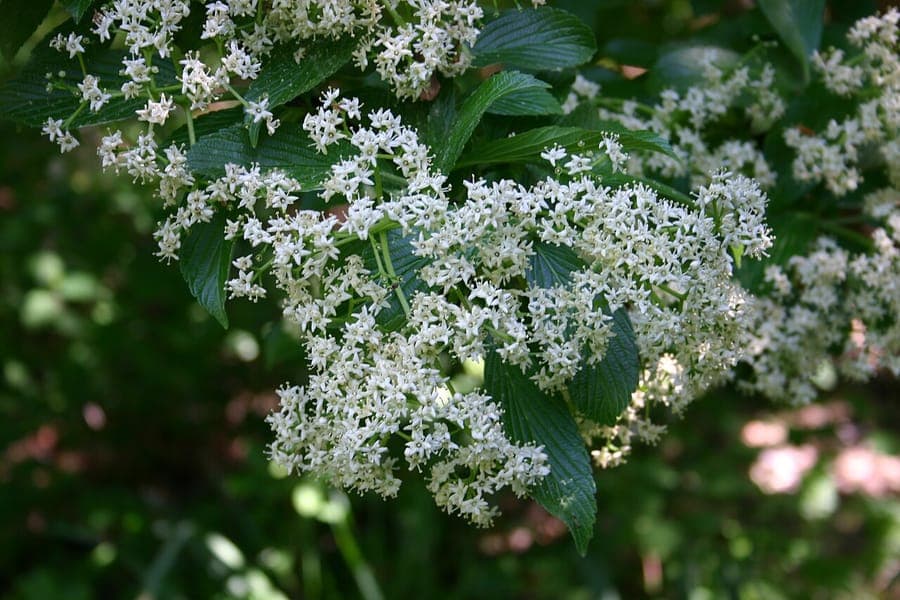
User:SB_Johnny / CC BY-SA 3.0, via Wikimedia Commons
Viburnum sieboldii: complete guide
Viburnum sieboldii
¿Quieres ver Viburnum sieboldii: complete guide en tu jardín?
1 minuto, sin tarjeta de crédito
Overview
Viburnum sieboldii, also known as Siebold's arrowwood or Japanese snowball, is a medium to large deciduous shrub native to Japan. This beautiful plant belongs to the Viburnaceae family and is a classic choice in landscape architecture. With its robust growth habit, enchanting flowers, and abundant bird fruits, it offers versatility for gardens seeking both botanical beauty and practical ecological value.
Appearance and Bloom
The Japanese arrowwood grows into a densely branched shrub reaching 3 to 4 meters in height and width. The leaves are oval to elliptical, deep green, and feature prominent veining on the surface. From May to June, flowers appear in large, flat clusters of white to cream-colored florets - a breathtaking sight that attracts insects for years.
After flowering, bright red fruits develop that gradually turn black. These berries are irresistible to birds in autumn and winter, making this shrub a valuable food source during the bird season.
Ideal Location
Viburnum sieboldii thrives best in a location with full sun to partial shade. The plant is quite flexible regarding light conditions but will flower more abundantly and produce more fruit when receiving at least 4-6 hours of direct sunlight daily. Ensure the plant has sufficient air circulation to prevent fungal diseases.
Soil
The plant is not overly critical regarding soil type but grows best in well-draining, slightly moist soil. A pH of neutral to slightly acidic (6.0-7.0) is ideal. Add organic material when planting to improve soil quality. This shrub tolerates even poorer soils, though it grows better in rich soil.
Diseño gratis
¿Quieres ver Viburnum sieboldii: complete guide en tu jardín? Crea un diseño gratis ahora.
Watering
Once established, Viburnum sieboldii is fairly drought-tolerant. During the growing period in the first and second seasons, water regularly to ensure the soil remains consistently moist (not waterlogged). In dry summers, supplemental irrigation may be necessary. In winter, when the plant is dormant, watering can be reduced.
Pruning
Viburnum sieboldii responds well to pruning, though this is not always necessary. Early pruning (immediately after flowering) helps maintain a compact form. Remove dead branches or diseased wood as needed. For shaping, light pruning in July can be performed.
Maintenance Calendar
- Spring: Inspect for diseases; add compost to the base
- Summer: Water during dry periods; prune in July for shaping
- Autumn: Enjoy fruits and fall colors; no major maintenance
- Winter: No maintenance needed; plant is fully hardy
Winter Hardiness
Viburnum sieboldii is very winter-hardy and can withstand temperatures down to -15 to -20 degrees Celsius. In colder regions, protection of young specimens may be recommended until established.
Companion Plants
This shrub combines beautifully with other hardy shrubs such as mahonia, forsythia, and other viburnums. Underplanting with shade-tolerant groundcovers like ivy adds extra texture to the design.
Closing
Viburnum sieboldii is an unforgettable choice for gardens requiring natural beauty, bird fruits, and reliable hardiness. With minimal care, this plant will provide enjoyment for decades. Look for this shrub at gardenworld.app for expert guidance and premium selections.
¿Quieres ver Viburnum sieboldii: complete guide en tu jardín? Crea un diseño gratis ahora.
Sube una foto, elige un estilo y obtén un diseño fotorrealista con lista de plantas en menos de un minuto.
Más de 10.000 jardines diseñados
Sin tarjeta de crédito


Plantas similares
Squashberry: complete guide
Viburnum edule
Grow mooseberry (Viburnum edule): ultra-hardy North American shrub with fragrant white flowers and red autumn berries. Perfect for boreal gardens. Zone 3.
Witherod: complete guide to this elegant North American shrub
Viburnum cassinoides
Discover Viburnum cassinoides: an elegant North American shrub with white flowers, yellow fall foliage, and blue berries. Perfect for temperate garden zones.
Buddlejaleaf viburnum: complete guide
Viburnum buddleifolium
Elegant evergreen shrub with delicate foliage and white spring flowers. Perfect for sheltered borders in temperate gardens.