
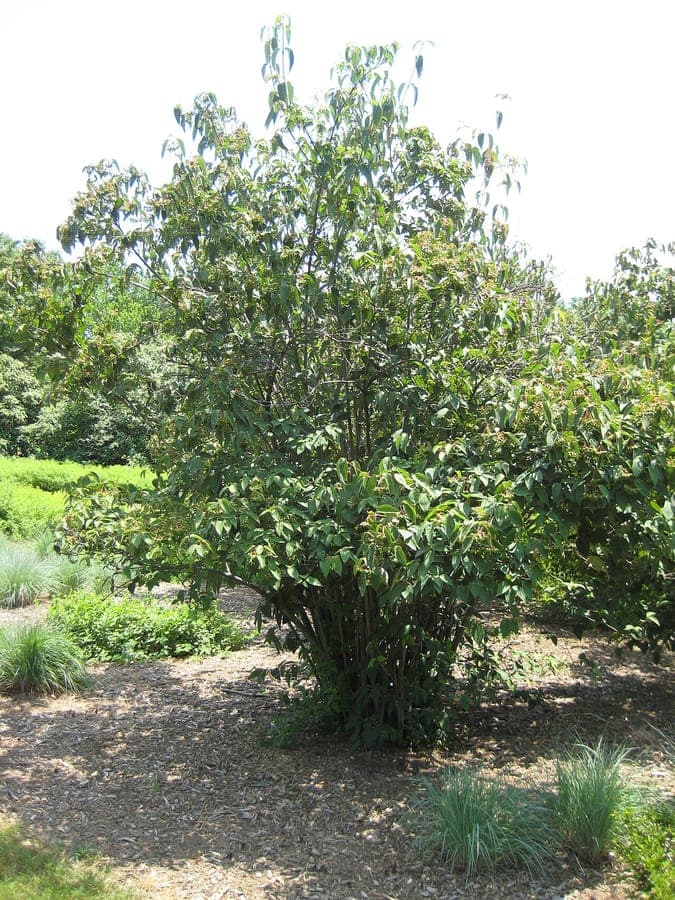
TheKohser - Gregory Kohs / CC BY-SA 3.0, via Wikimedia Commons
Viburnum setigerum: complete guide to tea-leaf viburnum
Viburnum setigerum
¿Quieres ver Viburnum setigerum: complete guide to tea-leaf viburnum en tu jardín?
1 minuto, sin tarjeta de crédito
Overview
Viburnum setigerum, the tea-leaf viburnum, is an elegant Asian shrub from China and Taiwan combining fine, serrated foliage with soft yellow spring flowers and striking red to orange fruits. This multi-season plant delivers critical bird food August through October when other nourishing plant materials are scarce. With its upright, open form and bristly red-brown bark, it creates distinctive winter silhouette and strong three-dimensional interest.
Appearance and bloom
The shrub grows upright to approximately 2-3 metres tall with fine, bristly twigs coloured red-brown. Leaves are lance-shaped to elliptical, 5-8cm long, dark green with fine serrations. Foliage does not display dramatic autumn colour but remains present into late season. Cream to pale yellow flat flower clusters appear April-May at twig tips. Fruits ripen from red through bright red to orange, mature August-October, highly attractive to songbirds and jays.
Ideal location
Viburnum setigerum performs best in full sun to light shade. Plant in broad borders, hedgerow margins, or as a specimen accent where red berries show well against green. Ideal for medium gardens. Open growth makes it suitable alongside lower-growing plants. Highly valuable in bird-friendly gardens.
Soil
Flexible soil requirements, tolerating sand to clay, acidic to neutral. Prefers moderately fertile, well-draining soils. No special preparation required. In very poor soil, incorporate organic material. Avoid perpetually waterlogged conditions; maintain moderate moisture.
Watering
Once established, minimal watering needed except severe drought. Young plants first 6-12 months require regular watering (twice weekly). Deep watering encourages robust root systems. Mulch 5-7cm around plant to improve moisture retention and temperature regulation. Mature plants need watering only after extended dry periods.
Diseño gratis
¿Quieres ver Viburnum setigerum: complete guide to tea-leaf viburnum en tu jardín? Crea un diseño gratis ahora.
Pruning
Minimal pruning required. Remove dead or damaged twigs in early spring. For denser forms, selectively prune weak or redundant twigs after flowering. Remove old, ungainly branches at ground level. Avoid aggressive rejuvenation pruning; this reduces fruit production.
Maintenance calendar
March: Inspect for winter damage. Remove deadwood. April-May: Bloom appears. White flower clusters prominent. June: Fruit set begins. First fruits visible. August: Fruits colour to red. September-October: Full fruit display. Birds actively feed. November-December: Fruit drop. Plant dormancy.
Winter hardiness
Viburnum setigerum is hardy to approximately -15 to -20 degrees Celsius. In UK gardens, entirely reliable. Young plants may experience light twig damage in severe winters below -20 degrees, but recover well. Mature specimens very dependable.
Companion plants
Pair with other bird-friendly shrubs: Sambucus nigra (elder), Crataegus monogyna (hawthorn), Ilex aquifolium (holly). For structural contrast: Forsythia x intermedia (forsythia), Kolkwitzia amabilis (beauty bush). Low understorey: Hedera helix (ivy), low-growing Carex species.
Closing
Viburnum setigerum is a dependable, low-maintenance shrub for wildlife-friendly garden designs. Red berries provide critical food when winter birds face scattered hunger. With fine foliage and red twigs, it also offers winter interest to resting gardens. Valuable addition to border and hedgerow designs. Source from specialist nurseries stocking diverse shrub selections.
Happy planting!
¿Quieres ver Viburnum setigerum: complete guide to tea-leaf viburnum en tu jardín? Crea un diseño gratis ahora.
Sube una foto, elige un estilo y obtén un diseño fotorrealista con lista de plantas en menos de un minuto.
Sin tarjeta de crédito


Plantas similares
Squashberry: complete guide
Viburnum edule
Grow mooseberry (Viburnum edule): ultra-hardy North American shrub with fragrant white flowers and red autumn berries. Perfect for boreal gardens. Zone 3.
Witherod: complete guide to this elegant North American shrub
Viburnum cassinoides
Discover Viburnum cassinoides: an elegant North American shrub with white flowers, yellow fall foliage, and blue berries. Perfect for temperate garden zones.
Buddlejaleaf viburnum: complete guide
Viburnum buddleifolium
Elegant evergreen shrub with delicate foliage and white spring flowers. Perfect for sheltered borders in temperate gardens.