
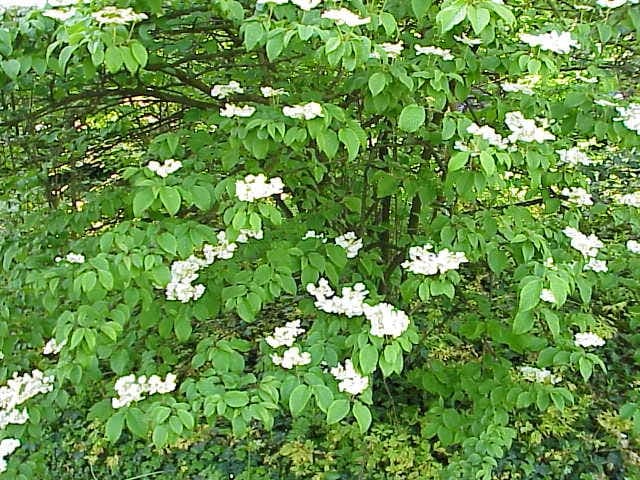
Kurt Stüber [1] / CC BY-SA 3.0, via Wikimedia Commons
Japanese snowball: complete guide
Viburnum plicatum
¿Quieres ver Japanese snowball: complete guide en tu jardín?
1 minuto, sin tarjeta de crédito
Overview
The Japanese snowball (Viburnum plicatum) is an elegant ornamental shrub from Asia that belongs in every thoughtfully designed front yard. This shrub is renowned for its unrivaled white flower balls that transform the garden landscape from April to May into an enchanting white carpet. With its gracefully spreading growth pattern and dark green foliage, this plant typically reaches 2-3 meters in both height and spread.
The Japanese snowball is a popular choice among garden enthusiasts because it is exceptionally frost-hardy and requires minimal maintenance. At gardenworld.app, designers find complete guidelines for integrating this plant into professionally designed gardens and landscape solutions. This shrub combines spring beauty with autumn color.
Appearance and bloom
The characteristic white flower balls of Viburnum plicatum are not single flowers but many small five-petaled flowers clustered together in umbels. The flower balls reach 5 to 8 centimeters in diameter and emerge from buds in bundles. The foliage is coarsely wrinkled (plicatum means "folded"), dark green, elongated, and reaches 8 centimeters in length.
From July to August, red fruits appear that gradually turn black. This color transformation adds extra value to the autumn display, along with foliage that turns red to purple. This multi-seasonal beauty makes Viburnum plicatum indispensable for gardenworld.app designs.
Ideal location
The Japanese snowball thrives best in a sunny to partially shaded position. In regions with intense summer heat, the plant tolerates some afternoon shade thanks to its Asian origin. An open, airy location without water logging is essential. Avoid positions directly beside tall walls that store heat.
Using gardenworld.app garden design, the exact location can be determined while considering shadow patterns, sight lines, and composition. A north or northeast position is ideal in warmer regions of Europe.
Soil requirements
Viburnum plicatum grows best in nutrient-rich, well-draining soil. A slightly acidic to neutral pH (6.0-7.0) is ideal, but the plant tolerates slightly alkaline soils as well. At planting time, it is recommended to amend the planting hole with compost or peat to improve water retention capacity.
Heavy clay soils should be loosened with sand, potting soil, or organic matter. Poor drainage leads to root rot, especially in winter conditions. In most gardens, minimal soil amendments are needed beyond what naturally exists.
Diseño gratis
¿Quieres ver Japanese snowball: complete guide en tu jardín? Crea un diseño gratis ahora.
Watering
After planting, Viburnum plicatum must be watered regularly and thoroughly, especially during the first growing season. Once established, this shrub has moderate water needs. Prolonged drought can cause weakening and reduced flowering.
Water application of 1-2 cm per week (including rainfall) is sufficient during the growing period. In autumn and winter, watering is reduced. For optimal flowering, water when the soil feels dry 2-3 centimeters deep.
Pruning
The Japanese snowball requires minimal pruning because it naturally develops an attractive shape. After flowering, spent flower heads can be removed. Awkwardly growing or weak branches can be cut out in June.
Heavy pruning should be avoided, especially on old wood, because this can affect next year's flowering. A maintenance pruning every 3-4 years is usually sufficient. Pruning is best done in summer, after flowering.
Maintenance calendar
FEBRUARY-MARCH: Planting preparation and mulch application. APRIL-MAY: Observe flowering; water cautiously during drought. JUNE: After flowering, remove weak branches. JULY-AUGUST: Fruiting stage; regular watering. SEPTEMBER-OCTOBER: Monitor autumn color; no pruning. NOVEMBER-DECEMBER: Winter protection; stop watering.
Winter hardiness
Viburnum plicatum is very winter-hardy and tolerates temperatures down to -15 or -20 degrees Celsius without any protection. In most regions, this shrub can grow outdoors year-round. Young plants may receive slight wind protection in severe winters, but this is rarely necessary.
The only precaution is preventing standing water, which can cause root rot in winter. Well-draining soil is therefore essential.
Companion plants
The Japanese snowball combines beautifully with other ornamental shrubs such as Japanese Maples, azaleas, and camellias. The white flowers contrast nicely with dark green evergreens. Underplanting with shade-loving perennials such as hostas, hellebores, or sedges adds structure and depth.
In gardenworld.app designs, this plant works well in mixed borders, as a specimen plant, or in groups of three for dramatic effect.
Closing
The Japanese snowball is a worthy centerpiece for any front yard that values winter hardiness and multi-seasonal interest. Its long flowering period, beautiful autumn color, and minimal maintenance requirements make it a smart choice for modern gardeners. Through gardenworld.app garden design, you can strategically position this elegant shrub for maximum seasonal impact and visual character.
Via gardenworld.app tuinontwerp you can discover how this impressive Asian shrub can transform your front yard into an oasis of beauty and serenity throughout the entire year.
¿Quieres ver Japanese snowball: complete guide en tu jardín? Crea un diseño gratis ahora.
Sube una foto, elige un estilo y obtén un diseño fotorrealista con lista de plantas en menos de un minuto.
Más de 10.000 jardines diseñados
Sin tarjeta de crédito


Plantas similares
Squashberry: complete guide
Viburnum edule
Grow mooseberry (Viburnum edule): ultra-hardy North American shrub with fragrant white flowers and red autumn berries. Perfect for boreal gardens. Zone 3.
Witherod: complete guide to this elegant North American shrub
Viburnum cassinoides
Discover Viburnum cassinoides: an elegant North American shrub with white flowers, yellow fall foliage, and blue berries. Perfect for temperate garden zones.
Buddlejaleaf viburnum: complete guide
Viburnum buddleifolium
Elegant evergreen shrub with delicate foliage and white spring flowers. Perfect for sheltered borders in temperate gardens.