
Wikimedia Commons / Public domain, via Wikimedia Commons
Sheepberry: complete guide
Viburnum lentago
¿Quieres ver Sheepberry: complete guide en tu jardín?
1 minuto, sin tarjeta de crédito
Overview
The Sheepberry or Nannyberry (Viburnum lentago) is a native North American shrub found across most temperate regions of eastern and central America. This shrub belongs to the Viburnaceae family and is renowned for its graceful foliage, fragrant white flowers in late spring, and stunning red fruit that later turns dark purple-black. Growing 12-20 feet tall and 10-13 feet wide, Viburnum lentago develops into a medium-large shrub perfect for larger gardens, hedgerows, and wildlife gardens.
Its vigorous growth, extreme cold-hardiness, and ability to adapt to various conditions make it a popular choice for North American and European landscapes.
Appearance & Bloom
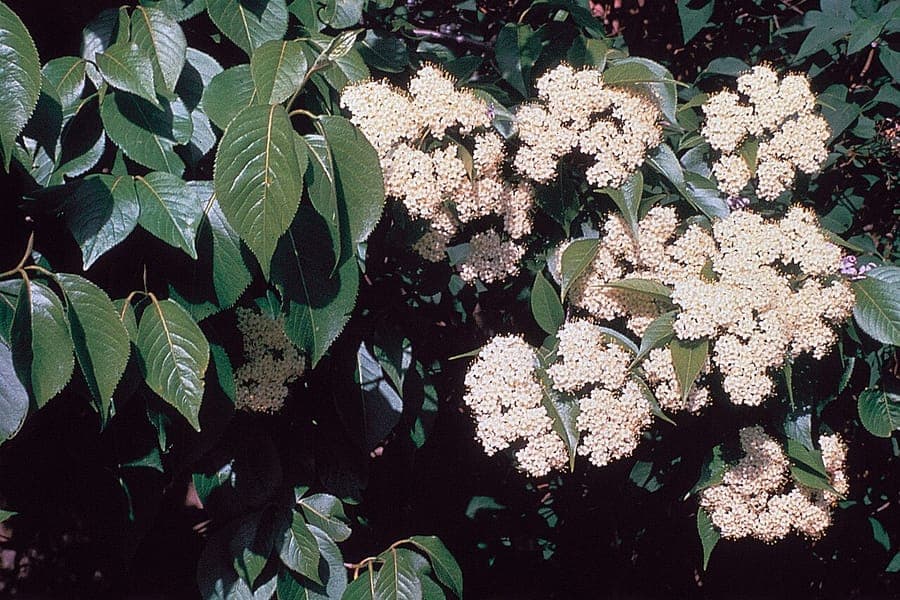
Sheepberry forms a multi-stemmed shrub with a rounded, upright-spreading crown. Leaves are oval to lance-shaped, smooth and dark green, 2-4 inches long. With fine texture, they provide elegant effect throughout growing season. In fall they color beautifully purple to red, adding extra autumn interest.
Flowers appear in May in small, intensely fragrant blooms arranged in large, flat clusters 2-4 inches broad. They are pure white to creamy white. After flowering, fruit develops first red, later turning dark purple-black and highly attractive to birds. These fruits persist on branches offering food in late fall and early winter.
Ideal Location
Sheepberry grows best in locations with full sun to light dappled shade. Ensure at least 3-4 hours direct sunlight daily. The shrub tolerates various locations but blooms most abundantly in sunny sites. Plant where you can enjoy flower fragrance, near seating areas.
This is an extremely cold-hardy species performing well across Europe. It tolerates wind and urban conditions fairly well.
Soil
Sheepberry is quite flexible regarding soil type. It grows best in fertile, well-draining soil with pH 5.0 to 7.0 (acidic to neutral). It tolerates both dry and wet soils, though not stagnant water.
Add organic material when planting (compost, leaf mold) to improve soil structure. In poor soils it grows more slowly.
Diseño gratis
¿Quieres ver Sheepberry: complete guide en tu jardín? Crea un diseño gratis ahora.
Watering
Although Sheepberry is quite drought-tolerant once established, regular watering is essential in the first growing year. Water deeply 1-2 times weekly depending on rainfall and temperature. It tolerates both drier and wetter conditions better than many other shrubs.
Established shrubs require less frequent watering except during drought. Keep root zone lightly moist.
Pruning
Sheepberry grows naturally into pleasing form and requires minimal pruning. In early years, remove dead, damaged, or crossing branches. On mature specimens, light pruning in winter can open canopy and rejuvenate old branches.
Avoid heavy pruning; this can reduce flower production. Prune between November and March when shrub is dormant.
Maintenance Calendar
- March: Inspect for winter damage; remove dead branches
- April-May: Growing season begins; blooming preparation
- May: Fragrant flowers appear
- June-July: Fruit begins forming
- August-September: Fruit ripens red
- October-November: Fruit darkens; fall color
- November-March: Pruning season; winter dormancy
Winter Hardiness
Sheepberry is extremely cold-hardy to -22F (-30C) or colder. This makes it suitable for all temperate climates in Europe. The shrub tolerates cold and frost well; frost damage to young shoots may occur in extreme winters, but the shrub recovers quickly.
Companion Plants
Sheepberry combines well with:
- Other native shrubs: Dogwood, Elderberry, Cherry
- Understory: Shade plants with bird food
- Climbers: Ivy (Hedera helix) adds texture
- Flower beds: Hosta, Heuchera, Astilbe beneath shrub
Plant this shrub in wildlife gardens for optimal bird habitat and food.
Conclusion
Sheepberry is a beautiful, versatile choice for larger gardens, wildlife gardens, and parks across Europe. With fragrant flowers, stunning fruit, and cold-hardiness, it offers value for decades. Once established, it is low-maintenance. Plant this native shrub and create a blooming, bird-rich garden full of natural beauty.
¿Quieres ver Sheepberry: complete guide en tu jardín? Crea un diseño gratis ahora.
Sube una foto, elige un estilo y obtén un diseño fotorrealista con lista de plantas en menos de un minuto.
Más de 10.000 jardines diseñados
Sin tarjeta de crédito


Plantas similares
Squashberry: complete guide
Viburnum edule
Grow mooseberry (Viburnum edule): ultra-hardy North American shrub with fragrant white flowers and red autumn berries. Perfect for boreal gardens. Zone 3.
Witherod: complete guide to this elegant North American shrub
Viburnum cassinoides
Discover Viburnum cassinoides: an elegant North American shrub with white flowers, yellow fall foliage, and blue berries. Perfect for temperate garden zones.
Buddlejaleaf viburnum: complete guide
Viburnum buddleifolium
Elegant evergreen shrub with delicate foliage and white spring flowers. Perfect for sheltered borders in temperate gardens.